At Mr. Handyman, the owner runs the business and the technician lowers the closet rod
Founded in a Massachusetts town in 1996, the handyman franchise grew on a plain division of labor: owners manage the business while technicians do the repairs.
Waco, TX
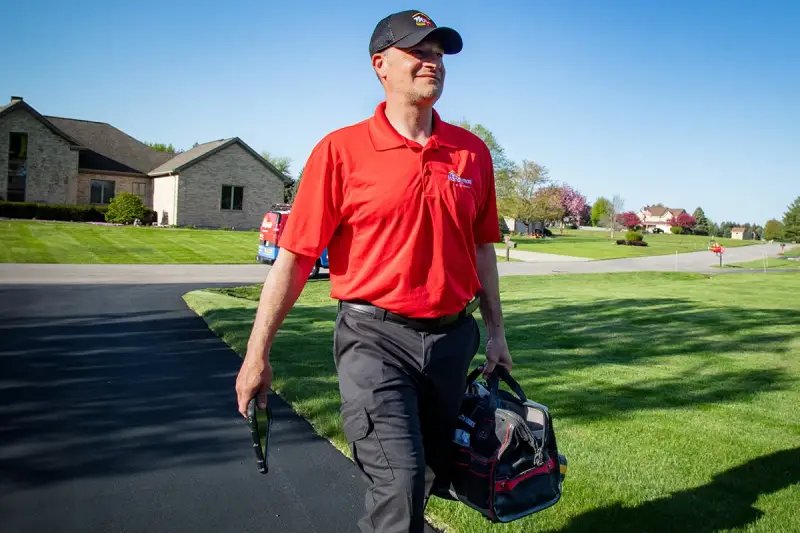
Midway down Mr. Handyman’s long menu of residential services, under a heading for safety and mobility, sits a group of small jobs. Grab bars. Lever door handles. Doorway widening and interior threshold lowering. Ramps and handrails. And a service for lowering shelves and closet rods.
None of these is a big project. The work happens one room at a time, and the person doing it is usually not the person whose name is on the franchise agreement.
That arrangement is the most distinctive thing about Mr. Handyman. The company sells the handyman trade to people who may never have practiced it. Franchise owners hire and manage teams of technicians, and the technicians carry the tools into the house. Since it began franchising in 2000, a business that started as one handyman concept in Massachusetts has built that split into a system that counted more than 250 locations by 2020.
David Lavalle founded the company as Mr. Handyman, Inc. in Chelmsford, Massachusetts, in June 1996. It stayed an independent concept for its first few years. Around 2000, Service Brands International, a franchisor based in Michigan, acquired it and began selling franchises.
Under Service Brands, Mr. Handyman had sister companies including Molly Maid, 1-800-DryClean and Protect Painters, and a franchise listing from that era pitched cross-marketing with them. The same listing made the brand’s central promise in capital letters: owners do not do the handyman work, and they do not need to be handy.
The pitch was aimed at managers rather than tradespeople. The ideal candidate, the listing said, would bring strong management and business skills, consultative sales ability and the ability to manage employees. It advertised Monday-through-Friday hours, 8 a.m. to 5 p.m., along with minimal inventory and few employees. Among the owners it featured was David Ambinder, described as a former Wall Street executive. The listing noted that Mr. Handyman had made the Franchise 500 list from 2007 to 2011, and it counted locations in both the United States and Canada.
In 2015, The Dwyer Group, a franchisor headquartered in Waco, Texas, acquired Service Brands International. Mr. Handyman has been owned since then by that Waco company, part of a portfolio that includes Molly Maid, Aire Serv and Glass Doctor. In the system’s disclosure figures through 2020, every location was a franchise.
The executive-owner model sounds as though the boss never touches the work, and the franchise contract is more careful than the sales pitch. A disclosure document filed with state regulators required an individual owner to directly perform or supervise operations. If an entity owned the franchise, a designated principal owner had to supervise directly, and a trained manager could stand in only with the franchisor’s consent. Owners can do the repairs themselves. The system is simply built so they don’t have to.
New owners learn that system before they open. In the Service Brands years, the program was called Right Start and ran one to two months. It covered five days of training at the home office and three days of regional training alongside an existing owner, then an on-site visit within about eight weeks of opening. In the later disclosure document, the pre-opening program is called Sure Start and runs six to eight weeks, followed by up to 10 days of classroom training at the home office in Waco or Dallas and two to three days in the field. The classroom portion runs 34 to 41 hours. Training does not stop at opening day. Owners must attend at least one convention, regional meeting or similar event every two years.
The tools changed along with the training. Early franchisees ran their businesses on a software program called Toolbox, which the listing said managed the entire business. The later disclosure document named ServiceTitan as the required business management software, with separate charges for each office user and each service professional. The two tiers mirror how the business divides its people: some at desks, others in the field.
Each franchise gets a protected territory of about 40,000 to 60,000 target households, drawn from postal codes, census tracts or physical and political boundaries. While a franchisee stays in compliance, the company agrees not to put another Mr. Handyman inside that territory. Franchise agreements run 10 years, with the option of one more 10-year term.
The service list is where the trade itself shows up, and it is long. Under interior repair are TV wall mounting, grout repair, picture hanging, bathroom caulking and exhaust fan repair. Drywall gets its own category, covering patching, finishing, installation and ceiling repair. Doors take up a dozen lines, among them pocket doors, barn doors, pet doors, storm doors and door closers. Plumbing work covers faucets, toilets, sump pumps and leak detection. Electrical work includes outlets, dimmer switches, motion sensors, smoke and carbon monoxide detectors, and smart doorbells.
Some entries are larger. The bathroom section lists tub-to-shower conversions and walk-in tub installation. The kitchen section lists cabinets, countertops, backsplashes and custom islands. Carpentry includes custom bookcases, mantels, wainscoting and wood rot repair. Assembly has its own page, with bikes, grills, furniture, cabinets and fences.
Local menus vary. The site for Mr. Handyman of South Montgomery County carries the same structure but drops a few items, such as hot water dispenser repair and exhaust fan cleaning. The Canadian site, mrhandyman.ca, leaves out several exterior jobs, including gutter and chimney work, and adds categories the U.S. menu lacks: appliance repair, landscape design, dryer vent service, and fire and water damage. The national site and the South Montgomery County site both carry the same tagline near the top of the page, describing each business as locally owned and operated.
That tagline describes the brand’s structure. The name, the training and the territory rules come from headquarters in Waco. The van, the crew and the hiring belong to whoever bought the territory.
The system’s growth has not run in one direction. In 2018, according to the company’s disclosure filings, 28 franchises opened and 16 closed, leaving 215 at year’s end. In 2019, 31 opened and 12 closed, bringing the total to 234. In 2020, 38 opened and 15 closed, and the count reached 257.
Lavalle started with one handyman concept in Chelmsford. The menu that grew from it runs well past a hundred entries, and between the grab bars and the ramps, it still lists the job of lowering a closet rod.