College Hunks Hauling Junk started with a borrowed van and a phone number that rang in the driver’s seat
Two friends who met in high school detention turned a borrowed furniture-store van into a national moving and junk removal franchise, learning their lessons the hard way.
Tampa, FL
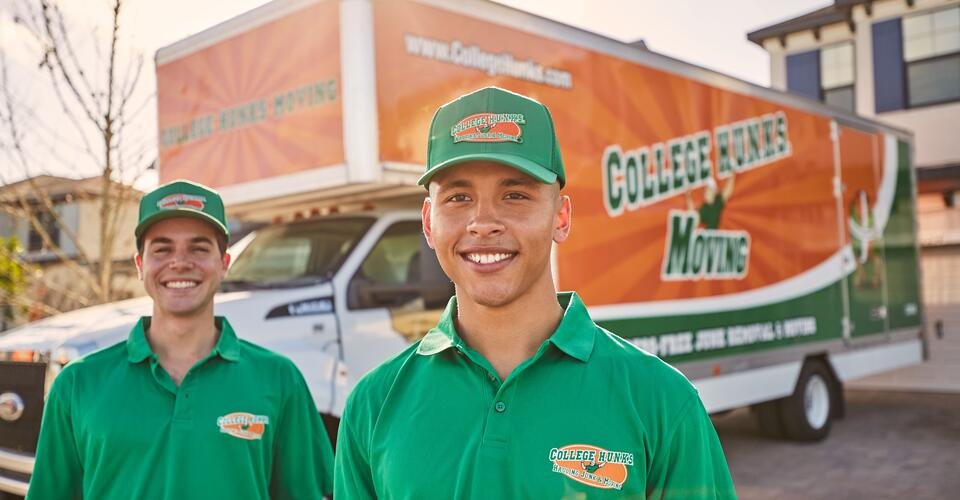
In the company’s first year, the number on the back of the truck was a 1-800 line, and it rang on the founders’ cell phones. So when someone called to complain about a College Hunks driver driving erratically, the founders were usually taking the call from the driver’s seat.
They would switch into manager mode. They told the caller the company did not condone that kind of driving and promised the employee would be formally reprimanded. “I may have wanted to fire myself three or four times,” Nick Friedman told CEOs Speak, an interview series published by the software firm Bitbean, in 2020.
The joke turned into a rule. Friedman and his co-founder, Omar Soliman, realized that driving a branded truck between jobs, or wearing a company T-shirt to dinner with friends, put them in front of customers as surely as any job did. That idea became “Always Branding,” one of four core values at College HUNKS Hauling Junk & Moving, the moving and junk removal franchise the two built from one cargo van. The Tampa company is privately held; Susquehanna Growth Equity invested in it in 2021. Its story belongs to two young men with no training in running a business who made their mistakes where everyone could see them, then wrote the lessons down.
Friedman and Soliman met in 10th grade, in detention. Soliman has called himself a troublemaker.
“We both had trouble sitting still and liked to push the boundaries of what was allowed. Those were entrepreneurial qualities but back then we were just written off as troubled youth, for lack of a better word,” Soliman told the St. Pete Catalyst in 2020.
They stayed best friends while attending colleges on opposite sides of the country. Soliman went to the University of Miami. Before his senior year, his mother told him he needed a job. She owned a furniture store, so he borrowed its cargo van and recruited some friends to haul junk. His mother came up with the name, and the calls started coming in.
Friedman, meanwhile, was working as an unpaid intern in Washington, D.C., when Soliman showed up with the beat-up van. Both had been raised to expect the standard path of a degree, a job and a climb up the corporate ladder. After their first stint with the van, Friedman said, they knew they weren’t suited to working for someone else.
“It was the first time I found something I was passionate about. It’s not that I was passionate necessarily about hauling junk, but it was that light bulb — wow, this is what being an entrepreneur is. You’re your own boss. You make your own decisions,” Soliman told the Catalyst.
In an entrepreneurship class, Soliman used the College Hunks model to enter the Leigh Rothschild Business Plan Contest. He won first place and $10,000; Friedman later put the field at 150 other participants. Both founders took corporate jobs after graduation, and both found they disliked them. They quit and went to work on the business full time.
They had no investors. They went to several banks asking for a loan to buy a truck and were turned down until Bank of America agreed. By Soliman’s account, they had no idea how to run a business or even handle payroll. The timing covered for a lot. It was 2005, they were working in Washington, and the region was in a housing boom with plenty of work to go around. In its first two years, the company hauled away more than 4,000 tons of junk.
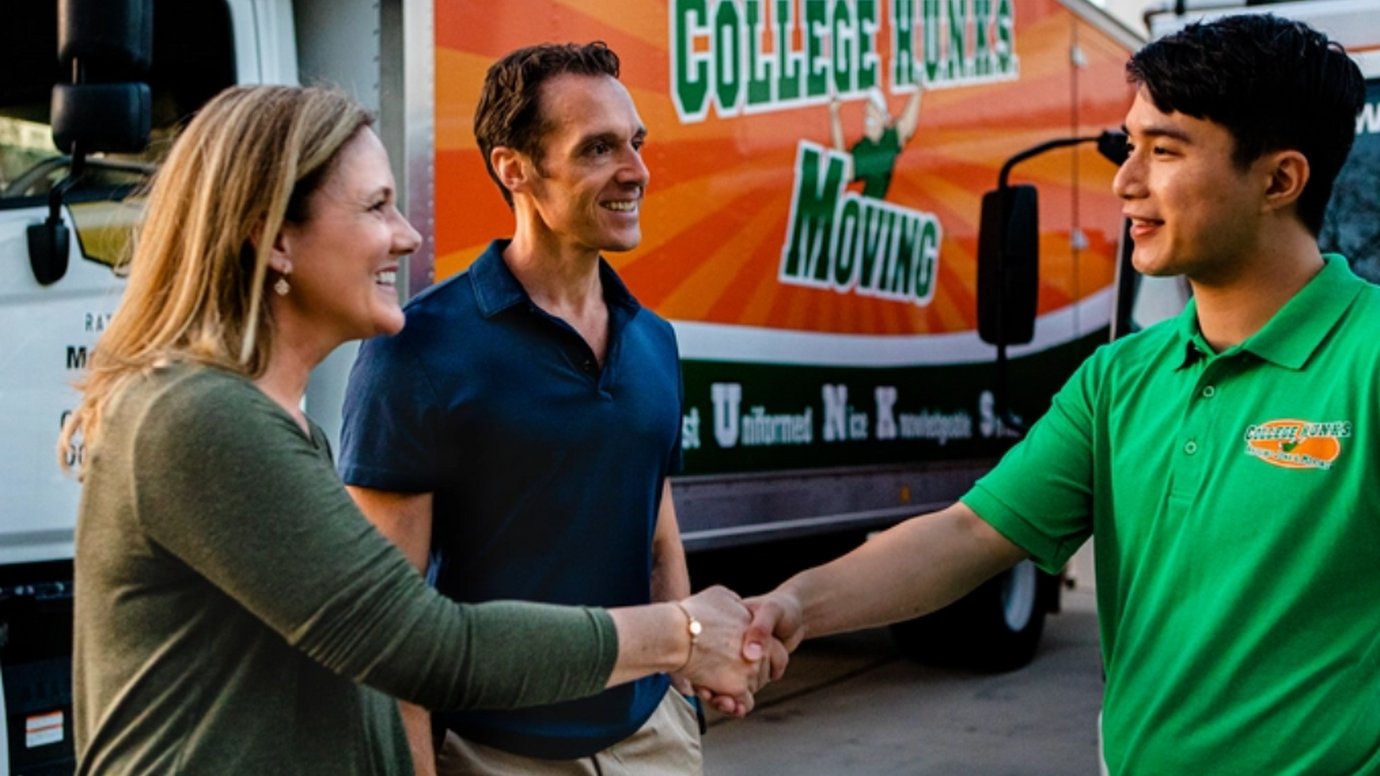
The name came from Soliman’s mother, but Friedman thought harder about the brand than it might seem. Around the time they launched, he read Seth Godin’s Purple Cow, which argues that a business has to be remarkable to be noticed, the way a purple cow would stop a driver passing a field of brown ones. Moving and hauling were neither new nor remarkable. What customers seemed to care about, the founders noticed, was who would be in their homes handling their family’s things.
“In order to stand out and be remarkable, we had to humanize the brand,” Friedman told Bitbean’s CEOs Speak. The employees would be the face of the company. The founders turned HUNKS into an acronym for Honest, Uniformed, Nice, Knowledgeable, Service, and added what Friedman called “strategically bold coloring” to the logo. A 2016 Tampa business radio segment described the company’s green and orange trucks as recognized all over Florida.
The company began franchising in 2007 and moved its headquarters to Tampa in 2008. Soliman has been candid about how thin the operation was at that stage.
“There was no real training. There was no real system. We were in a tiny office on Gandy Boulevard. I’m still surprised people even bought franchises back then,” he told the Catalyst.
The fix came from another book, Michael Gerber’s The E-Myth. “You have to work on the business, not in the business. Once we changed our mindset to that, it changed everything and we were able to grow rapidly,” Soliman told the Catalyst. Friedman drew the same conclusion from those early days of fielding complaint calls behind the wheel. They had been rushing to the next job while talking to customers and checking in with each other. Adding even one more truck meant hiring people and handing them real responsibility. Systems and training programs, he said, were what let them copy the model in other markets.
The principle became one of 10 “business commandments” the founders developed, which Friedman laid out in Effortless Entrepreneur, a book he co-wrote and Random House published.
In 2009 the company made Inc. magazine’s list of the 500 fastest-growing companies and ranked No. 30 on Entrepreneur magazine’s Top 50 New Franchise Rankings.
On the first episode of ABC’s Shark Tank, Friedman and Soliman sought $250,000 for 25 percent of a new concept, College Foxes Packing Boxes, a packing and professional organizing service meant to support the moving business. The investors wanted a piece of College Hunks instead and floated $1 million for 10 percent. Robert Herjavec offered $250,000 for half of the Foxes and 10 percent of the Hunks. The founders said no. The Foxes never took off, but Soliman said the national exposure helped a company that was already selling franchises.
The work itself has stayed close to what the van did in the beginning, with more added on. Crews handle local and long-distance moves, packing and unpacking, and hourly labor such as rearranging furniture or loading a truck. They take down sheds and kitchen cabinets and haul off the debris. They will not take cars.
On a junk job, the company says, the first stop is a charity. It works especially closely with Goodwill and also with Habitat for Humanity ReStore. Items a charity won’t accept go to a recycling center or a waste-to-energy facility, and a landfill is the last resort. The local businesses are independent licensees of CHHJ Franchising LLC.
By 2020, Friedman said, there were more than 100 franchises. That same year, Soliman looked back on the long, self-financed climb while explaining why the pair took outside investors for a newer venture, a valet trash pickup service for apartment communities called Trash Butler. Having bootstrapped College Hunks “and knowing that took 15 years to get where it is today,” he told the Catalyst, “we didn’t want to do that again.”
He did not sound sorry about the first time. “I have fun playing the game of business,” Soliman told the Catalyst.