The Vermeer family still runs the Pella company that gave tree crews the stump cutter
Gary Vermeer’s heirs still own and run the Iowa maker of stump cutters and underground drills, under hiring rules the family began writing in 1989.
Pella, IA
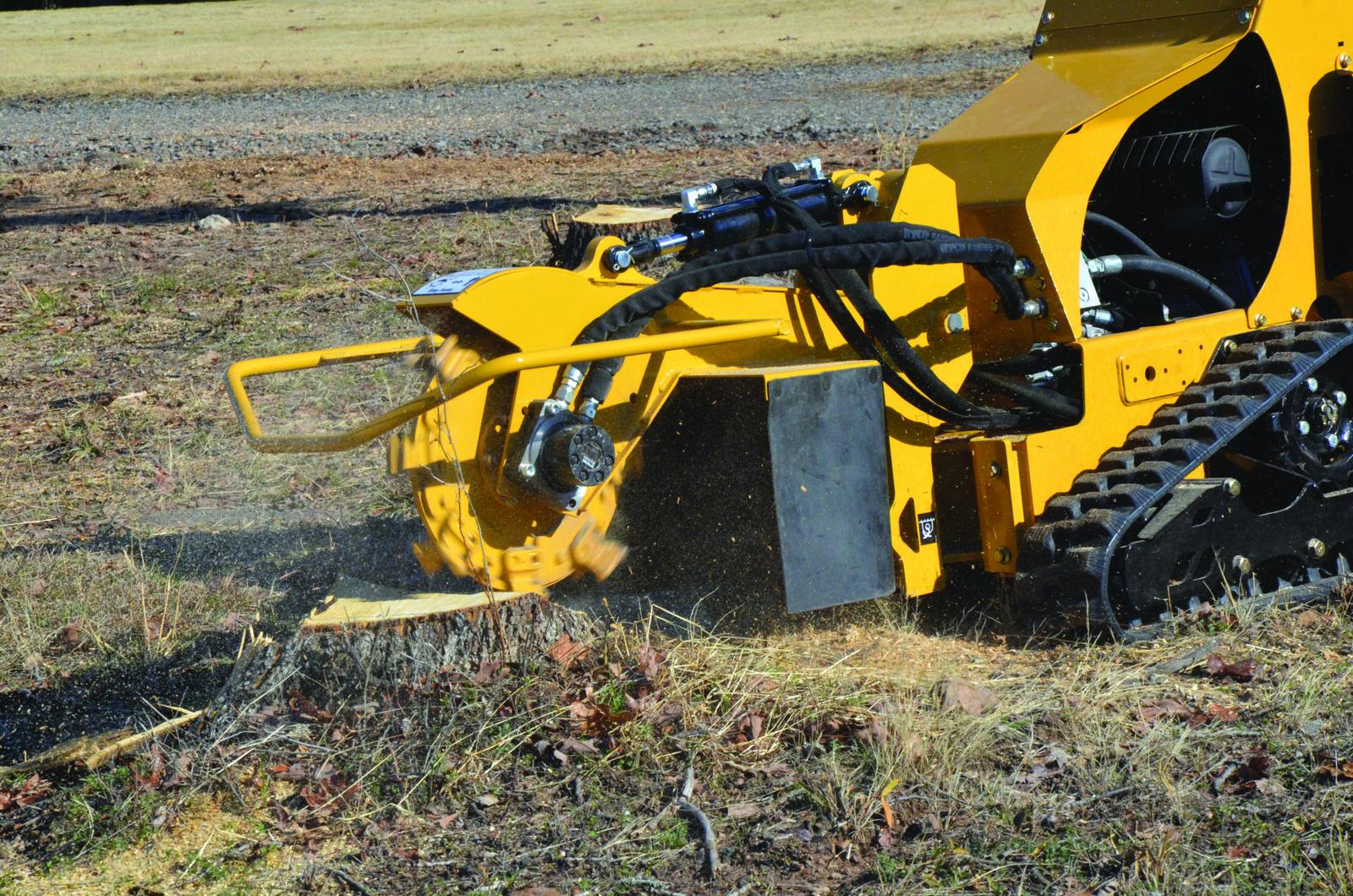
In 1957, a Vermeer test crew was trying out a machine built to grind tree stumps. The prototype was meant to cut forward and backward across a stump. Then, as the family tells it, someone hit the wrong lever and the cutter swung side to side. “They realized it was 5 times more effective cutting a stump that way,” Bob Vermeer, the founder’s son, said in a 2018 podcast with Farm Equipment. “And, to this day, that is how a stump cutter works,” he said.
The SC402, a stump cutter Vermeer introduced in 2025 for tree care professionals, uses a control system the company calls SmartSweep. It watches engine load and adjusts how fast the cutter wheel sweeps across the wood. With its dual wheels taken off, the machine narrows to 35.5 inches, so it can roll through a standard 36-inch gate.
Vermeer Corporation, based in Pella, Iowa, reported more than 4,000 employees and more than 600 dealers in 2023. It is also still owned and run by the family of Gary Vermeer, who started it in 1948. Jason Andringa, his grandson, has been president and CEO since 2015. The family has held on for three generations in part by making it hard for its own members to walk in the door. For the arborists and utility contractors who use its machines, it has meant one family making the long calls, from how to ride out a 90 percent drop in drill sales to how fast to rebuild after a tornado.
Gary Vermeer was a farmer who liked to tinker. In 1939 he put a cab on his John Deere tractor. “When everybody else was on their tractor with purple cheeks and hands because it was so cold, Gary Vermeer was riding nicely along in his cab,” the local paper wrote, as his daughter, Mary Vermeer Andringa, recalled it for Farm Equipment.
During World War II, he and his father picked corn for neighbors, and in 1943 he built a mechanical wagon hoist to unload it faster. “He initially built that for his own use,” Andringa said in the 2018 Farm Equipment podcast. Neighbors wanted hoists of their own. He tried having a Pella blacksmith shop build them, and that “didn’t really go as well as he thought it would,” she said. In 1948 he started Vermeer Manufacturing Company with his cousin Ralph Vermeer and one other employee.
The machines that contractors know came early. In 1951 the company built a tractor-driven trencher for laying drainage tile in farm fields, and the trenchers grew into the ride-on machines that utility crews used to lay lines under the suburbs of the 1960s. The stump cutter started as a way to clear land for farming. The large round baler, which turned haymaking into a one-person job, did not arrive until 1971. “The business existed 23 years before the invention of the baler,” Jason Andringa said in 2019, speaking to Farm Equipment.
Gary Vermeer had long wanted a tool that could put pipe and cable underground without digging a trench. “I’ve always thought there should be some kind of a tool that’s like the animal mole that can literally bring infrastructure in the ground without having to open cut it,” he said, as Mary Andringa recalled in 2025 for Equipment Journal. Vermeer introduced its first horizontal directional drills in 1991. Early operators carried drill rods by hand and pounded stakes with sledgehammers. Directional drilling was a new kind of work, so the company took its training on the road. “We were training in local conditions, and we trained a lot more people that way,” Mary Andringa said.
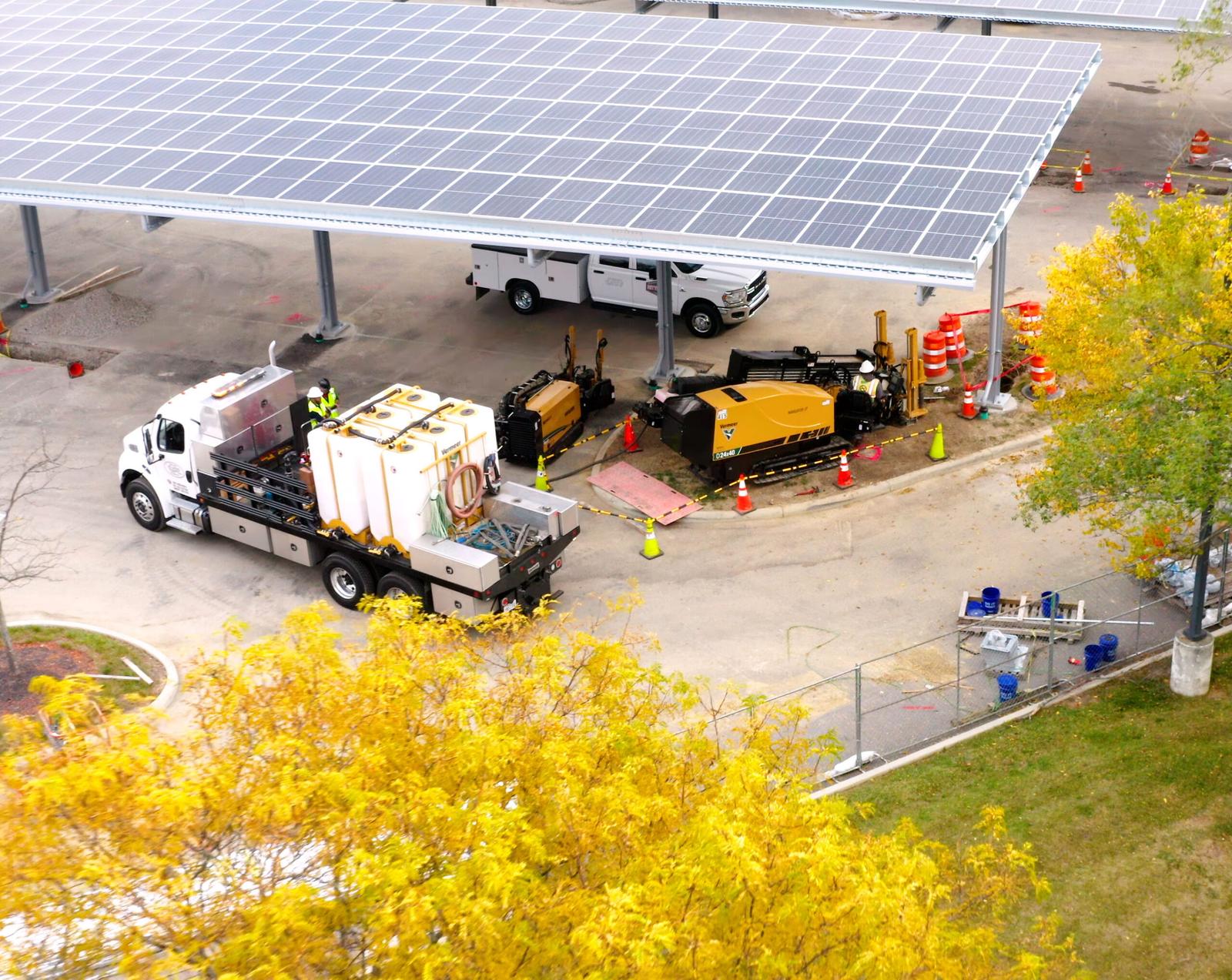
The drills sold fast through the late 1990s, then collapsed when the dot-com bust hit. Directional drill sales dropped by 90 percent, she told Equipment Journal. “We actually closed Plant 7 for a little while, which we had really designated as the HDD plant.”
At the start of 2002, Vermeer had its first reduction in force. Mary Andringa, who became CEO the next year, described it on The Vermeer Podcast around 2020. The company met individually with every person affected. It also held an employment day, bringing other employers into its plant to offer jobs, and helped people write resumes. Senior leaders split up so every plant heard the news at the same time. She said she remembered getting pretty emotional as she told the people in her own plant. Afterward the company worked to lean less on drills. Between 2003 and 2008, she said, it doubled the share of its business that came from hay equipment and from its environmental line.
Jason Andringa was working at NASA’s Jet Propulsion Laboratory in Southern California during those years. Coming home was not automatic. On the company podcast, he said the family’s employment policy is to hire family members only when there is a genuine job for them. He joined Vermeer in 2005. His first summer back, he did shop-floor improvement work, at one point rearranging greasy parts to set up the brush chipper line. “I remember thinking to myself, ‘Just a few months ago, I was designing spacecraft,’” he said in 2019, speaking to Farm Equipment.
The policy goes back to 1989, when the family hired a Minneapolis firm that plans succession in family businesses. Each third-generation member met with the firm and wrote a five-year plan. Bob Vermeer said one of his daughters, then in junior high, could not figure out her plan. Those headed for management had to earn a degree, work somewhere else and then get an MBA, and the family wanted to see them earn a promotion at the outside job. Family members who wanted board seats had to go through an evaluation, Bob Vermeer said.
“The whole idea is that we didn’t want entitlement,” Mary Andringa told Farm Equipment in 2019. “Whether it’s family members in the business or on the board, it’s not that ‘it’s your turn now.’” She said a family group, first called the Family Council and later the Ownership Council, “deals with a lot of hard stuff.” The company counts more than 70 family shareholders.
Her daughter, Mindi Andringa Vanden Bosch, learned to weld on the factory floor the summer before her senior year of college. On improvement projects she wore her badge on her jeans so coworkers could not read her last name. She is now Vermeer’s vice president of operations.
On July 19, 2018, Vermeer was marking its 70th anniversary with hundreds of dealers and customers on the Pella campus when an EF3 tornado hit. Winds reached 144 mph. People took cover in shelters inside the plants. Seven had minor injuries, and no one died. Plants 5 and 6, where Vermeer built small and medium directional drills among other machines, were destroyed.
Gary Vermeer’s layout helped. He had spread production across separate plants instead of one large one, and redundancy in case of a natural disaster was one of his reasons, Doug Hundt, then president of industrial solutions, said that week, speaking to Trenchless Technology. The company moved the lost lines into its other buildings. Everyone was back at work within 30 days, and production recovered within 45. “We have heard from our dealers and customers that based on Vermeer’s performance, if they hadn’t heard about the tornado, they would not have known it happened,” Jason Andringa said in 2019, speaking to Farm Equipment.
Vermeer rebuilt in Pella, a town of about 10,000 where it was the largest employer at the time. It retired the numbers of the two destroyed plants and began building a monument from pieces of them. Bob Vermeer, who died in 2022, told Farm Equipment in 2019 that going through the tornado showed him what the family’s third generation wanted. “We celebrated 70 years,” he recalled them saying, “but we want to go 100.”