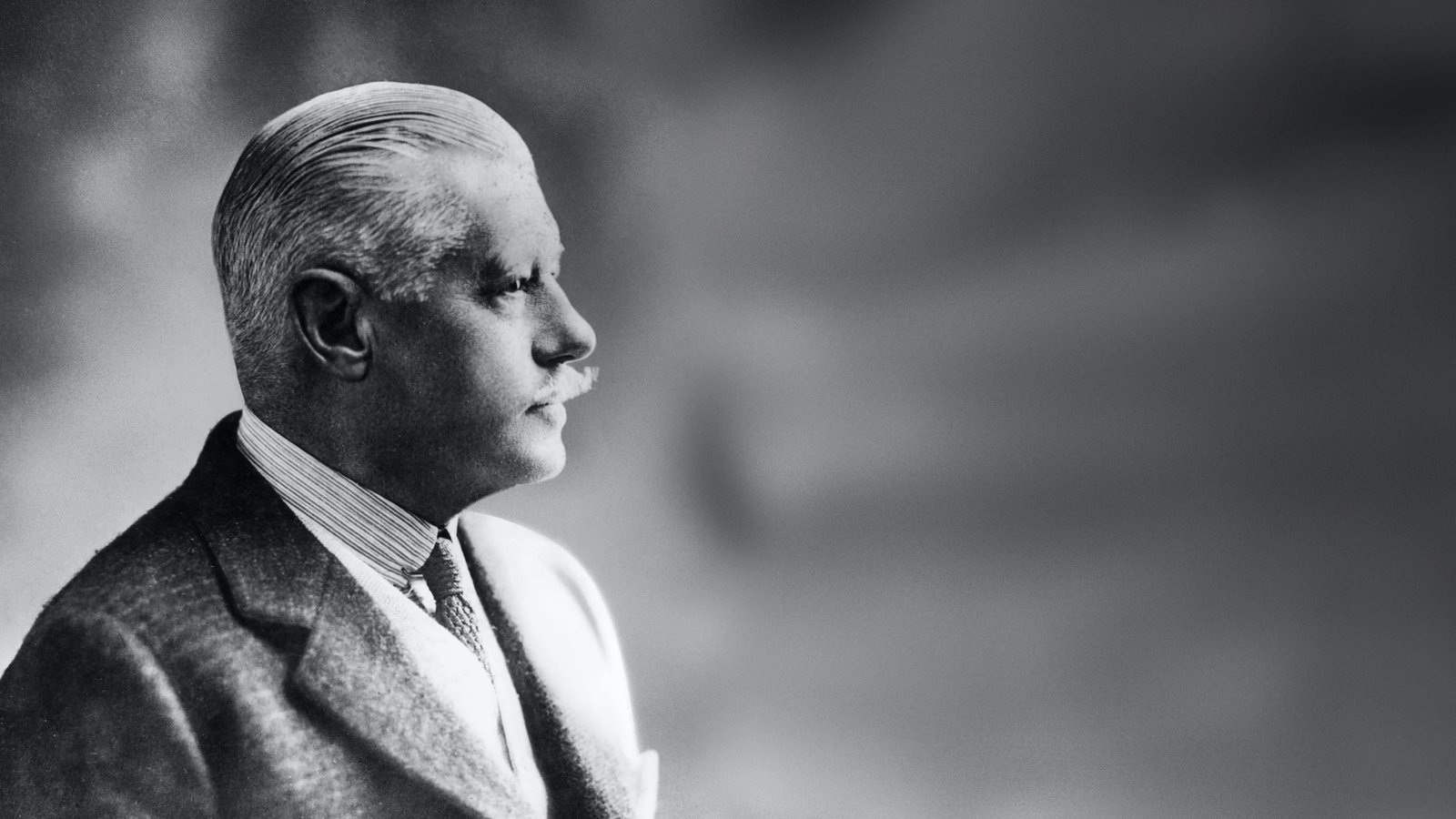
Carhartt still belongs to the family of the man who started it in a Detroit loft in 1889
Hamilton Carhartt’s family has owned the Dearborn workwear company since 1889 and has kept it making clothes for people who work, even when fashion buyers wanted more.
Dearborn, MI
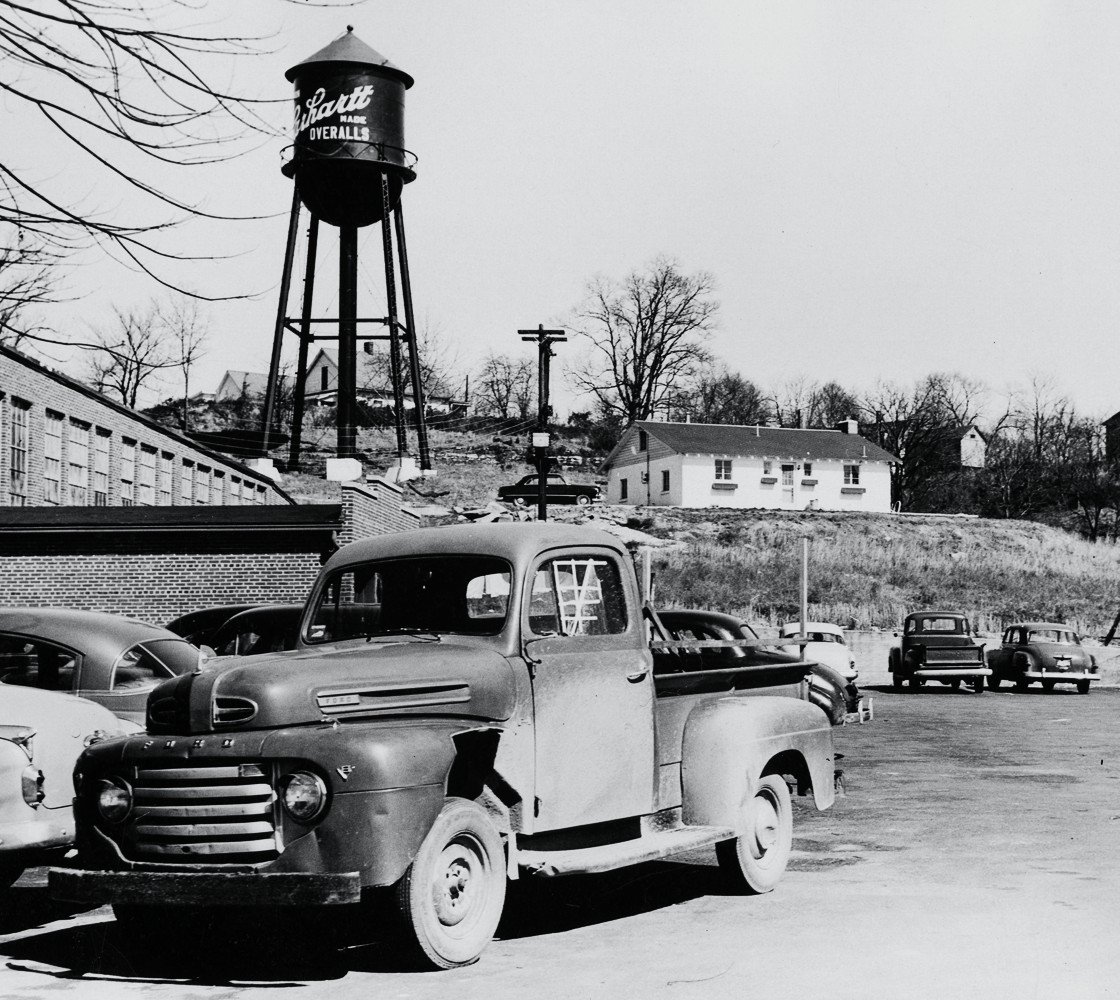
In 1932, three years into the Great Depression, Carhartt finished a new sewing plant in Irvine, Kentucky. The people of Irvine helped get it built. It cost just over $35,000 and employed 20 people when it opened, according to the company’s entry in the International Directory of Company Histories.
The company needed it. A slump in cotton in the 1920s and then the Depression had cost Carhartt every location except its plants in Atlanta, Detroit and Dallas, and it had sold off the rights to sell its clothes in Texas, most of the South, southern California, Europe and Canada. The company writes in its own history that it came close to shutting its doors for good. The 1932 Irvine building now houses the operations center for Carhartt’s supply chain, the company writes.
Today Carhartt has about 3,000 employees around the world and headquarters in Dearborn, Michigan, according to its press releases. It is also still owned and managed by the descendants of Hamilton Carhartt, who started it in Detroit in 1889, the company says. The family’s choices have set how fast the company grows and where its clothes are sold. More than once, that has meant choosing the farmhand or the highway worker over the fashion buyer.
Hamilton Carhartt was born in 1855 in Macedon Locks, New York, and grew up in Michigan and Wisconsin, the son of a physician. He went into the furniture business, first in Grand Rapids and, from 1884, in Detroit. In 1889 he turned the business over to work clothes. The company says he began with two sewing machines and a half-horsepower electric motor in a small Detroit loft. The Detroit Historical Society puts the first crew at about five employees.
The company writes that early failures pushed him toward market research, and that he talked directly with railroad workers before he designed a product that fit them. It was a heavy bib overall made of denim and duck, a tightly woven cotton. His motto was “Honest value for an honest dollar.”
The business grew quickly. By 1910 Carhartt had mills in South Carolina and Georgia and sewing plants in Atlanta, Detroit, Dallas and San Francisco, along with operations in Canada and in Liverpool, England. Then came the collapse. In the leanest years, Hamilton’s son Wylie helped lead a “Back to the Land” program that turned the company toward farm and ranch workers and led to the new operations in rural Kentucky. Wylie also started Carhartt’s first outdoor line, the Super Dux hunting and fishing gear, in 1930. Hamilton Carhartt died in 1937, three days after a car accident in Grosse Pointe that killed his wife, Annette. Wylie became president.
The family line runs through Wylie’s daughter, Gretchen. In 1948 she married Robert C. Valade, who took over leadership of the company in 1958, according to Carhartt, and served as its president for four decades. In the 1960s, chain-store sales grew enough that the company could buy back the selling rights it had given up in the 1930s. Gretchen Carhartt Valade sat on the board from 1958 and became chairman after her husband died in 1998. “I was a Carhartt, and that’s what I was supposed to do,” she once said, as quoted in her obituary in the Grosse Pointe News. “My duty as a family member was to contribute to the family business.” She died in 2022 at 97.
Her son Mark Valade became president in 1998. By then he had already watched the brand turn into fashion. In the early 1990s, rap and hip-hop artists wore Carhartt in videos and onstage, and the clothes showed up in Vogue and Harper’s Bazaar. Every plant was running at capacity. In 1993 the company turned down accounts from department and specialty store chains because it did not have the capacity to meet demand. Fashion demand was making it hard to keep its traditional customers supplied. “We’re really having a problem balancing the traditional retailer and the new retailer,” Mark Valade, then vice president of marketing, said in Sales and Marketing Management that year, as quoted in the International Directory of Company Histories.
He explained the thinking to Crain’s Detroit Business in 1999, when the brand was still sold mostly in mom-and-pop stores. “A lot of people try to take companies and drive profit as far and as quick as possible,” he said. “We want to grow the product slowly, so we are selective in our distribution.” When the company added T-shirts and jeans for warm-weather work, he was clear about who they were for. “We are not in the casual-wear business,” he said. “The last thing this world needs is another casual-clothing company.”
The products change slowly too. The company says its archive holds ads for its chore coat dating to 1917, and that the coat remains largely unchanged. Its duck garments were built with triple chain stitching over felled main seams, a method that locks the seams in place. In the 1970s, large orders from workers building the Alaska pipeline helped grow the brand, the company writes. The hooded Active Jac, which the company calls its best-selling jacket, marked 50 years in 2025. In 1997 Carhartt introduced its first line designed specifically for women.
Carhartt was traditionally a union manufacturer, and union workers were a major group of its customers, according to the directory. In 2020, when protective gear for health workers was in short supply, its factories in Kentucky and Tennessee switched to making 50,000 medical gowns and 2.5 million masks. Factory workers volunteered for the job, and the company kept paying them for it. In the company’s announcement, Mark Valade, then chief executive, said that answering the call in times of need had always been an integral part of Carhartt’s history.
The family still owns the company, but it no longer fills every top job. In 2013 Linda Hubbard became president, the first person outside the family to hold that position. She had joined Carhartt in 2002 as chief financial officer, after working as a partner at the accounting firm Plante Moran, and later served as chief operating officer. She took the CEO title in 2024. Mark Valade, Hamilton Carhartt’s great-grandson, stayed on as executive chairman. “I grew up in a blue-collar family and am a first-generation college graduate,” Hubbard said in a 2025 Q&A with Women in Retail Leadership Circle. “This experience has been valuable for my career at Carhartt and enabled me to better understand our consumer and their needs.”
The fifth generation has worked there too. Mark Valade’s daughter, Gretchen R. Valade, started as a 15-year-old intern in the product department. When Hour Detroit profiled her in 2024, she was the company’s director of sustainability. She helped open the Carhartt Workshop, a free tool library and meeting space above the Detroit flagship store, in 2020. She said the company was focused on keeping its products in use longer. “We launched our Carhartt repair in 2021, and it’s a service for our consumers to be able to send in their product to us and we will repair them for free and send them back to them,” she told Hour Detroit.
Her father once put the company’s ambitions in one sentence. “Our competitor is the highway worker that’s wearing anything but Carhartt,” Mark Valade said in 1999, speaking to Crain’s Detroit Business.