The family behind Klein Tools has made lineman’s pliers since 1857
A Chicago blacksmith’s repair for a telegraph lineman became Klein Tools, which his descendants still own and run, six generations on, for the trades that carry its pliers.
Lincolnshire, IL
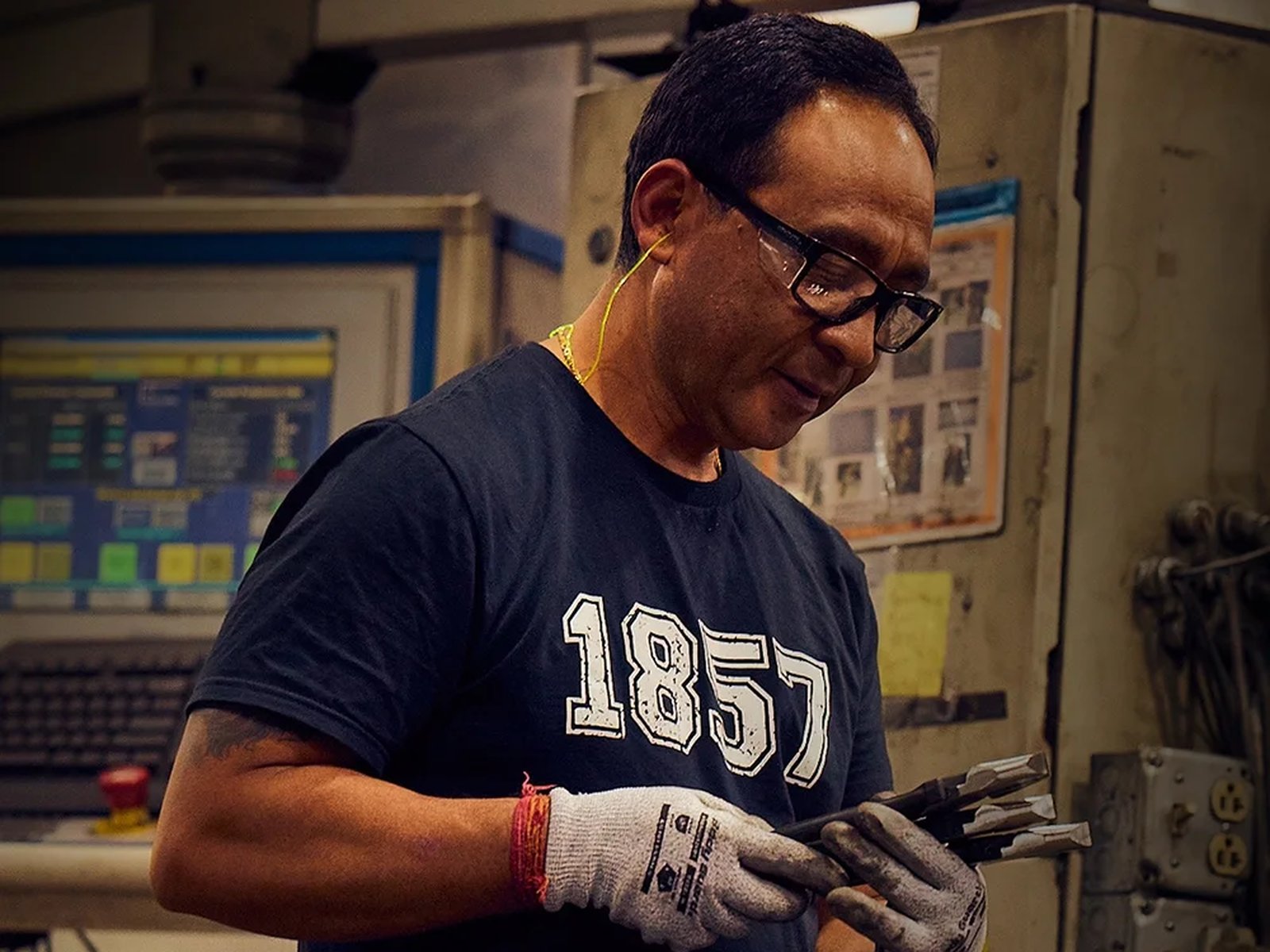
In a basement outside Mifflinburg, Pennsylvania, orange pegboards cover the walls, and on them hang lineman’s pliers sorted by the year they were made. The oldest pairs are stamped “M. Klein & Son.” The company changed that mark to “M. Klein & Sons” in 1897, so their owner, Eric Anstadt, dates anything with the old stamp to before then. Since 1917, Klein has struck a code on its tools that shows the year of production. Anstadt has a pair for every year but four.
Anstadt, an electrician who now teaches at Pennsylvania College of Technology, owns about 800 pairs. He bought his first Klein tools in 2006 as a 28-year-old freshman. “I had never heard of Klein before,” he said in a 2025 profile in Penn College Magazine. “I liked the way the tools felt in my hand. You get used to how the handle feels, and if you switch to another company, the tools don’t feel the same.”
Every pair on that wall came from the same family. Klein Tools, based in Lincolnshire, Illinois, has been owned and run by descendants of its founder, Mathias Klein, since 1857, and the family is now into its sixth generation at the company. The family has held on by staying close to the people who carry its tools, and by making some hard choices about where and how to sell and build them.
Mathias Klein was a German immigrant who set up a forge shop in downtown Chicago in 1857. According to the company’s history, his first tool was half of a pair of pliers. A telegraph lineman brought in a broken pair of side-cutters. Klein forged and finished a new half, riveted it to the old one, and the lineman left. When he came back, the other original half had broken. Klein forged that half too, and the result was the first complete pair of Klein pliers.
After the Chicago fire of 1871, Klein’s forge was one of the few available to make wrought-iron fixtures for the rebuilding city, according to the International Lineman’s Museum. The firm, by then Mathias Klein & Sons, turned to hand tools in the 1890s. In 1900 it was listed in the Chicago phone book as a maker of linemen’s tools, and it printed its first catalog that year. By the 1910s it offered more than 100 types and sizes of pliers.
The tie to linemen held. When the International Lineman’s Hall of Fame named its first class, Mathias Klein was in it, alongside Thomas Edison. “He would be proud that Klein Tools has diligently continued his work in providing quality hand tools for linemen,” Mathias A. Klein III, then the company’s chairman and the founder’s great-great-grandson, said in 2007, as quoted by Plant Engineering. The name also became a word. “So many tradespeople across the country don’t just reach for their side-cutters or Lineman’s pliers in their pouch, they reach for their ‘Kleins,’” Mark Klein, then a co-president, said in a 2021 profile published by The Home Depot.
Mark Klein learned how far that went at a trade show early in his career. An electrician came up to tell him how much he loved the tools, then undid his shirt cuffs to show the Klein logo tattooed on his arm. “That was the first opportunity I had to realize how strong the brand was,” Klein said in 2021, speaking to Canadian Electrical Wholesaler.
Family members have started low. Mark Klein’s first job at the company was as a buyer. Tom Klein Jr. began working summers at the company at 14. “I started off in customer service and then rotated between various departments until I was able to join Klein full time after I graduated college,” he said in a 2019 profile in tED magazine, a trade publication for electrical distributors. He joined full time in 2010 as a product manager, and by 2022 he was the company’s president and chief operating officer. He said he still sat in on customer focus groups when he could and watched recordings of the ones he missed. His advice to younger people in the industry was plain: “Don’t let yourself get separated from your customers.”
Thomas R. Klein, who ran the company as president from 2006 to 2015, was elected chairman in 2015, according to the company. In a 2015 profile published by The Home Depot, Mark Klein said that passing the company down through the family let it focus on long-term goals. Mathias Klein III spoke to the manufacturing side in the same piece. “We like to be involved in the process and it’s our first choice to manufacture here,” he said.
Keeping it here has meant moving it. In December 2011, Klein said it would close its plants in Skokie and Roselle, Illinois, and move the work to Mansfield, Texas, between Fort Worth and Dallas. The Skokie plant had run for 60 years and had once been the company’s headquarters. About 200 people worked at the two sites, and the company said it hoped many would accept transfers, NBC Chicago reported. Klein said it would stay in Lincolnshire and in Elk Grove Village, where it forges tool steel.
When Klein opened a heat-treating plant in Mansfield in 2014, family members cut the ceremonial ribbon, which was a Klein fish tape, according to Contractor Supply magazine. In the company’s announcement that day, Thomas R. Klein said that Klein had made tools in America since 1857 and that keeping that tradition mattered as much now as it had more than 150 years earlier. In 2025 the Mansfield city council approved an agreement for Klein to add a global research and development headquarters and 460,000 square feet of warehouse space there, with 400 new jobs over 10 years, the Fort Worth Report reported. Klein’s list of U.S. plants also includes a leather and canvas shop in Fort Smith, Arkansas, and a cutlery plant in Bolivar, New York.
Big-box retail was its own hard call. “At first, the company resisted,” Mark Klein said of the first approach from The Home Depot, in the 2021 profile. “We were reluctant to do anything that would disturb our traditional distributor relationships.” The company decided that professional tradespeople were already shopping there, and in 2009 it signed an exclusive deal with the chain. In 2023 Klein announced a partnership with Lowe’s that put its hand tools and test meters in that chain’s stores.
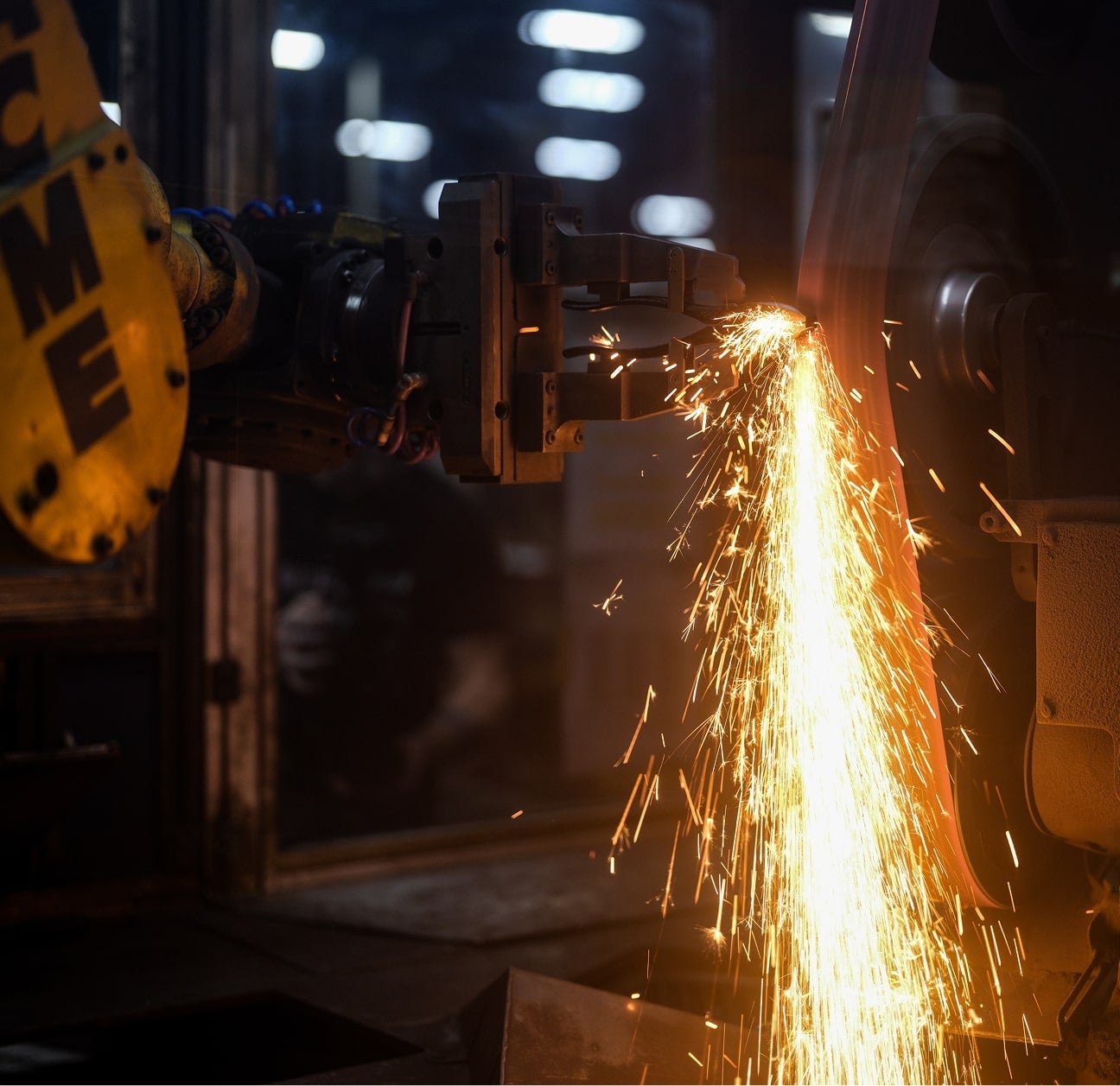
The work on the factory floor is measured in small numbers. The variation from one pair of Klein pliers to the next is about the thickness of a sheet of paper, Mark Klein said in 2020, speaking to IndustryWeek, and the company makes tens of thousands of tools a day. “As a hand-tool manufacturer, we rely heavily on a human touch to ensure the right hand feel for our tools,” he said.
That hand feel is what drew Anstadt in. He once drove to southern Ontario and back in a day to buy limited-edition Klein pliers sold only at one Canadian chain. The border agent asked why anyone would cross the border just for pliers, he told Penn College Magazine. “This is the only place you can get them,” he told her.