From a railroad car to a Borneo trailer, five generations of Bechtel
The builder behind Hoover Dam and the Channel Tunnel has had five generations of family leaders, two of whom spent childhood years at its job sites.
Reston, VA
Stephen Davison Bechtel spent much of his boyhood in a railroad car. His father, Warren A. Bechtel, was a builder. The family moved to Oakland, California, but the boy spent much of his youth in construction camps, living with his parents in the car at railroad job sites, the Los Angeles Times reported when he died in 1989.
Generations later another Bechtel child had his own first stint in a company camp. Brendan Bechtel lived in a trailer in the jungle on Borneo while his father worked as a supervisor on a liquefied natural gas plant. Fortune recounted the detail in 2016, the year he became chief executive. He was 3.
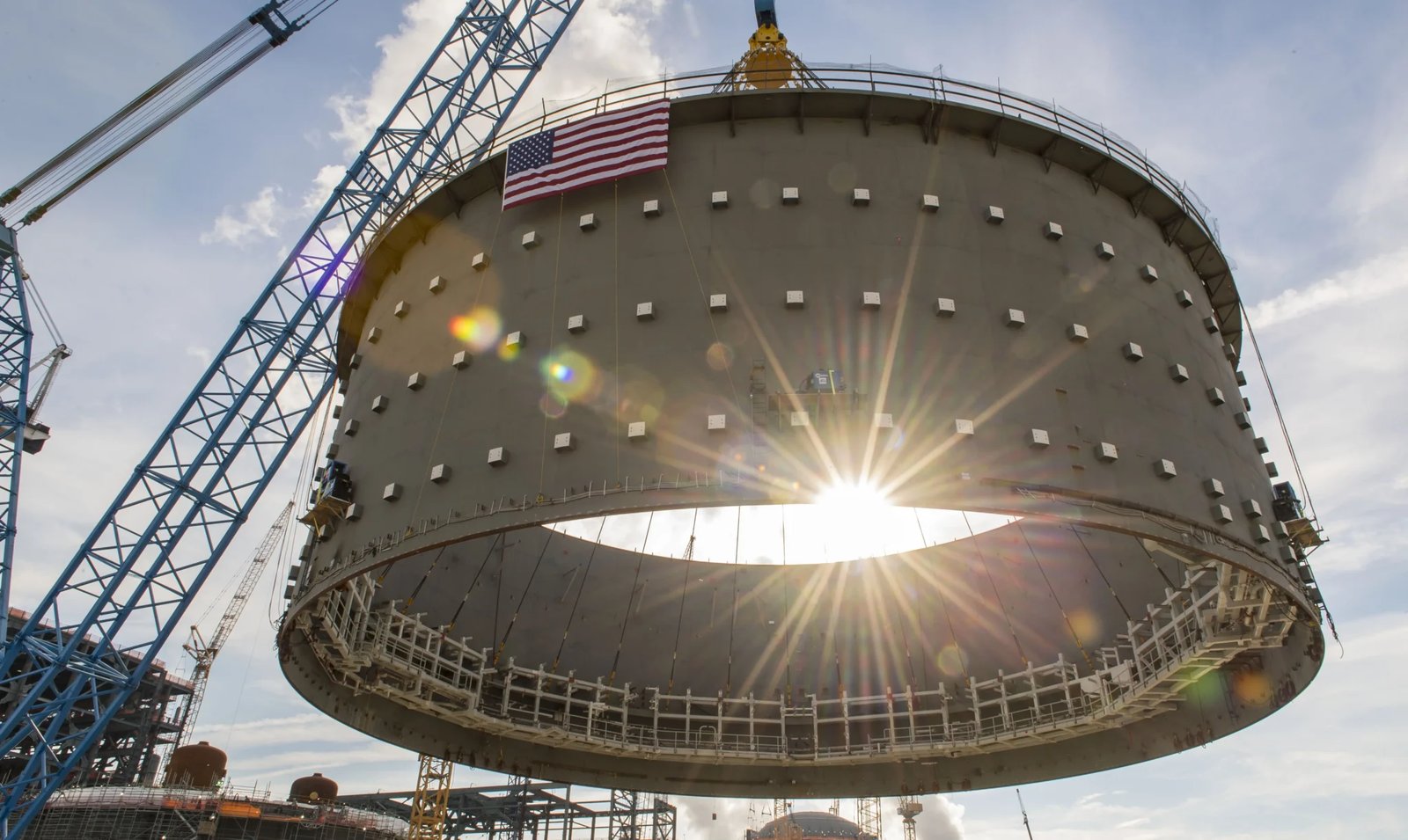
Warren Bechtel started the business in 1898. Over the next century it helped build Hoover Dam, part of the San Francisco-Oakland Bay Bridge, the first large-scale nuclear power station to go into operation and the Channel Tunnel between Britain and France. Bechtel is privately held, and five generations of the family have led it. Brendan is the fifth.
What stands out in the record is how often those leaders learned the work up close, in camps and on project sites, before they ran the company.
Stephen was born in Aurora, Indiana, in 1900. He served as a motorcycle dispatch rider with the 20th Army Engineers in France during World War I, then enrolled at the University of California, Berkeley. At 19 he quit school and joined the family business alongside his brothers, Warren Jr. and Kenneth. “Dad needed us in the business,” he explained later, the Los Angeles Times reported in 1989.
In 1925 his father formed the W. A. Bechtel Co., one of the largest construction firms in the West. Stephen became a vice president and supervised railroad, building and pipeline construction.
Then came the dam. Warren Bechtel died in 1933 while traveling abroad, at a critical moment. Concrete was being poured for Hoover Dam, then the company’s biggest project, in the Black Canyon of the Colorado River on the Arizona-Nevada border. Bechtel had allied itself with five other companies to build it. Stephen took on a major role in the job, and in 1935 he became president of the company. The dam was finished in 1936.
The work kept coming. In 1934 and 1935 he served as vice president of Bridge Builders Inc., which was set up to build part of the Bay Bridge. With a school friend, John A. McCone, who later headed the CIA, he formed the Bechtel-McCone Corp. to design and build chemical plants and petroleum refineries. World War II pulled him into shipbuilding. He helped form the California Shipbuilding Corp. and the Marineship Corp., which built more than 460 freighters and about 90 tankers.
After the war the jobs went farther afield: pipelines in Canada and Saudi Arabia, one of the world’s largest refineries in Aden, a power plant at Joppa, Illinois, a mining project in the Venezuelan jungle. The company was one of the developers of the boiling water nuclear reactor. It did much of the early engineering for the Atomic Energy Commission and built its Experimental Breeder Reactor No. 1 at Arco, Idaho, in the late 1940s. In the 1950s it built the Dresden Power Station in Illinois.
His philosophy, as the Los Angeles Times put it in his obituary, was “We’ll build anything for anybody, no matter what the location, type or size.”
He ran a large organization by then, but the field never left him. Fortune described him in the early 1950s as “a practical contractor who knows the work in the field as well as any man in the crew,” the Times noted. One of his customers told the magazine, “For a run-of-the-mill job, I’ll … give (it) to the lowest bidder. But for something that requires dreaming and imagination, Bechtel’s my man.”
In 1960 Stephen handed the presidency to his son, Stephen Jr. He retired as chairman in 1965 but stayed active. When he was 84, he helped set up a joint engineering venture in China.
Stephen Jr. led the company for three decades. In that time it grew from an already sprawling operation into an international giant, with projects that included the Channel Tunnel and Jubail Industrial City in Saudi Arabia, according to his 2021 obituary in The Washington Post. He died at his home in San Francisco at 95.
His son Riley was born in San Francisco in 1952. He did not head straight into the family firm. He earned bachelor’s degrees in political science and psychology at the University of California, Davis, then an MBA and a law degree from Stanford University in 1979, and went to work as an associate attorney at the law firm Thelen, Marrin, Johnson & Bridges. He joined Bechtel in 1981 and worked on projects in Michigan, Indonesia, New Zealand and the United Kingdom before succeeding his father as chief executive in 1990. He presided over the expansion of Hong Kong International Airport, the modernization of the Athens subway system and the building of the Tacoma Narrows Bridge in Washington State. He stepped down as chief executive in 2014.
Brendan, Riley’s son, took a longer road back to the company than the trailer on Borneo might suggest. He worked for Bechtel during school breaks in high school. He studied geography at Middlebury College, with a minor in environmental studies, and spent two years at a conservation nonprofit. Then he went to Stanford for two master’s degrees, an MBA and a master’s in construction engineering and management, and rejoined the company.
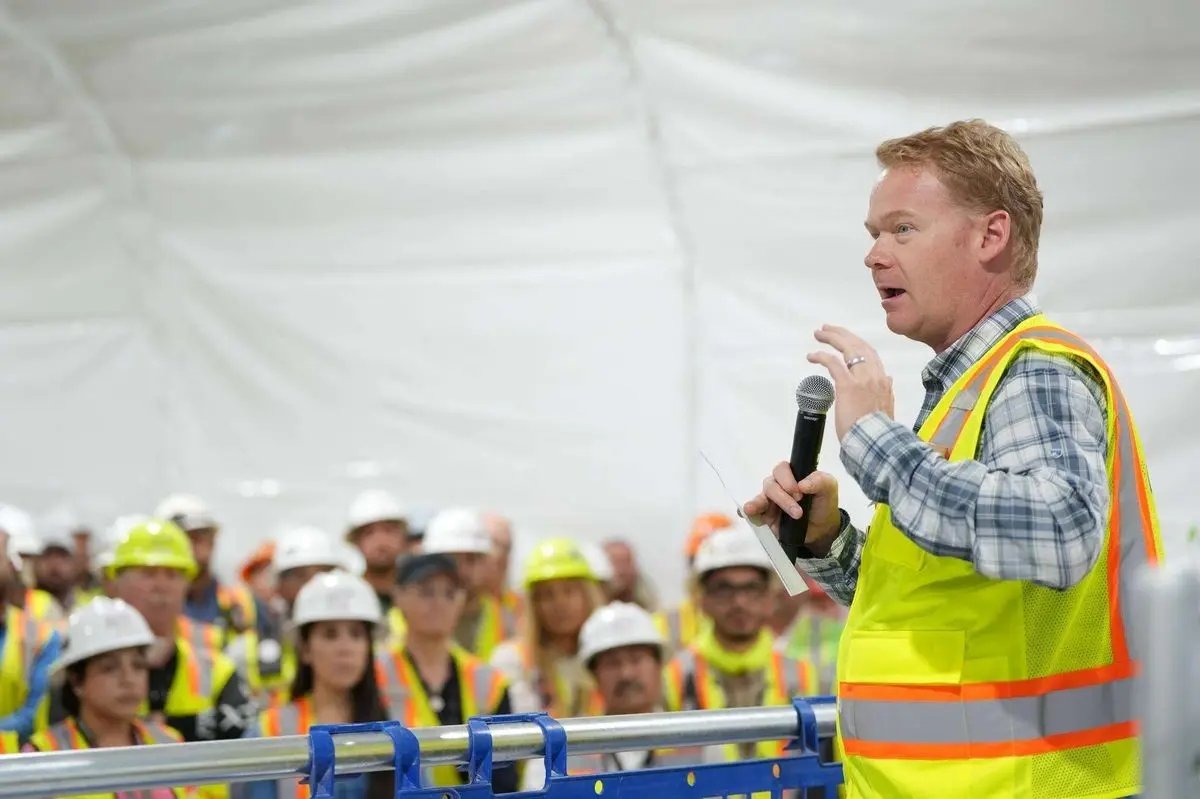
His early jobs were on projects: energy, infrastructure and power work in North America, Australia and Africa, with duties that ran from safety and field engineering to construction supervision and project management. He led the company’s liquefied natural gas business line, then served as president of its global energy business. From 2014 to 2016 he was president and chief operating officer. He became chief executive in 2016, at 35, and chairman in 2017. Fortune noted at the time that he was taking over amid a collapse in commodities prices and new competition from Chinese contractors.
The work his generation inherited still happens in hard country. In Chile, Bechtel helped build the second phase of Teck’s Quebrada Blanca copper mine, which was inaugurated in 2023. Every facility was built at once, from the mine to the port, along 165 kilometers and at altitudes of up to 4,400 meters. The job included a concentrator with capacity to process 140,000 tonnes a day, a new port and a desalination plant, all connected by pipelines for copper concentrate and desalinated water.
That plant made the mine the first in Chile’s Tarapacá Region to run on desalinated water at large scale instead of fresh water.