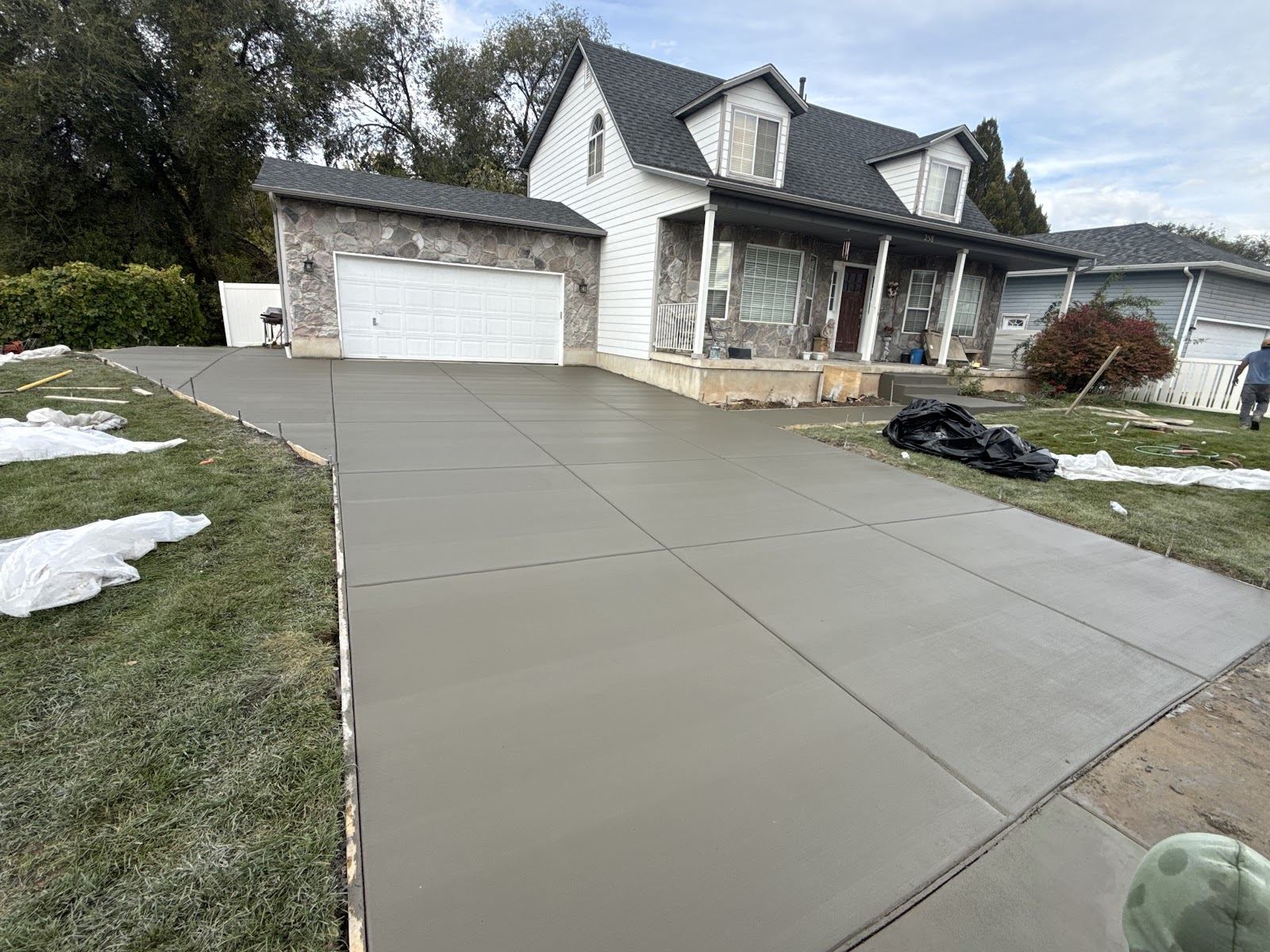
Dan Williams still remembers the job where he could find nothing to blame on his crew.
The ground was compacted. The base was in. The rebar was in. Then a little spider crack ran off one corner of the slab. “There’s nothing we could have done better on this job,” Williams says.
He owns Utah’s Concrete Pros in Bluffdale, and he decided the problem was not in the ground. It was in the concrete. Williams says Utah now regulates how much fly ash can go into a mix. Fly ash makes concrete harder, he explains, but it is expensive and hard to get, so suppliers moved to a substitute. No matter how well his crews prepped a site, they started finding small cracks coming off the corners.
He called the supplier, which he refers to as Geneva. “This is a mud thing, it’s not a prep thing,” Williams says he told them. The supplier put him in touch with its chemist, and the two worked out products to add to the mix. One is a densifier. The other prevents dry shrinkage. “I pay for it,” Williams says. “I don’t charge customers for it.”
When a crack shows up, he points out, the customer does not call the supplier. “As far as they’re concerned, you’re the concrete guy,” he says. On one job a crack appeared within a week, from dry shrinkage. He calls it minimal, but “I think people just freak out about it.” His crew went back, ground the crack out and filled it. “It was just a pain in the butt,” he says.
The FAQ on the company’s site takes a blunt line on the subject. It promises the concrete will crack eventually, because concrete does, and says the crew’s methods are about controlling where.
The rest of the recipe is a run of choices that cost more or take longer. Williams says the crew pours on state-spec road base rather than plain gravel. It uses fiberglass rebar instead of steel, so nothing rusts or rots out. It adds a microfiber to the load, which he describes as “a bunch of loose hairs” poured in and turned through the mix.
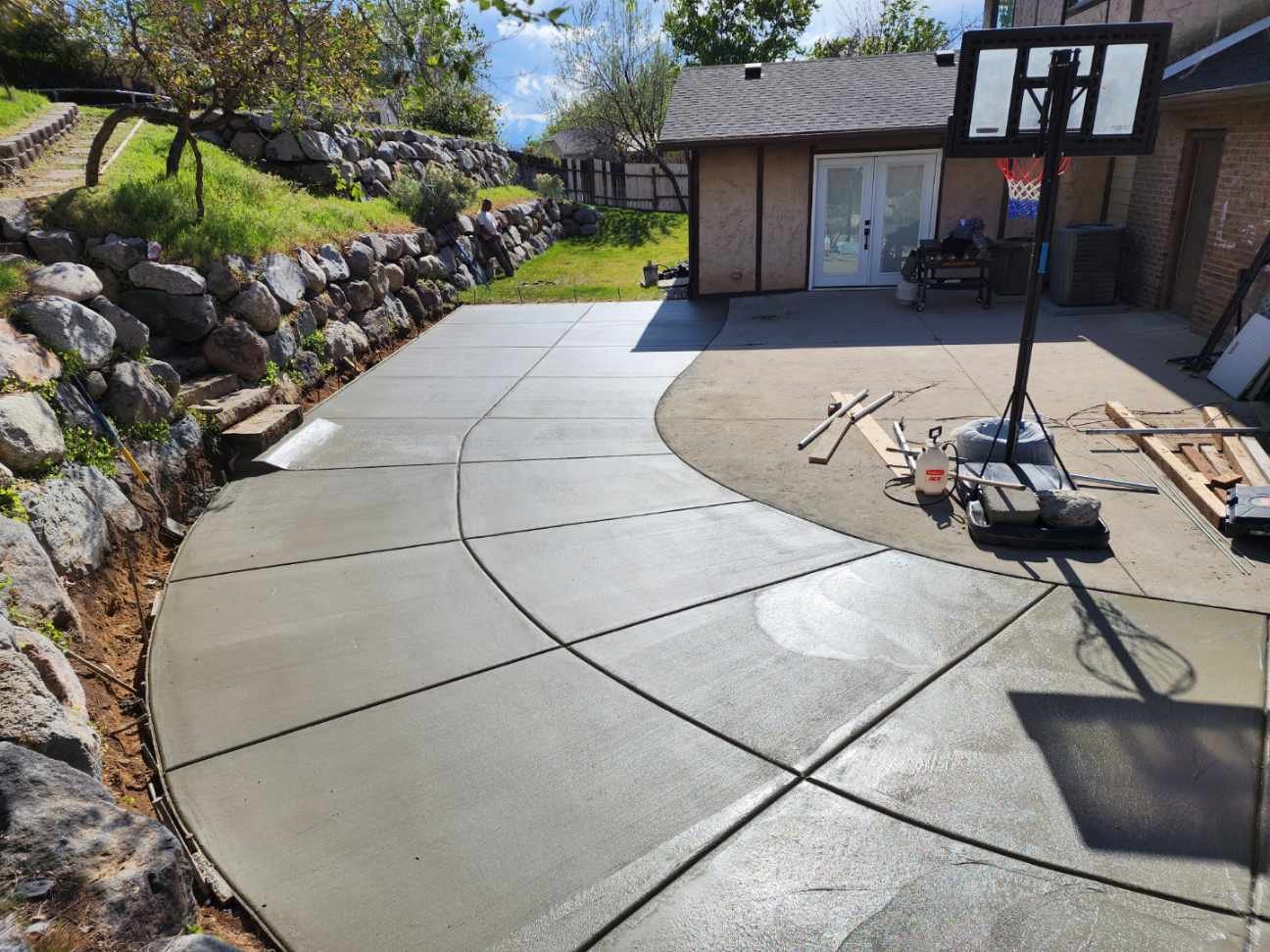
A laser sets the grade and the slopes. After the pour, the crew goes back along the slab with grinders and opens up the joints, so no board marks are left behind.
He is picky about who is on his job sites. The company owns its equipment, including a dump truck, and Williams says his crew is full-time. He does not bring in day laborers for the pour. He is on site himself and says he touches each job two or three times a day: out in the morning to get it started, off to a bid, back in the evening to look it over. He still catches things. A corner that could be rounded. A slope that could run a little differently. “Those are the details that a customer comes out and they’re like, ‘Dang, I didn’t expect that, but it looks really good,’” he says.
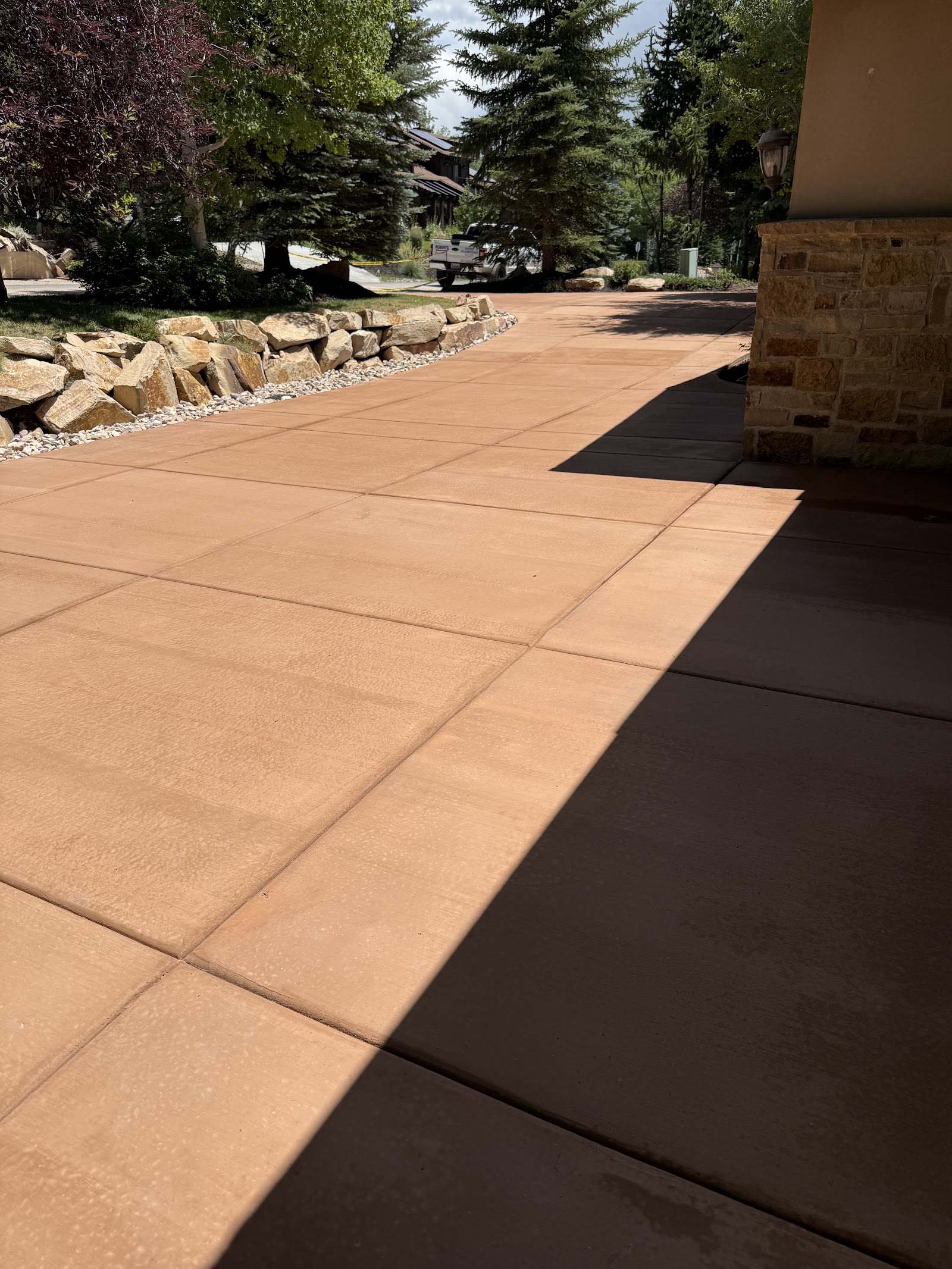
His crew knows the standard. “I don’t care if it’s stamp color or just a broom driveway,” Williams says. “I want the word wow to come out of their mouth.” He tells them the work carries their names, too. “Let’s look at what we do as art,” he says.
Williams came to concrete sideways. He started a landscaping company while in college, and backyard customers kept asking for fire pits, patios and sidewalks along with their sprinklers. He looked hard at those jobs, decided the company would do better sticking to concrete, and made the jump.
Now the crews work from Layton to Provo and up to Park City, Midway and Heber. One job took them to Preston, Idaho, to pour a pool deck. They also build heated driveways and pickleball courts.
The courts are post-tension slabs, with cables about an inch thick running all the way through. Williams says the crew tightens them with a drill about 24 hours after the pour, then comes back and tightens them again after seven days. The tension changes how the ball bounces, he says. It also means a crack that shows up later can be pulled shut. Hook the drill to the cables and tighten, Williams says, and “it just disappears completely. You can’t even see it.”