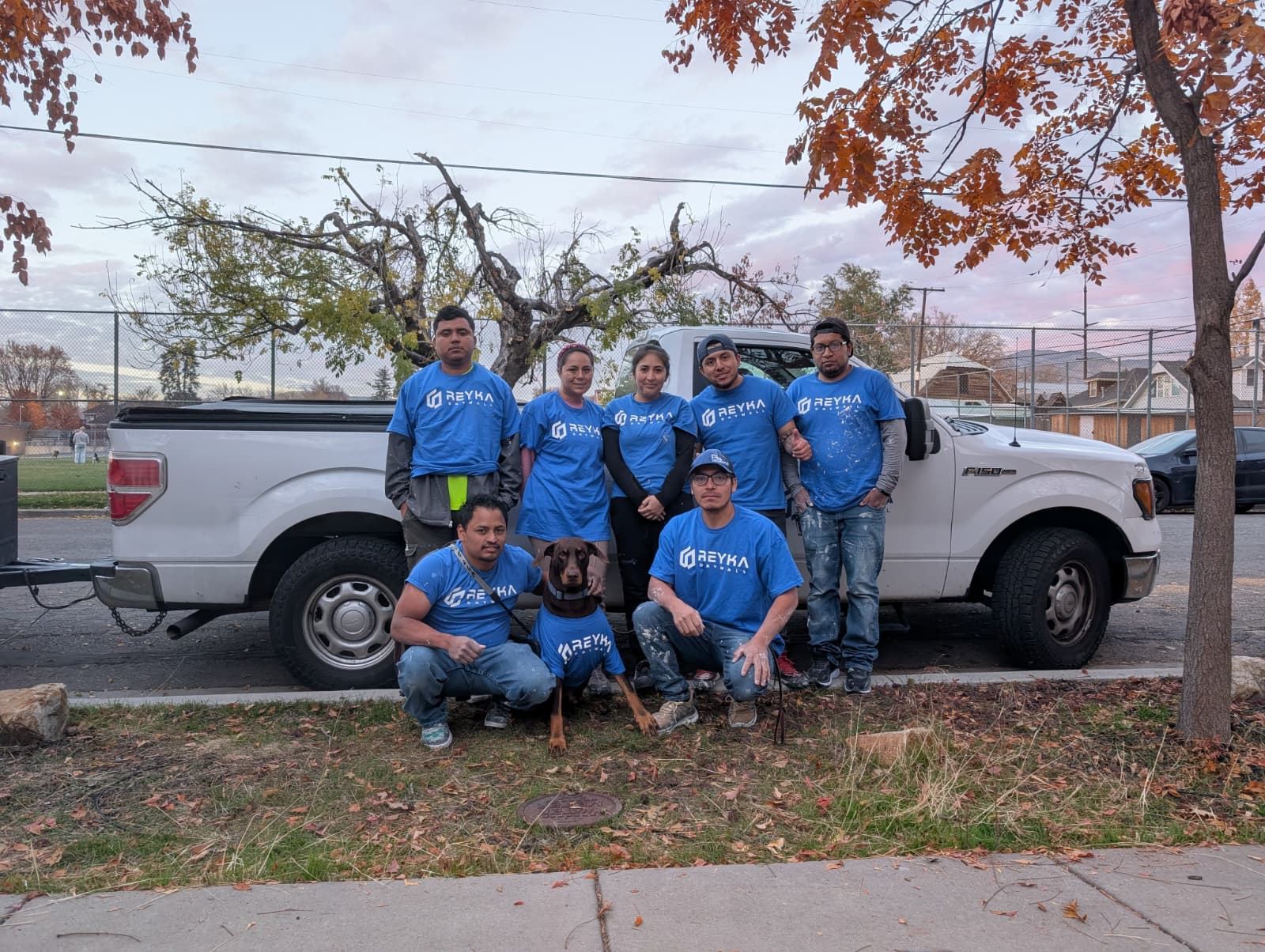
Reyka Drywall runs on a 15-minute rule, and Katelyn is the one who enforces it.
“We give ourselves a 15-minute window,” says Katelyn, who owns the Salt Lake City company with her husband, Nelson. “If we’re going to be more than 15 minutes late, someone needs to let me know so that I can tell the client that we’re going to be more than 15 minutes late, and if they don’t, that’s a big problem.”
The clock starts on the morning of a job, when she gives the customer a window of 15 to 30 minutes for the crew’s arrival. If nobody turns up inside it, she gets in touch. “If we don’t show up in that time, I’m calling them, I’m sending them a text,” she says. “That’s just how it is.”
She says the company has never stood up a customer. “We’ve never no-showed a customer. That’s never happened, ever.” She does not pretend the schedule is always hers to command. “I don’t like when people show up late, but sometimes it’s just not entirely within your control what time people show up to work,” she says. “But we try to do our best to make sure the clients are in the loop as to what’s going on and why.”
Her reasoning starts with how a job begins. Unless someone has walked the site beforehand, the crew’s arrival is the first time a customer meets the company in person. Everything before that is phone calls. On residential jobs, she notes, homeowners often take the day off work or come home at lunch to meet the crew. Promise 9 o’clock and show up at 10, she says, and “that’s a bad foot to start off on.”

“It’s a respect thing,” she says.
The rule applies inside the company, too. A worker who keeps showing up late hears about it. “If they can’t fix it, then they don’t work here anymore,” Katelyn says.
She makes no claim to a secret method. “Drywall is drywall,” she says. With so many drywall companies around, she figures the difference lies in the things around the work, like communication and being there when a customer wants to talk. She puts the basic habit plainly: “You always answer your phone.”
Nelson was a drywaller before they started Reyka. The two decided to go out on their own rather than keep working for someone else, and they split the company fifty-fifty. Commercial jobs are what they prefer. “Commercial is our sweet spot,” Katelyn says, listing commercial framing, commercial drywall and acoustical ceilings as the work they like to do. The company also takes residential jobs, basements among them.
After one of those home jobs, the customer said she had always known when the crew would show up, and that before leaving they helped her find a lost knee pad.
Katelyn traces the rule to her own wiring as much as to manners. “I’m kind of type A,” she says. “I get stressed out when stuff doesn’t happen when it’s supposed to be happening.”