
Alan Stoller drove a liquor truck for his family, and on Mondays nobody worked. He filled the open day with plastic strip doors, the flexible curtains that hang over back doors and the openings of walk-in coolers and freezers.
Then a customer asked whether he could replace a steel entry door. Stoller says he said sure, though he wasn’t “quite ready to be equipped.” He found an installer named John and a distributor in Villa Park, and steel entry doors for back entrances became his next line, sold alongside the strip doors. After 12 or 13 years behind the wheel for his father and uncle, he gave up the truck.
The Monday side job is still his trade. It is narrower than the name on the sign suggests. “I do garage doors but I try not to do them because they’re a pain in the butt,” he says.
What his crews do instead is commercial doors. They replace the glass-and-aluminum entry doors at stores like T.J. Maxx, Barnes & Noble and Walmart, and the steel doors at the back of those buildings, the ones for receiving and loading docks. He works FedEx warehouses too. The territory runs across Illinois, Indiana and Wisconsin. Illinois Door has put in a rolling steel door for a T.J. Maxx that measured 17 feet by about 12 feet high.
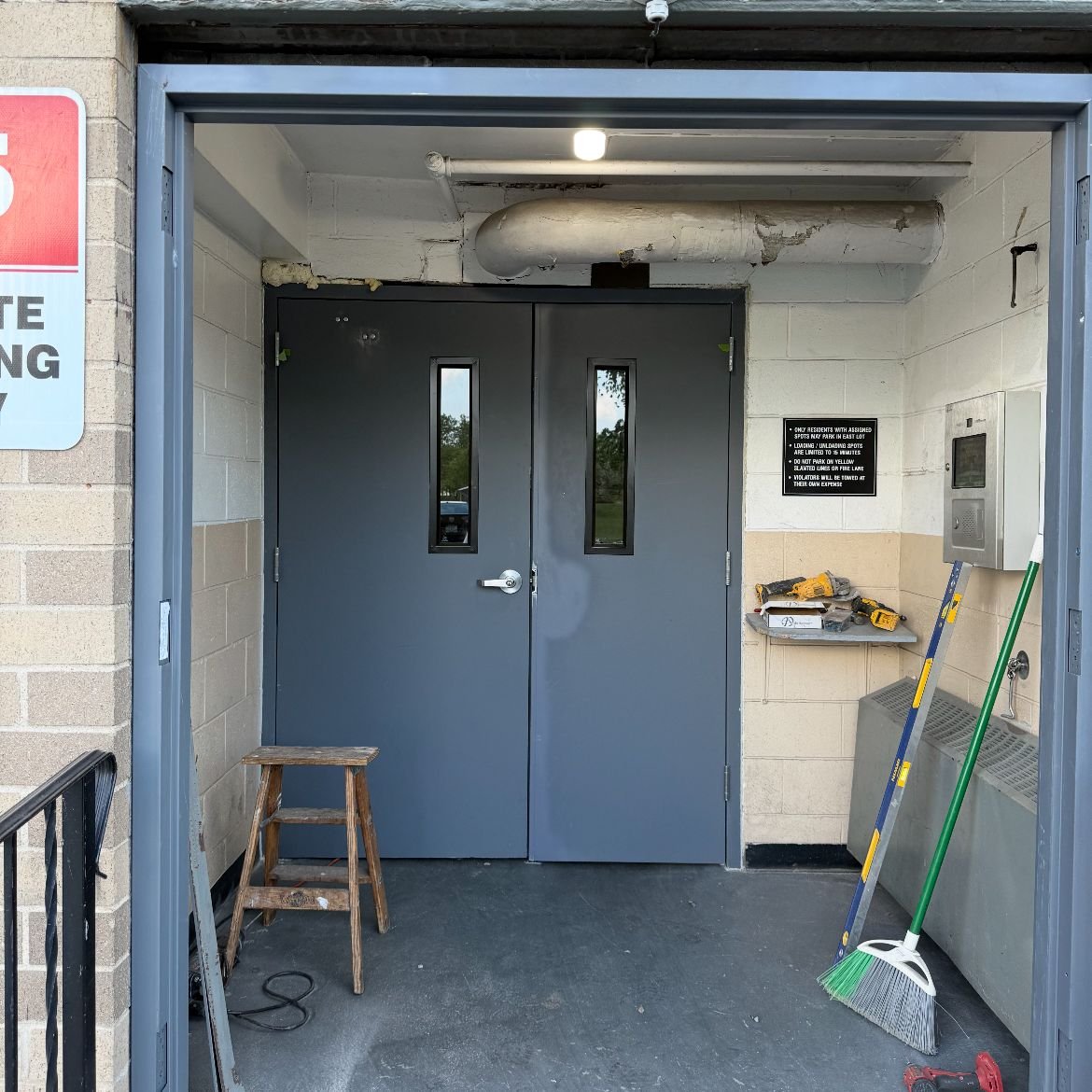
He has a soft spot for the automatic sliding doors that part as you walk into an Office Depot. He installs them and fixes them a lot. “I enjoy doing that stuff,” he says. “It’s kind of fun, actually.”
He will take a commercial garage door now and then, and his crew will stain and hang a residential door for a customer. But he would rather stay out of homes, where one small problem can turn into a bigger one. Commercial work is simpler, he says: “You do the job and when you’re done you get paid and that’s it.”
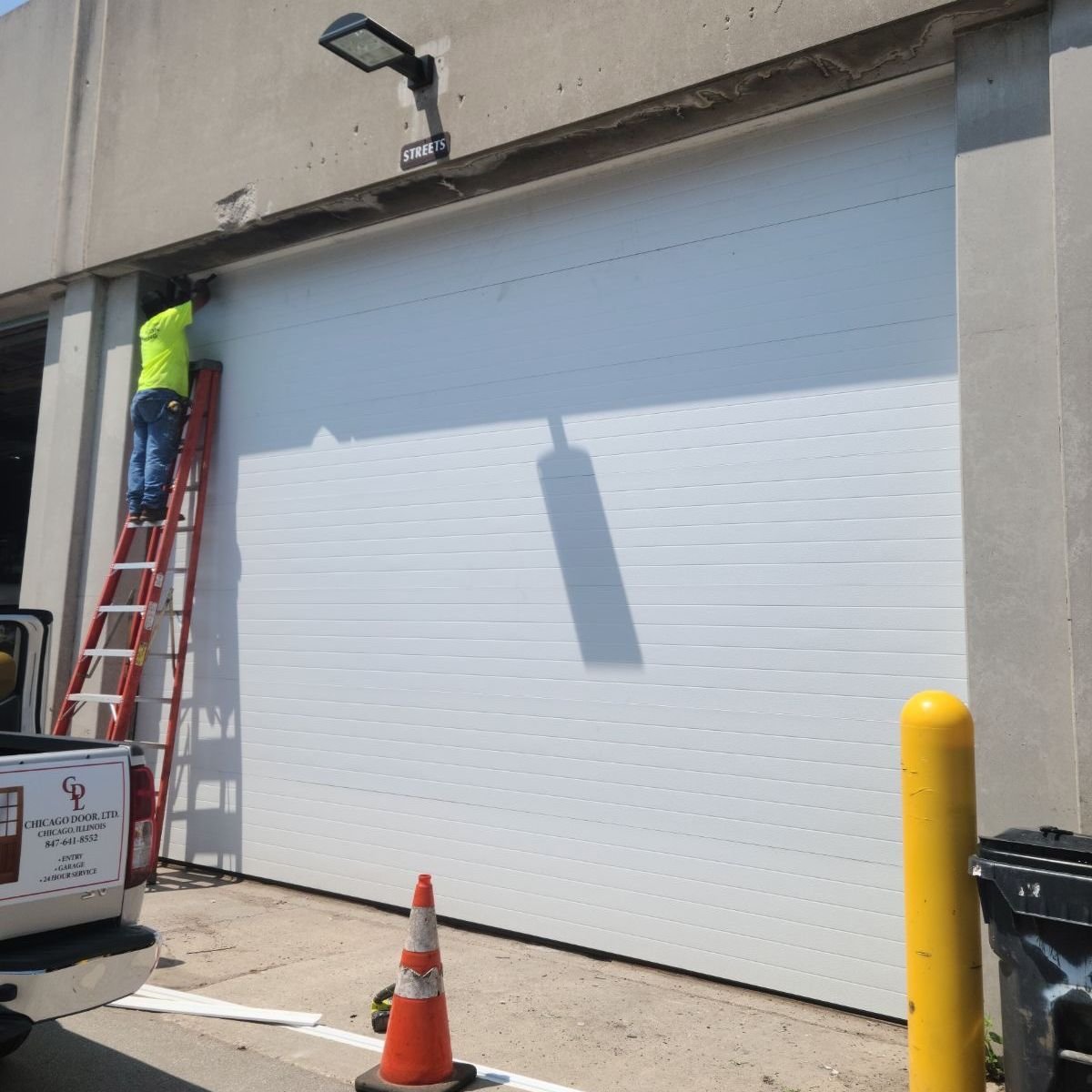
Not every commercial client is a chain. A property manager in Lincolnwood described in a review how the crew replaced a building’s main entry doors, a job that required repairing the transom and custom fabricating both door sections, and then replaced two sets of emergency exit doors.
The company has had more than one life. By 1995 the business, then called Chicago Door, was big, with a whole fleet of trucks and people working for it. Stoller sold it and stayed on with the buyer for about six months. The buyer’s company later went out of business. Stoller started again as Illinois Door and kept Chicago Door as a division.
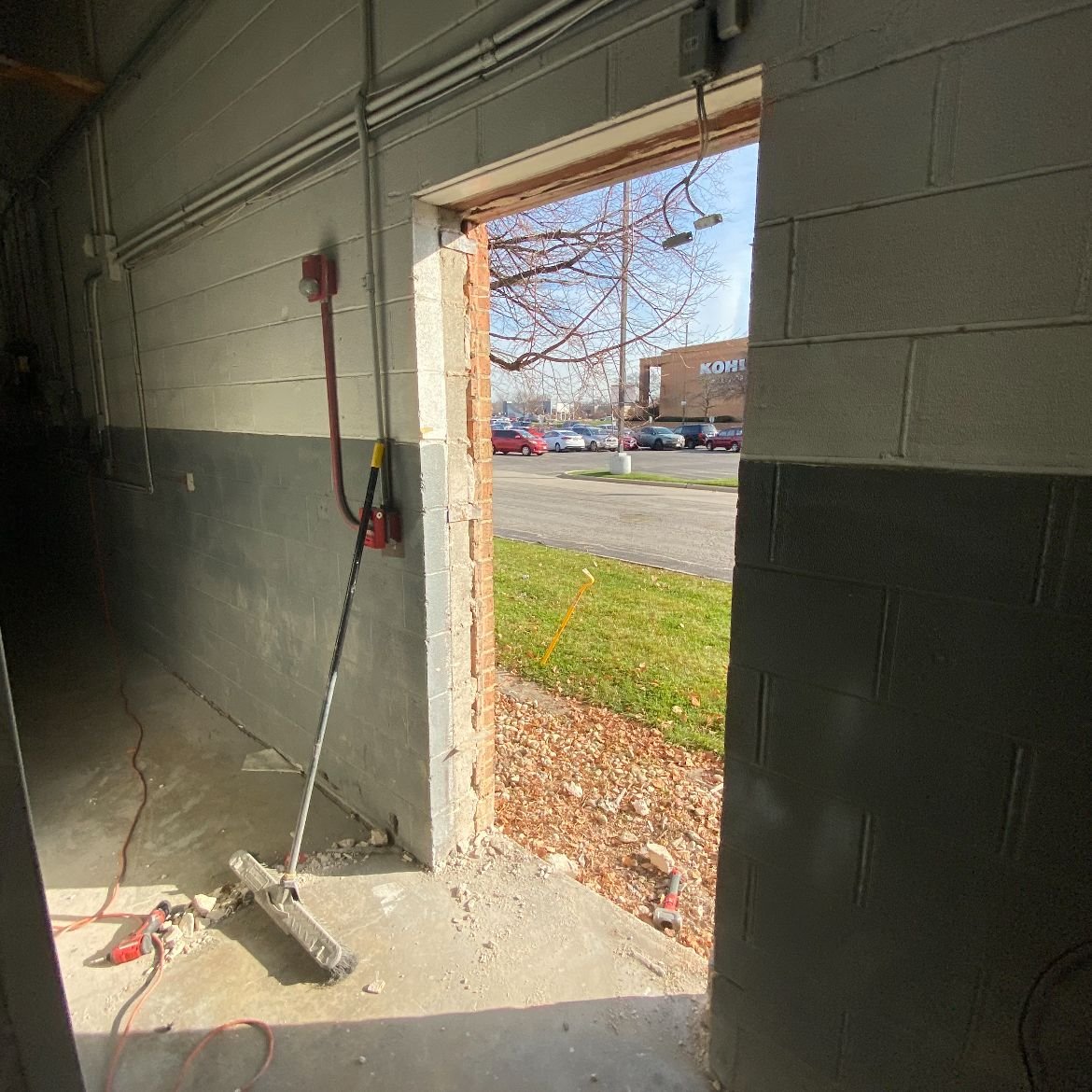
His scheduling habits are plain. If an install is two weeks out, he names a specific day rather than a window. In an emergency, he says, he can have someone out within a couple of hours, or within 24. Weather can move a date. Pulling an old door means running electrical tools outside, and he won’t do that in rain, snow or ice or at five below zero. When that happens, he says, he calls the customer right away and asks to come back in a day or two. “I don’t blow people off and not show up,” he says.
Illinois Door covers its labor for a year, and the door itself for one to two years depending on the type. If a closer breaks two months after an install, he says, the crew goes out and puts on a new one, and they try not to make a big deal of it.
Some jobs run long. Stoller recalls a Walmart job in Centralia, in southern Illinois, where his installer called to say he didn’t have the studs he needed. They finally found a place down there that carried six-inch studs for framing the wall around the doors. The installer had left the night before, and the job was heading toward 15 hours. Stoller says the man wasn’t rattled.
“You’re going to get paid either way, so get it done and move on,” Stoller says he told him.