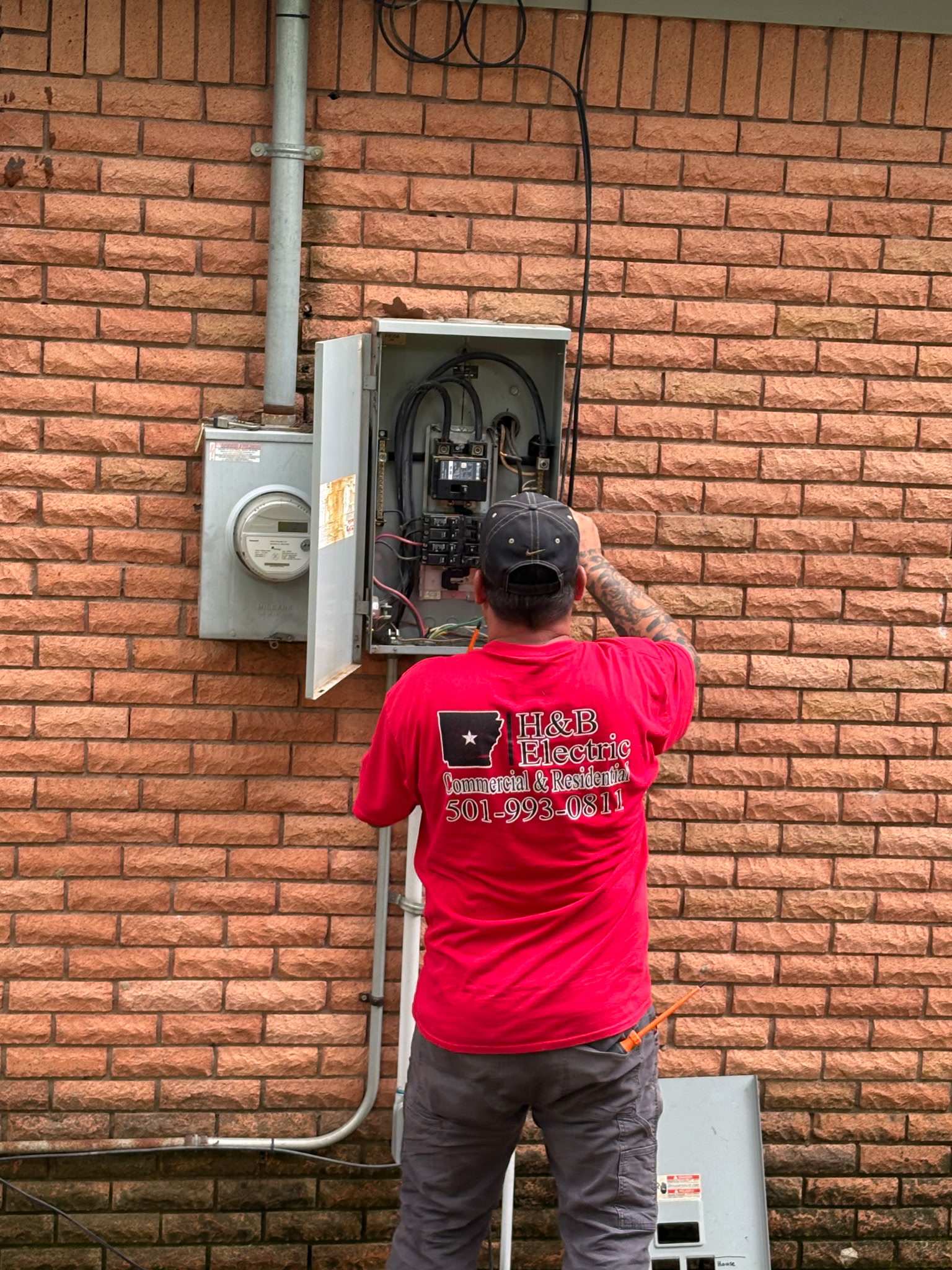
When a job runs a little bigger than another electrical contractor’s crew can handle, that contractor sometimes calls Mike Sims. When Sims has the same problem, he makes the same call in the other direction.
He keeps those arrangements going with a couple of other electrical shops, and a loan usually lasts a week or two. The electrician comes over, does the work and goes back to his own company. Sims says the alternative is to hire a man or two for two or three weeks and then lay them off. He won’t do that.
“I don’t want to put somebody in that position,” he says.
The same thinking runs through how H&B Electric is staffed. Sims owns the company by himself, and its field crew is seven electricians. “I don’t like a turnover rate like that,” he says. If he hires someone and the person works out, he would rather make “a long-term relationship out of this.”
The crew bears that out. One electrician has been with him since the beginning. Two others have stayed about four and a half years, and three more about three. Sims started the company as COVID hit, with one other man. Before that he worked a corporate job that kept him away from his family, and he says he was missing a lot. So he “jumped off the corporate bandwagon” and opened his own shop.
Hiring for the long haul means being picky, and Sims is plain about what he screens for. He has hired people who didn’t work out, he says, because they only wanted to collect a check. “Drawing a paycheck is not what we’re in this for,” he says. He expects his men to want the company to grow, because without that there is no company.
He doesn’t do much of the hands-on work anymore. His days go to bidding jobs, going around to check on them and making sure everything on site is going right. The work splits about evenly between homes and commercial buildings across Central Arkansas.
The office belongs to his two daughters. They answer the phone, handle the invoicing and the email, and talk with the customers who call for service. Sims deals with the contractors and the job sites.
He treats the schedule as a promise. “If we say we’re going to be there, we’re there,” he says. Customers get a target time and a window around it, because traffic never cooperates exactly: say 8:15, and the crew aims to arrive between 7:45 and 8:45. When a job runs long, Sims or a technician calls the next customer in line, so nobody sits home all day waiting.
He recalls a crew headed to a job when a work truck’s transmission gave out. He called the customer himself and offered two choices: wait a couple of hours while another crew was rerouted, or reschedule. The customer chose the next day, and the crew went out then.
Some customers have been with H&B for five years. They still call every two or three months when they have a project around the house, sometimes nothing more than changing out the light fixtures.