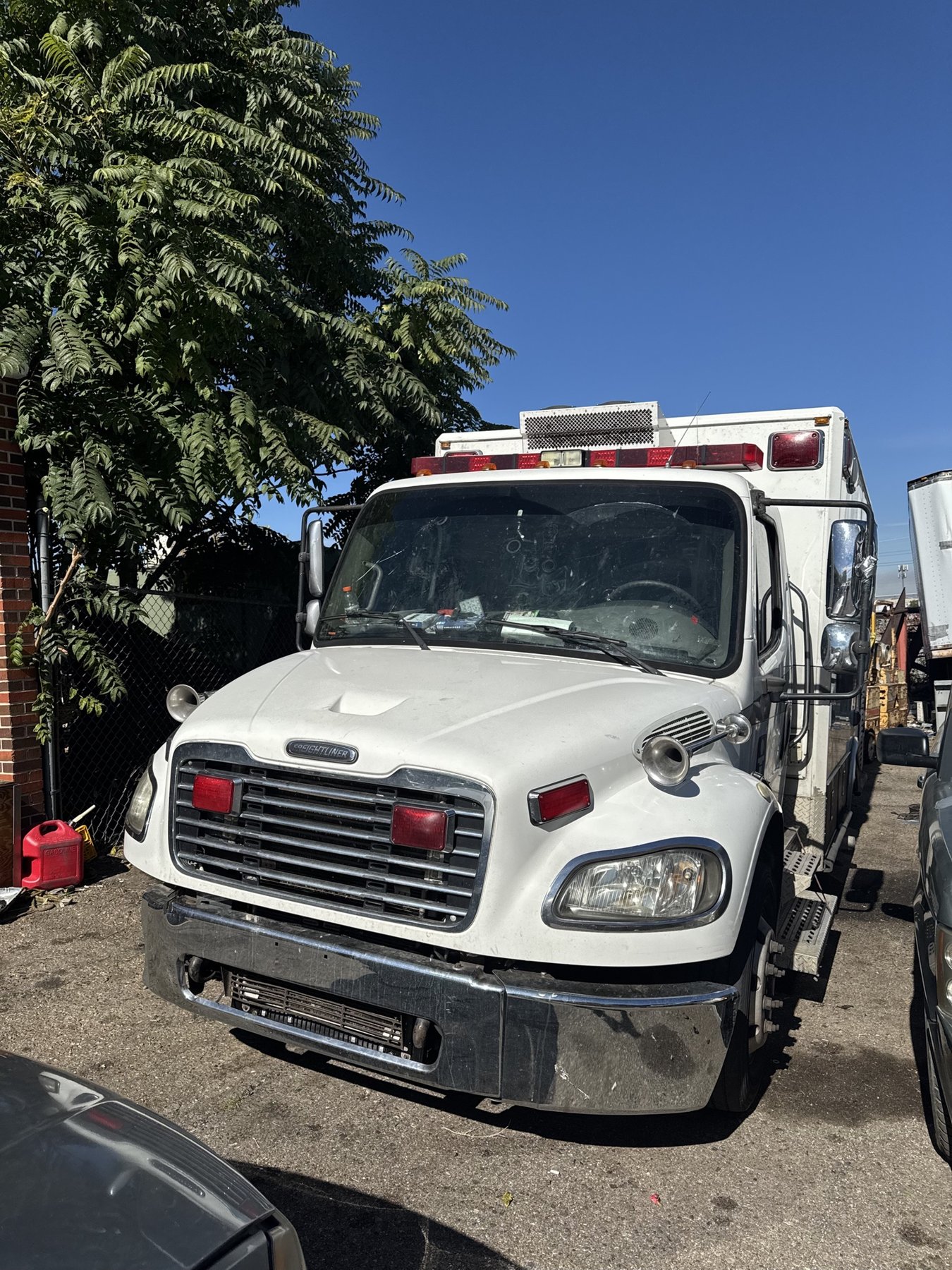
AJ’s service truck is a Freightliner ambulance, and he talks about the work the way a paramedic might. “My service truck is an ambulance, and so we show up, and we save the day,” he says.
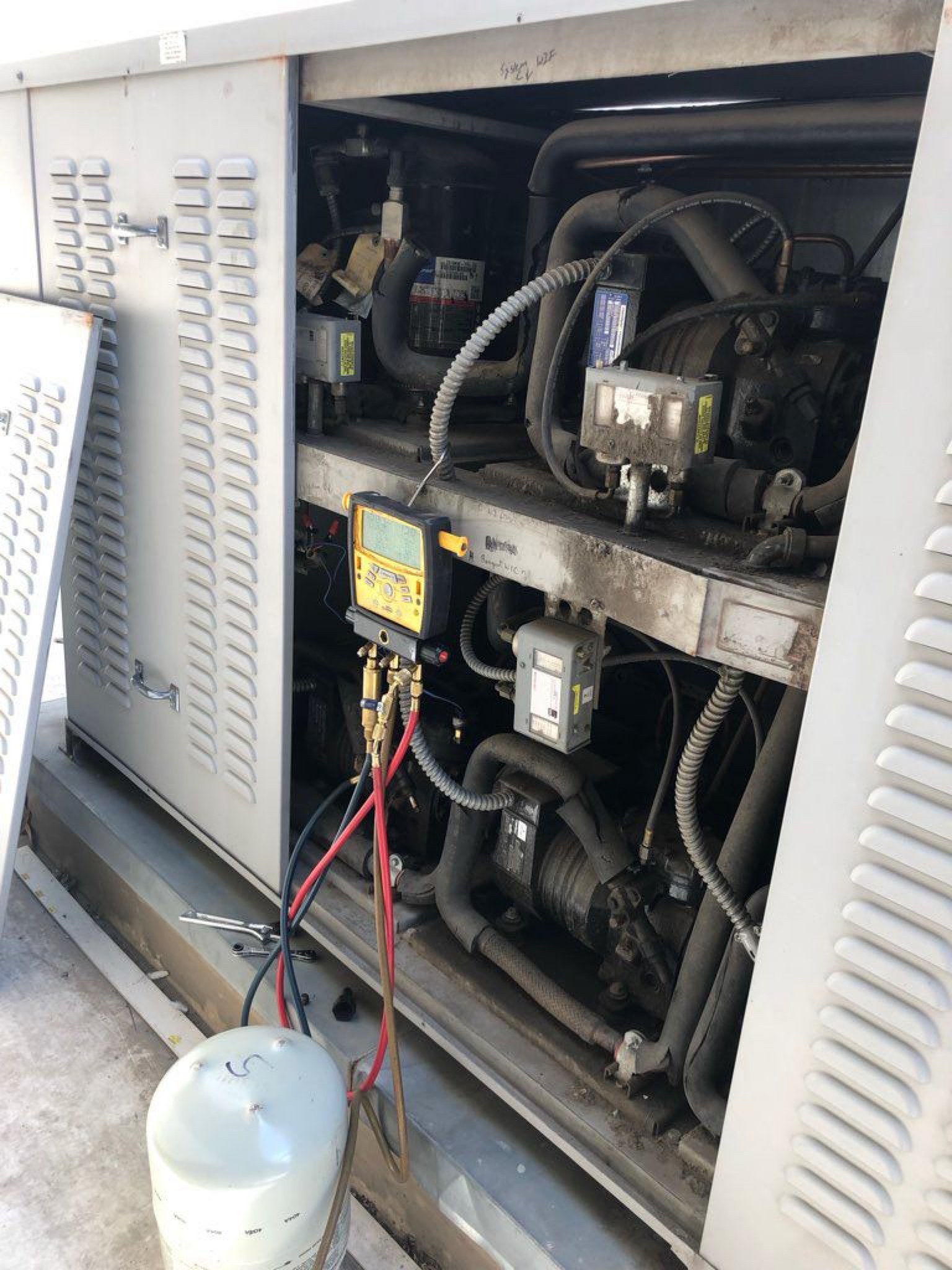
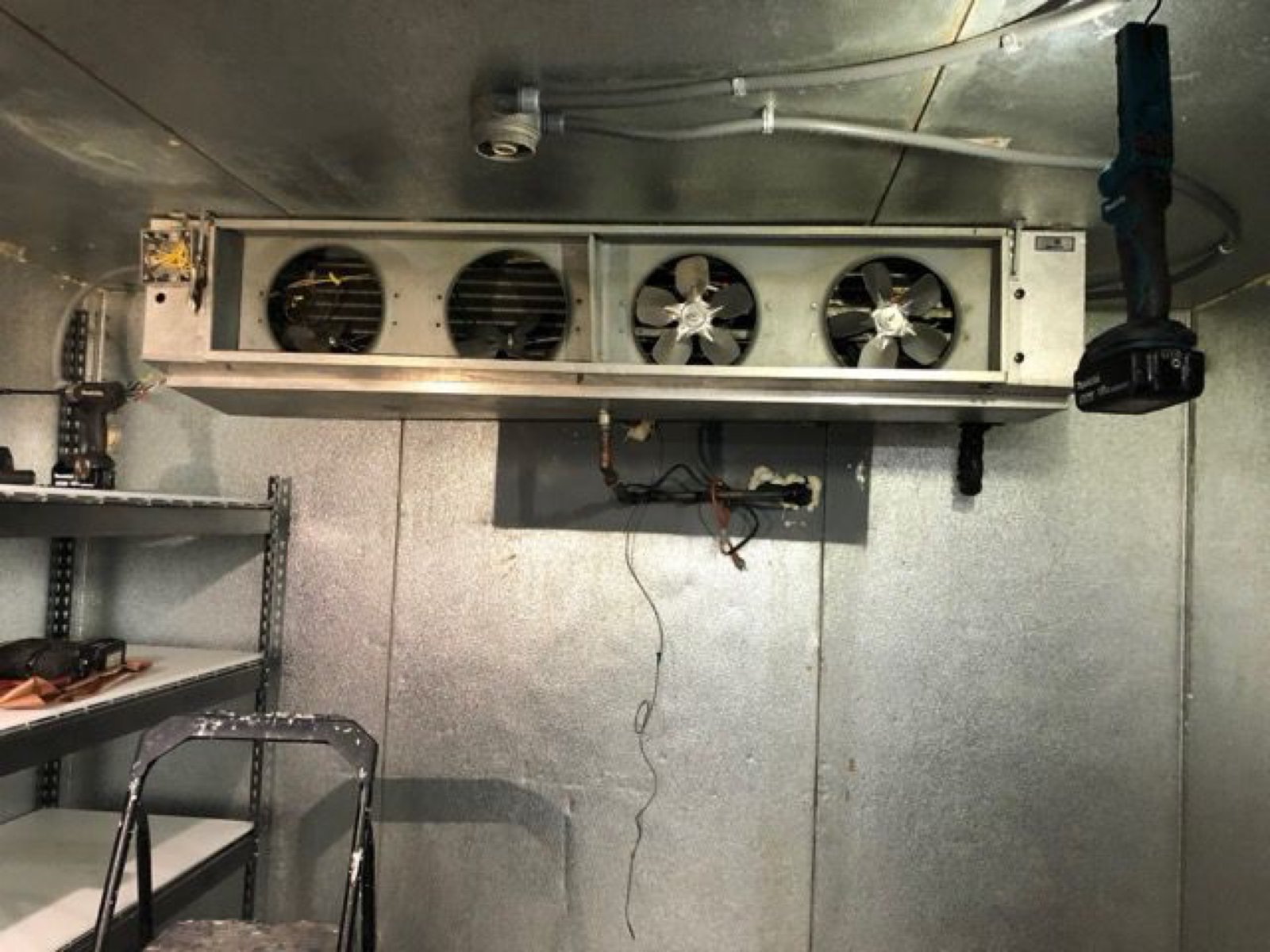
His patients are mostly commercial refrigeration: walk-in coolers and freezers, chillers, ice machines. The Denver business lists hospitals, nursing homes, hotels, restaurants, breweries and grocery stores among the places it serves, and it stays on call around the clock. AJ chose that end of the trade on purpose. Household refrigerators, in his view, are built to break and be thrown out. Commercial equipment is “designed to last 30 years or forever,” so it is worth fixing. He still takes on high-end built-ins, a Sub-Zero or a Monogram, because those are worth saving. An ordinary kitchen fridge usually is not.
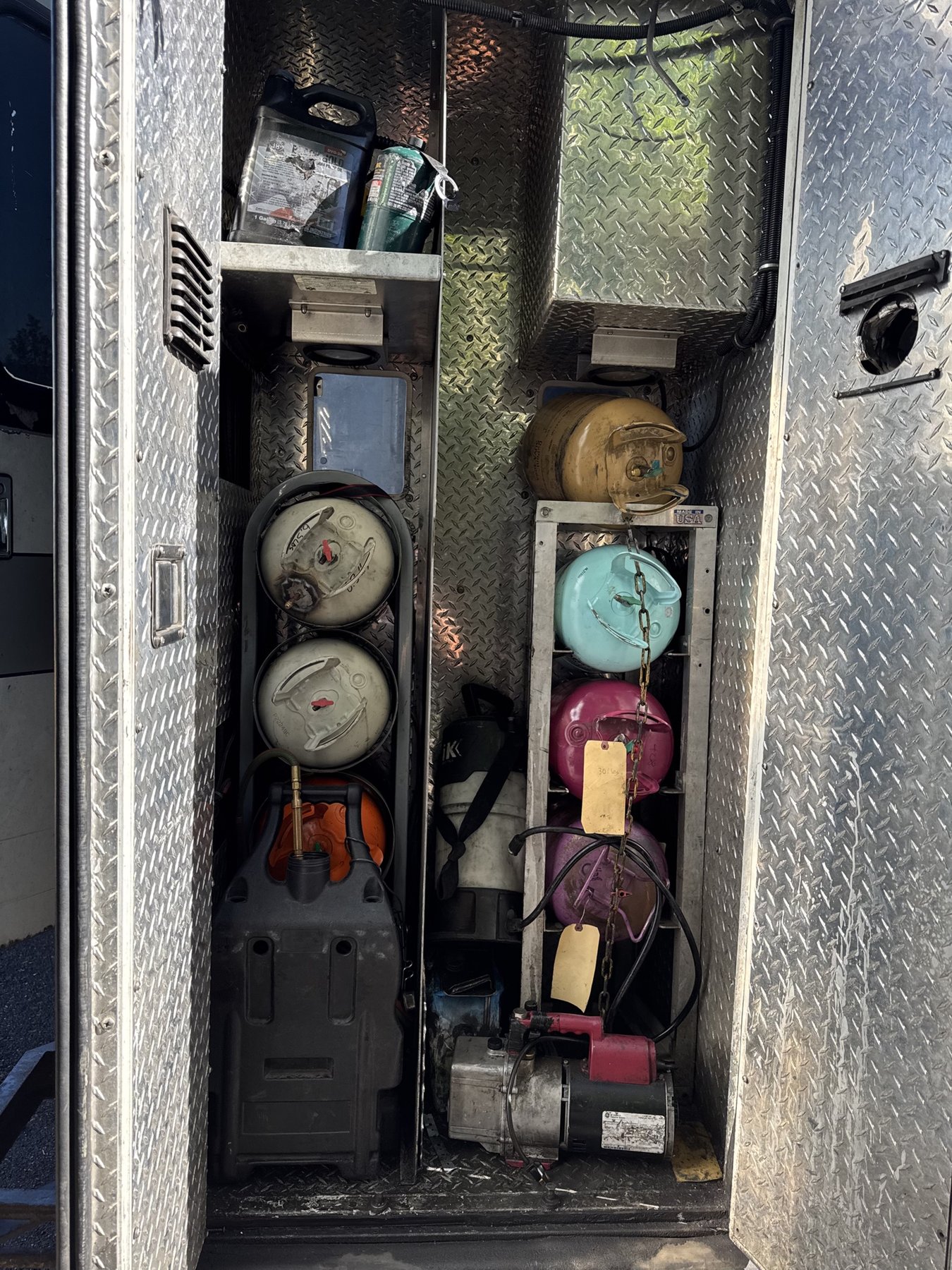
What sets the ambulance apart is what rides inside it. “My service truck is a rolling parts house,” he says. “I have more parts in my vehicle than the most parts houses have.” Motors are on board. He says he stocks every kind of Freon and every kind of part a repair requires. His shop holds more.
The stock is there so the first visit is the only visit. “My business model is we show up and we fix it,” he says. “We have the parts with us, we fix it, and we go to the next job.” On a walk-in that is losing temperature, the diagnosis and the repair happen in the same stop. He is used to going in behind other companies, on equipment that was not diagnosed properly or that they could not repair, and fixing it right.
He learned the trade from the inside of old refrigerators. After dropping out of college, he went to work for his father, whose company bought used refrigerators, refurbished them, cleaned and painted them, and sold them. AJ spent roughly his first decade in the trade fixing those machines by hand, and he counts about 40 years in the work overall.
The refrigerators came from every era. He has repaired units built in the 1930s and ’40s, the kind hauled out of barns, standing on legs with something like a little flying saucer on top. He has watched the machines change into linear compressors with inverters, computer boards and, on some models, cameras. He has worked on yachts, too. “I can fix anything that has refrigeration equipment,” he says.
That background is why he considers air conditioning the easier job. “If you can fix a refrigerator, air conditioners are simple,” he says. The business also does residential and commercial HVAC work, including furnaces and boilers, plus pool heaters. It puts its reach in plain terms: if a machine has Freon in it, from a home fridge to medical equipment to direct-expansion HVAC systems of up to 40 tons, it can be fixed.
AJ worked in Texas and then Florida before moving to Colorado. In Texas he worked alongside people from Mexico, El Salvador, Guatemala, Nicaragua and Honduras. In Florida he worked with people, and had employees, from Cuba, Colombia, Puerto Rico and Chile. He is bilingual and speaks Spanish fluently.
Because nearly every call is an emergency, he treats communication as part of the repair. “I give them a two-hour window, and then when I’m on the way, I text them and I say, ‘Hey, I’m on the way.’ I give them an exact ETA,” he says. He routes the drive through Waze and arrives when he said he would.
Sometimes the truck stays put. A customer recalled in a 2020 review that AJ picked up on a Sunday and talked them through troubleshooting the problem themselves, including vacuuming out the coil, instead of sending someone out.
He warrants his work, he says, and puts equipment back “to factory specs or better.” When a job is finished, he leaves a record of who did it.
“I sign my name. I date it, and I sign it with an ink marker,” he says. “It’s a work of art.”