Before Clopay made garage doors, it sold paper in Cincinnati
Clopay is named for the cloth and paper of its past; its lead in garage doors came from an early bet on steel and a long string of acquisitions.
Mason, OH
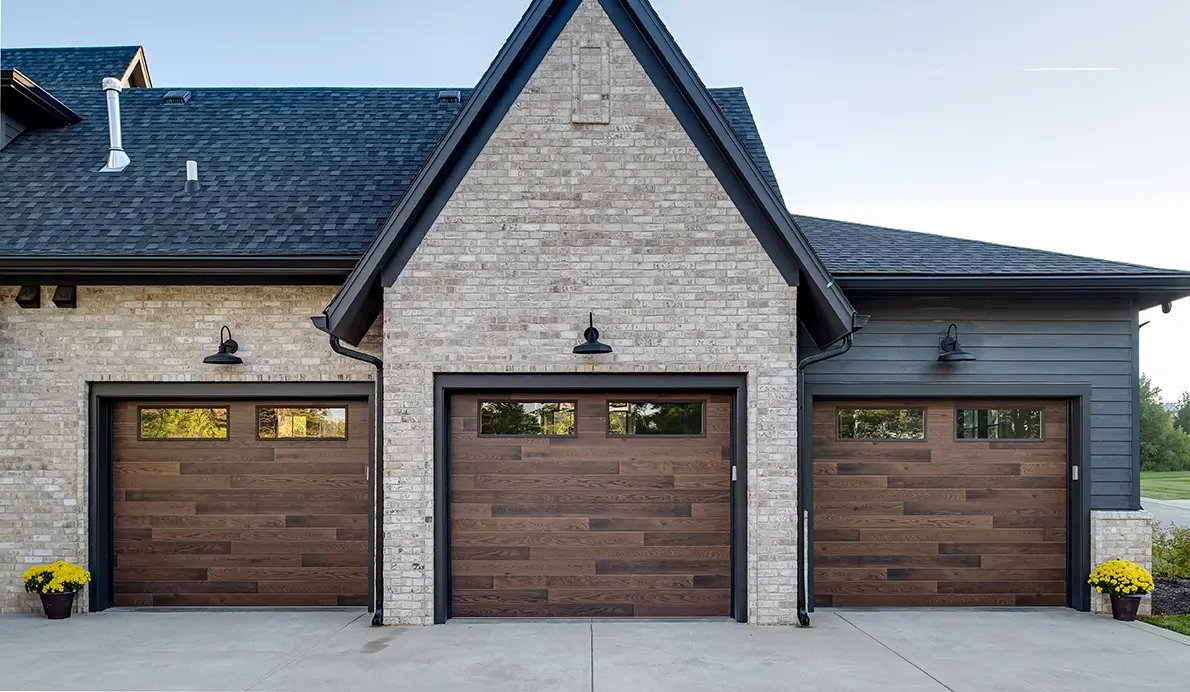
The name is a leftover. Clopay is a contraction of “cloth and paper,” and the company adopted it while it was making blackout window shades during World War II. Today it makes garage doors, enough of them that its parent company described it in 2023 as the largest manufacturer of sectional residential and commercial garage doors and rolling steel doors in North America.
The paper goes back further than the shades. The business began in 1859 as the Benard Seinsheimer Corporation, a paper wholesaler in Cincinnati. It did not make a garage door for more than a century.
That long detour is what makes Clopay worth a closer look. The garage door trade grew up in the Midwest, likely because cold, snowy winters made protected car storage more valuable there, and it had been running for decades before a Cincinnati shade maker arrived. Clopay climbed to the top of it by changing what its doors were made of, then by changing how they looked, and by buying regional door makers and pulling their work into a handful of Ohio plants.
Clopay has been owned since 1986 by Griffon Corporation, a publicly traded holding company headquartered in New York City that was called Instrument Systems Corporation when it made the purchase.
The industry Clopay walked into was already four decades old. Tom Wadsworth, editor of Door + Access Systems, wrote in a 2014 history of the trade in that magazine that “the era of mass manufacturing sectional garage doors likely began in 1921,” when C.G. Johnson started Overhead Door, with its first plant in Detroit. In those early years Michigan, Indiana and Illinois became the focal point of production, and manufacturers mostly served regional markets.
Clopay bought its way in. In 1964 it purchased Baker-Aldor-Jones of Hialeah, Florida. It then acquired Francis Products of Russia, Ohio, and the Russia factory became its primary manufacturing location. Clopay’s doors in those years were wood, and it also made wood doors in Ludlow, Vermont, and Ada, Oklahoma. The company eventually organized itself into three businesses: plastic products, window fashions and garage doors.
The turn came in the 1980s. Clopay produced its first steel doors and, by its own account, led the market’s conversion from wood to steel. It developed a method called Tog-L-Loc to assemble steel doors and was among the first to use pre-painted steel.
The same decade brought new owners. Instrument Systems Corporation, a defense electronics company founded in Queens in 1959 that had grown into a conglomerate, bought Clopay in 1986 for $37 million. Its chairman, Harvey Blau, a former federal prosecutor, had joined the company in 1966 as general counsel under his father-in-law, Edward Garrett, and took over after Garrett died in 1982. Blau spent his early years as chief executive selling off divisions while also buying businesses in unrelated fields. Clopay turned out to be the most successful of those purchases.
Around then, Clopay began building the dealer network that still carries its doors to homes and businesses. It formed a Clopay Dealer Advisory Board and set up an Authorized Dealer Network, holding the first Authorized Dealer Conference at the Doral on Miami Beach and on Paradise Island in the Bahamas. It consolidated all manufacturing in Russia, Ohio, and set up a network of distribution centers to serve customers region by region.
In the 1990s, Clopay made a second bet: that people would care how a garage door looked. The company says it was the first in the industry to focus on appearance. It introduced leaded-look windows, which it calls a first for garage doors, along with insulated sandwich-construction doors for homes and businesses.
Some of the decade’s work went into parts nobody sees. Torsion springs, mounted above the door, wind up as it closes and store the energy that lifts it again. They are under heavy tension, and the company’s own repair guidance warns that a single misstep with them can cause severe injury. Clopay introduced its EZ-SET Spring System for easier and safer spring installation, along with a SAFE-T-BRACKET meant to improve door safety.
Clopay also received the Good Housekeeping Seal of Approval, the first in the garage door industry to do so, according to the company. Two decades later it marked its 20th anniversary as a seal holder.
The acquisitions came quickly. Clopay bought Ideal Door and Phoenix Door, two Wisconsin companies, then Atlas Roll-lite, a maker of rolling and sectional steel doors. The largest deal was Holmes-Hally Industries, which brought in Arizona Door Systems of Tempe and Holmes Door of Auburn, Washington, a company founded in 1950 to make wood sectional doors. With Holmes-Hally, the company says, Clopay became the largest manufacturer of residential garage doors in North America. In the same decade its parent renamed itself Griffon Corporation, after the mythical half-lion, half-eagle. Clopay also developed WindCode, a line of doors for high-wind applications, and later received a patent on reinforcement strutting for those doors.
In the 2000s, Clopay moved its headquarters out of downtown Cincinnati to Mason, Ohio, into a building that combined offices with a technical development center. It also bought a 900,000-square-foot manufacturing plant in Troy, Ohio, and moved its Tempe production there.
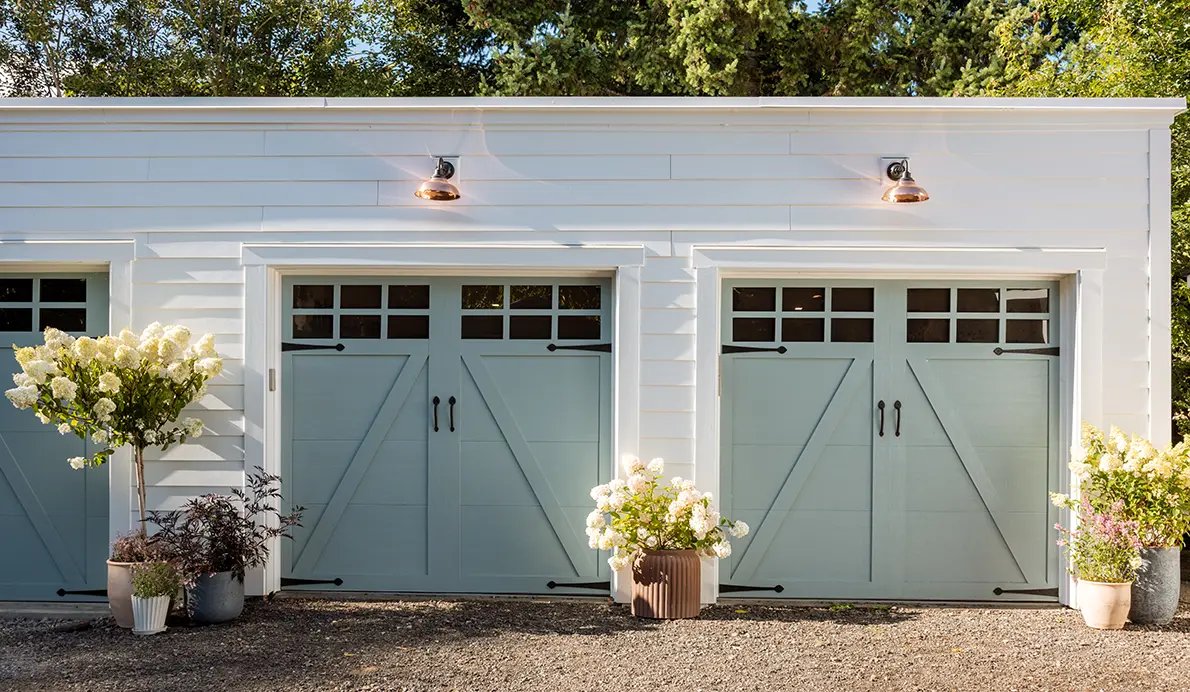
For all the emphasis on steel, the company kept a foot in wood. It introduced the Reserve Collection of hand-crafted wood carriage house doors. In 2006, Door + Access Systems reported that Clopay was offering raised-panel and flush wood doors in hemlock, cedar or redwood, in widths up to 18 feet, with optional windows handcrafted from carved wood. The same issue described new Clopay windows made to look like forged iron over beaded glass. They were acrylic.
That issue also reported a departure on the commercial side: a sliding door system for metal and pole buildings, in sizes up to 52 by 19 feet. The magazine said it made Clopay the first manufacturer in the garage door industry to offer a sliding door alongside its sheet roll-up and garage doors.
In the 2010s, the company finished consolidating its primary door manufacturing at Troy. It introduced the Canyon Ridge Collection, a composite made to look like wood without wood’s upkeep, and gave its proprietary polyurethane insulation a brand name, Intellicore. A program called Color Blast let customers order steel doors in custom Sherwin-Williams paint colors. Then Clopay acquired CornellCookson, which it describes as the largest maker of commercial and industrial coiling doors, and became, by its own account, the largest manufacturer of overhead doors in North America.
By 2023, according to Griffon’s annual report, Clopay sold its doors under the Clopay, Cornell, Cookson, Ideal Door and Holmes brands, through 54 North American distribution centers, to more than 3,000 professional dealers and major home center chains. The report noted finished expansion and upgrade projects at a rolling steel door plant in Mountain Top, Pennsylvania, and at the sectional door plant in Troy, the Ohio building where a company named for cloth and paper turns out its garage doors.