One of Shannon Collins’s accounts is a nuclear power plant. “We are the wildlife trapping company for the nuclear power plant out on the island,” she says, “so we do pigeon work out there.”
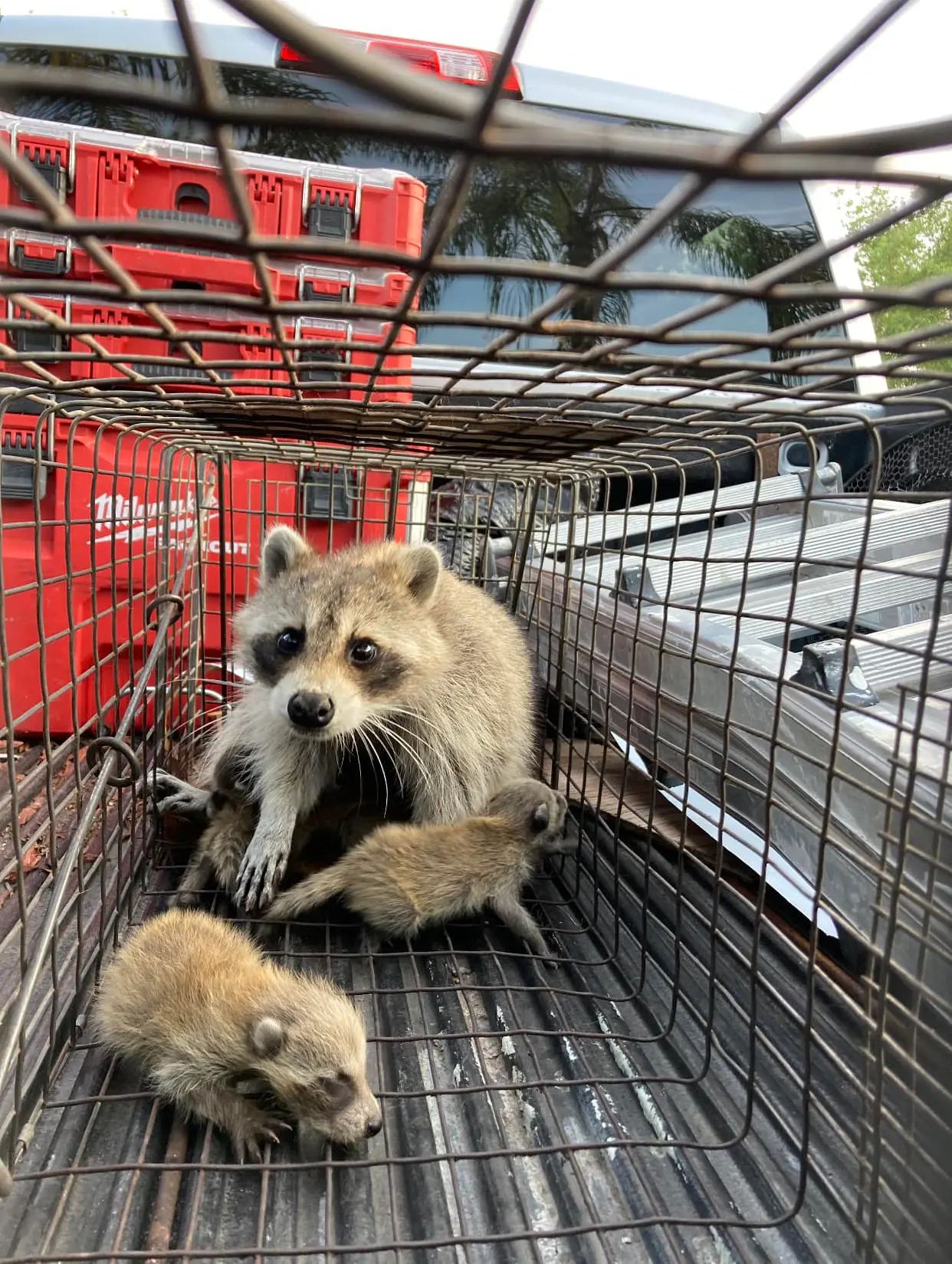
That is not the work most people call about. Absolute Critter Removal & Repair, based in Jensen Beach, still does what Collins calls “the general wildlife work that everyone knows”: rats, raccoons, squirrels, armadillos. When she talks about specialties, though, she names birds, bees and repair work that leaves no sign an animal was ever there.
The business dates to 2004. Collins and her husband, Jimmy, bought it from a friend. He was the one who wanted it; she calls him a serial entrepreneur. She later took it over full time. Customers’ reviews over the years name both of them at the door, and Collins puts it plainly: “Most of the time customers get me and not just a tech.” The technicians who work under her train with her.
Woodpeckers are where the bird work and the repair work meet. The birds nest in the decorative foam work on the front of people’s homes, and Collins counts repairing that damage, in a way that keeps them from nesting there again, among the company’s specialties. One homeowner described a job with two holes in the second-story molding. The crew patched them, coated the area with a special paint and installed spinning reflectors to keep the birds away.
Collins says finish repair was something the couple leaned into early, after taking over the business. The company has construction knowledge, she says, and uses it to close holes correctly and fix whatever the animals damaged, so the house looks good afterward. “It looks finished,” she says. “It’s finished work.” The same approach covers cleanup and remediation, along with reinstalling insulation and walls that animals have ruined.
Bees are the newer interest. Collins has spent about two years studying them intensely and does beehive removal. Depending on the situation, she works with the Treasure Coast beekeepers society, and with one beekeeper there in particular.
Much of the rest of what she says about the work comes back to explaining it. When customers understand the animal, she says, and how it affects their home, they calm down. Two weeks into the pandemic, with everyone suddenly home and wondering about the sounds in their attics, the company was so busy it could not keep up.
“It’s really hard to be comfortable with bumps in the walls and in your ceilings when you don’t know what it is,” she says. “Bumps in the night, day and night for that matter.”