How a Detroit mechanic’s fight with road salt became Ziebart
Kurt Ziebart’s rust coating was dismissed by Detroit, grew into a worldwide franchise, then had to find new work once rustproofing stopped carrying the business.
Troy, MI
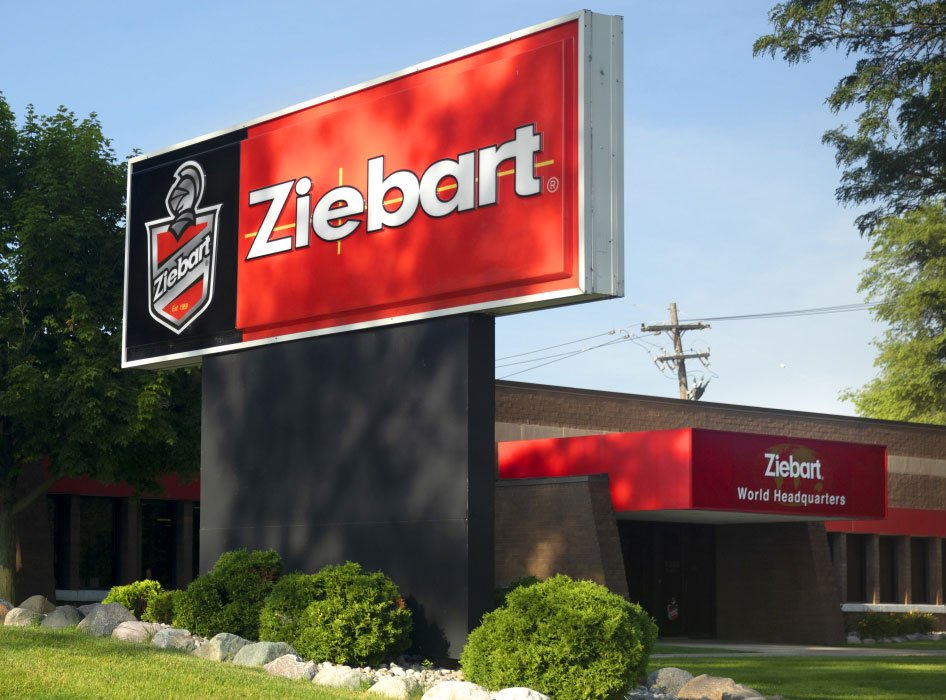
Kurt Ziebart could not get General Motors interested in his idea. He could not get anyone else in the car business interested either. He had a way to keep a car’s metal body from rusting, and the industry around him in Detroit did not want it.
“Everyone would say, ‘Kurt, you’re nuts,’ but I kept at it,” he said in a 1989 interview, which Automotive News quoted when he died in 2011.
He had come to Detroit from Germany with his wife, Edith, in 1953. He was a master mechanic, and he saw how unforgiving Michigan’s weather was on cars. In 1954 he developed a chemical process to protect a car’s metal body from corrosion. Gale’s company history of the business calls it the first successful method of protecting an automobile from rust. In 1959 the first shop bearing his name opened on Harper Avenue in Detroit, and the business was incorporated that year as Ziebart Corporation.
The name outlasted his ownership by decades. Automotive News wrote in his obituary that it had become synonymous with rustproofing. But the problem that built the company eventually started to fade. In the 1980s, rustproofing made up 80 percent of Ziebart’s revenue. By the mid-1990s it was less than 30 percent. The company kept going by finding other things to do to cars, and by passing through several sets of owners, one of them its own workforce.
The early appeal was regional and easy to explain. Ziebart’s treatment caught on in the Great Lakes states, where the salt mixture spread on the roads ate at car bodies. It also sold in coastal areas, where salt air did the same damage. Through the 1960s the company set up franchised shops, mostly in the Midwest.
Kurt Ziebart did not stay for the expansion. He sold the company in 1963 and moved to northern Michigan, where he founded Acme Motors Inc., a Mercedes-Benz dealership where he could sell and repair cars.
The business crossed its first border in 1969, with a shop in Windsor, Ontario, across from Detroit. The next year it was bought by E. Jan Hartmann, a Swedish immigrant, who built the international side through a master franchise system. In each new country Ziebart found one company capable of taking the master franchise, and that company then opened locations through subfranchising. The model carried the brand into the Pacific Rim, the Middle East, Australia, Europe and Mexico. By 1990 Ziebart had more than 1,000 locations in 40 countries.
In 1993 the Mexican master franchise went to Praxis Corporation, and average sales at its first shop, in Monterrey, ran twice the U.S. average. The first German location opened the same year, four decades after the founder left Germany for Detroit. By then Ziebart made its own rust protection chemicals, paint sealants and fabric protectors, along with cleaners and polishes, and shipped most of them worldwide from a warehouse in Detroit.
The move beyond rust started before rust sales fell. In 1989 Ziebart bought Tidy Car, which brought about 200 detailing locations in the United States, Canada, Sweden and Denmark. Detailing, the deep cleaning that restores a vehicle to something close to new, was a different line of work, and Ziebart tested whether the two belonged under one roof. It ran market tests in six cities that paired detailing with accessories and protection products. The tests succeeded. By late 1991 more than 400 franchises had been offered the chance to convert to a combined Ziebart Tidy Car store, and before the year was out nearly 60 percent had made the change or were in the process.
The company was betting on a habit it could see in its customers. People were keeping their cars longer, more than seven years on average by 1992, and many were too busy to look after those cars themselves.
New services followed that reasoning. In 1992 Ziebart introduced ChipFix, a process for restoring chipped or dinged paint that could match more than 25,000 colors and be finished in a few hours, at a fraction of the cost of a full paint job. When Mississippi River flooding paralyzed rail and truck traffic in 1993, the Tidy Car shops in the Midwest ran a campaign to power-wash mud out of engine compartments and clear mildew and odors from interiors.
In 1994 Ziebart’s employees bought the company through an employee stock ownership plan, making it employee-owned. The franchise support system grew, and so did the list of products and services.
The company needed the broader list. Rustproofing sales fell 25 percent across 1996 and 1997, even though market research showed most customers still thought of Ziebart as the rustproofing company. More people were leasing their cars. Automakers were using better grades of metal, and they had started selling add-ons directly, such as lighted running boards, an accessory Ziebart offered too. Through those two years the number of franchise locations held at around 600.
Ziebart leaned harder into detailing, a fragmented market in which it estimated it was already the largest operator in the United States, and into accessories, which meant keeping up with whatever drivers wanted next. In 1997 that was remote starters, so Ziebart began offering them. Some franchisees backed the strategy. Others gave up their franchises. In 1998 the company signed a co-branding agreement with Speedy Auto Glass and began offering glass replacement at many of its locations.
The list kept growing. By the early 2010s, Ziebart shops did window tinting, sprayed-on bed liners, glass and scratch repair and paint protection film alongside rust protection, and the company supplied its own privately labeled tint and film. In 2023 it introduced Z-Shield Ceramic Coating, made to protect paint protection films and vinyl wraps from damage and staining. A company that started by coating steel was now selling a coating for the films it applied over paint. That same year it announced a partnership with Dr. ColorChip for paint chip repair, three decades after ChipFix.
“The one consistent theme throughout our nearly 65 years of operation as a company has been a devoted focus on improvement and innovation,” Thomas A. Wolfe, then Ziebart’s president and CEO, said in 2023, as reported by Professional Carwashing & Detailing. “Staying relevant and innovating is the key to brand longevity.”
Much of the system’s long memory sits with its franchise owners. A shop in Fairborn, Ohio, opened in 1977 and was recognized for 45 years in business in 2023. The Mattiacio Group, a family-operated franchisee based in Rochester, New York, ran 10 stores that year and had expanded into Florida, including a shop in Fort Myers. “It’s been quite a ride to grow the Ziebart brand over 34 years in the Northeast,” Tony Mattiacio, the group’s founder and CEO, told Professional Carwashing & Detailing in 2023. Ben Moeller and his wife, Sophia, opened a franchise in Highland, Michigan, in 2022.
The brand also turns up far from Harper Avenue. In 2018 NATCO, an Egyptian company whose businesses include an authorized Mercedes-Benz distributor, founded Ziebart Egypt as its car detailing arm.
Kurt Ziebart died on Sept. 12, 2011, at his home in Williamsburg, in northern Michigan. He was 91.
The problem he noticed in the 1950s has not gone away in his adopted state. In Bay City, Ben Rogers and his father went into business with a Ziebart franchise on Euclid Avenue and held on through the 2008 financial crisis. After COVID, when finding staff got hard, Rogers turned to people other employers had overlooked, including a man who had been out of work for years and whose enthusiasm changed the feel of the shop. When the Total Michigan podcast described the Bay City shop’s work in 2024, it began where Kurt Ziebart had, with rust protection, a necessity in Michigan’s harsh climate.