The last employee Simon Hacco let go was good at the work. Hacco says so himself. The man respected customers, and “once he’s on the job he’s doing everything he’s supposed to be doing.” The trouble was getting him there. Several times he was supposed to be on a job and wasn’t. “He never shows up,” Hacco says. “He doesn’t answer the phone.” Hacco, who owns U.S. Air Conditioning and Heating in Thousand Oaks, let him go.
Hacco keeps a short list of what he will put up with in a hire. A man who says he can handle installs and repairs, then struggles once he’s on a job, gets help. “I’ll help them out,” Hacco says. “I’m not going to get mad at them at that part.” A man who says he’ll be somewhere and isn’t is a different case. That, Hacco says, “I cannot put up with.” He has let go many employees over it, he says, and once someone breaks that promise, they’re done.
He is blunt about where the rule comes from. “I can never leave anybody hanging,” he says. He puts it down to his own personality, and he states it as a promise: “My word is gold. When I say to somebody I’m going to be there, you can be 100% sure I’m going to be there. Even if I’m going to be late, I’ll call you or let you know I’m running late.”
He admits to one miss. Years ago a customer was expecting his crew, and the customer’s information got lost. Without a phone number or an address, nobody could get back to them in time, and the customer was very upset. “It only happened to me once in my whole 30-year career,” he says.
Keeping people on the payroll is hard in a seasonal trade, he says. If you can’t employ a technician all year, “they don’t like to hang around,” which he allows is understandable when people have bills to pay. He finds help through people he has worked with before, who refer others who need work, and through an employment agency that supplies a pool of workers he can hire as the season requires. Reliable help, he says, is one of the hardest parts of running an HVAC company.
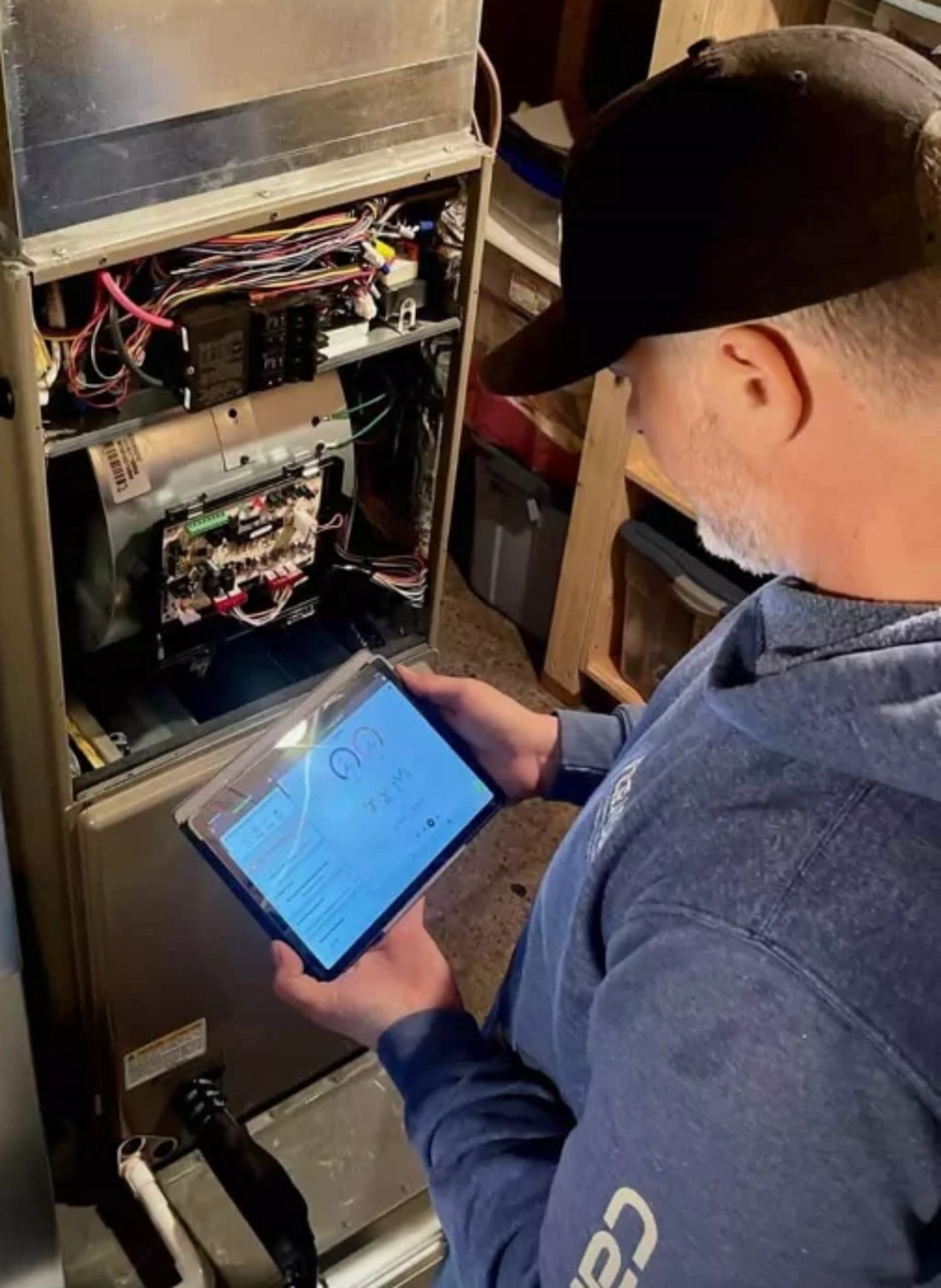
Hacco is the sole owner. He got into the trade in the 1990s through a partnership with a man who was selling his business. The two started a company together and later went their separate ways. The work now runs about 70 percent residential and 30 percent commercial. He calls the shop old school, “not afraid to get our hands dirty,” and says its motto is to get the job done the first time, because he doesn’t like callbacks.
He holds paperwork to the same standard as showing up. His estimates break the job down in detail, he says, and the contract spells out what will happen: “Whatever is written on the contract, it’s exactly what you’re going to get.” If something unforeseen turns up mid-job, he says, the customer is told. The company usually goes out as far as about 50 miles. “We don’t like to travel 50 miles,” he says, “but we’ve done it before.”
Spell out his last name, H-A-C-C-O, and Hacco has a theory about it. “I was actually born to be in this industry,” he says. “If you spell it out, air conditioning company.”
As for how he ended up in the trade, he has a simpler answer. “I guess I couldn’t get out of it,” he says. “It was printed in my DNA.”