S & S Property Maintenance sends a climber where the bucket truck can’t go
Steve Grabill built his Vandalia, Ohio, tree company around rope-and-saw climbers instead of heavy trucks, and he still hires himself out to climb for other crews.
Vandalia, OH
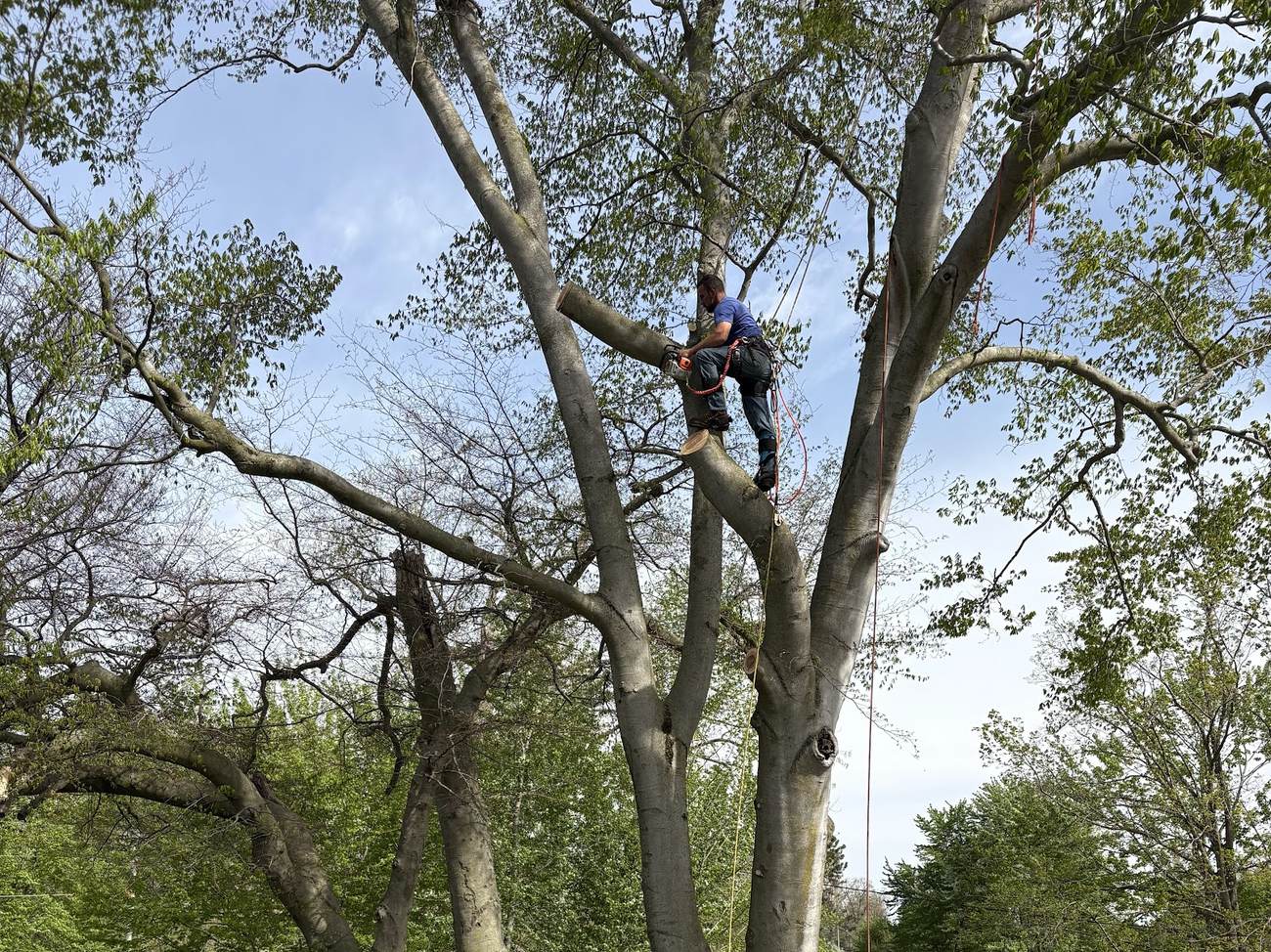
Steve Grabill owns a tree company, S & S Property Maintenance, and he still hires himself out as a climber. He recalls bidding on one job against another tree service that already had the customer’s signature. That company kept the job, then found its equipment could not reach the tree. It called Grabill to climb it, and he did, for pay.
Climbing for other companies is how he started. “I started off climbing for other tree companies and created mine in the meantime,” he says. He bought equipment and tools a piece at a time “until I took off on my own.” It was slow at first, he says, “and I was working for others because I was building my company.”
The company dates to 2013, according to its Better Business Bureau file, and it was organized as a limited liability company in 2015. It works out of Vandalia, north of Dayton, and takes jobs as far as Springfield, Cincinnati and Columbus. Grabill built it around the thing he knows best, a person in a tree with a rope and a saw, rather than around big machines. He keeps his schedule short by handing overflow to other crews, and he still closes a lot of deals with a handshake.
Grabill set the company up to work light. “I use conventional climbers and dump trailers and mini skid steers,” he says. “I try to stay away from the real super heavy equipment, because it leaves ruts, and if equipment goes down, it costs more money.” When a chipper truck breaks, he says, a crew can be down for a couple of weeks. “You can’t even work if you’re waiting on a chipper or chipper truck to get fixed.”
Customers notice. One wrote that the crew left no ruts in the yard. Another, who had a branch hanging over a pool, assumed the job would need a boom truck until Grabill explained how he would climb the tree and take the branch down.
In 2019 a homeowner wrote that at least 10 companies had looked at the damaged oak behind her house and turned it down. It was huge, it stood near power lines, and the houses sat too close together to get big equipment into the backyard. The S & S crew climbed it and had it down and hauled away within hours.
A customer who watched him trim three trees in 2018 wrote that it was like watching an artist: he climbed and moved around the tree as if he were part of it. Reviews over the years also name other climbers on his crews, among them a climber named Mike and another known as Ace.
He does not staff the company the usual way, either. He works with partners and independent crews rather than a payroll of employees. “I’m not like the traditional got employees type of guy,” he says. When he has more work than his own people can handle, he runs the estimate, closes the deal and passes the job to another tree company he knows.
The reason is timing. A homeowner who calls a tree service, he says, is usually worried about an immediate threat or about a tree that has stood dead too long. “I don’t like to be booked out more than a week, because customers will seek other estimates if you tell them that,” Grabill says. Only about 10 percent will wait more than a month or so. Storms make it worse. “When the storm hits, my phone blows up,” he says, and some of those calls are emergencies that need doing right then.
Two customers wrote about that speed. One called around 1:30 one afternoon about a tree she wanted removed. Grabill was there with a quote within the hour, and his crew was back by 3:45 to take it down. Another left a message at 1 a.m. about a tree that looked ready to fall, and Grabill showed up that morning.
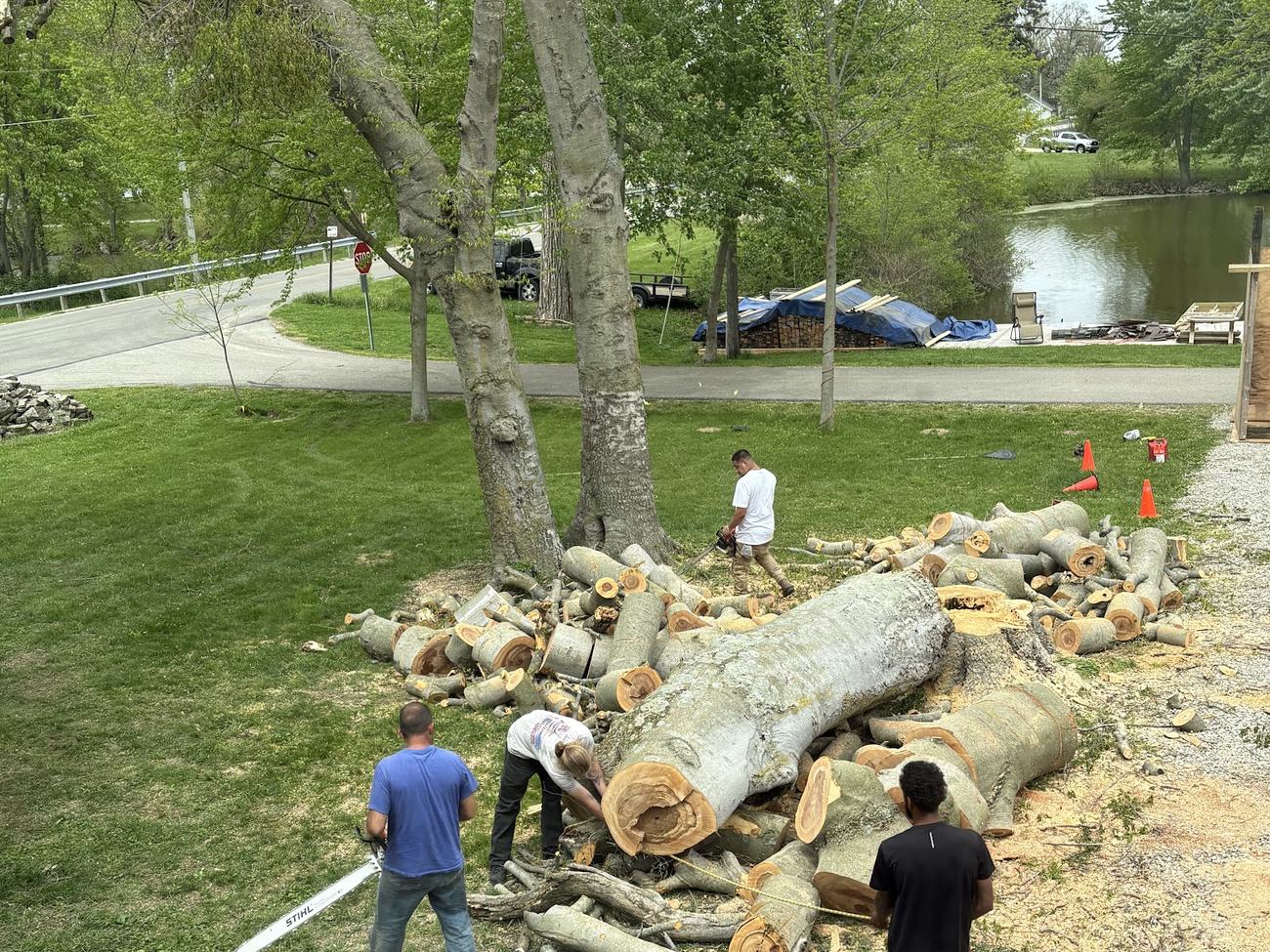
On its website, S & S lays out how it prices a removal: the tree’s size and health, where it stands in the yard, what it hangs over, and how the customer wants it handled. Every company prices trees its own way, the site says, and this is how S & S does it. “Leave lay” means the crew drops the tree and the customer cleans up. “Complete removal” means the brush is chipped and the rest hauled off. The middle option, which the site calls the favorite, is “keep firewood”: the crew clears the brush and cuts the trunk into firewood lengths, stacked in a neat pile. Reviews mention that pile again and again.
He prefers houses to commercial work. “I really like residential work,” he says. “I like to stay in the private if possible.” In 2020 the company also cleared dead trees and brush from three neglected vacant lots in Springfield for a nonprofit that planned a community space there.
Some calls are about animals. A family wrote that the crew rescued their cat, Bean, in under 10 minutes after the family had spent almost two days trying. A parrot owner wrote that Ace brought her bird home after it spent two days in trees more than 40 feet high.
“I work hard on keeping my name clean and doing good business and fixing any mistakes that happen along the path,” Grabill says. A homeowner whose fence and fire pit were hit by part of a tree wrote that he made sure the damage was repaired. Another customer fed the crew, and Grabill wrote back to thank her for the work and for the biggest hamburgers he and the guys had ever eaten.
One customer wrote that she had doubts at first, because he gave her the quote with no pen and paper, just a handshake. The crew did everything he quoted and more. In his reply to her review, Grabill wrote that the good old handshake still works when you do good business.