
The job was a cleanup. The man who owned the property was getting ready to sell, and when the elder Gustavo Reyes finished the work, he asked what the man wanted for the place. His son, also named Gustavo, tells the rest as he remembers it. His father made an offer and bought the house he had come to clean up. It had not even gone on the market.
The elder Reyes has a habit of staying put once he finds a good thing, and that goes for people as much as houses. Before he started Reyes Lawn Service in 1990, he worked for another company, and when he went out on his own he kept working for many of the same clients. That is why, his son says, some of the company’s clients are older than the company. A number of them have been with the family for about 40 years, a stretch long enough that many of the oldest have since died of old age. The younger Reyes counts those decades as commitment and loyalty.
Holding on to people that long comes down to keeping a routine. A client whose day is Tuesday gets the crew on Tuesday, the younger Reyes says, and his father has kept the same phone number since the 1990s.
The company is a family operation, and the younger Reyes is quick to say where the credit goes. His father started it and is, in his son’s words, the CEO. His mother is the secretary and does all the paperwork. Without the two of them, he says, the business would not be where it is. The crew these days is family too.

What his father passed down was short. “You’re going to do something, do it,” he says his father taught him. “If something happens, call. Don’t cut corners.” He describes it as honesty handed from one generation to the next, the way a grandfather teaches a father and a father teaches a son. The rest of the lesson was just as plain: never cheat anyone out of their money, and always do quality work, so people get what they paid for. That is also how he explains the clients who have stayed for decades. “For us each client means something,” he says.
The part about corners is practical as well as moral, he says. A shortcut eventually surfaces, and someone has to be there when it does. So the son, now one of the owners, is out on the jobs rather than behind a desk. “I’ll be in the job site. I’m not in the office,” he says. He stands behind what he puts in the ground, and he wants clients to be able to find him. “We are always there,” he says. If they have questions, “they can just come outside and talk to us.”
On a larger project, the work starts on paper. The client tells him what they want, he makes adjustments and offers ideas such as plantings, and all of it goes into the contract, along with his estimate of how long the job will take. “We like to have everything written down,” he says, so that whatever the client asks for is what the crew is expected to deliver. Without that, he says, a crew can be halfway into a patio and start making things up because nothing was settled.
Before anyone digs, he has Blue Stake come out to mark the underground lines. If the marks are right, nothing goes wrong. He calls it being cautious, and says it protects the client and the crew alike. Then he lays out the job itself. “I mark what’s going to be done, so everything’s laid out,” he says. That is how everyone on the crew knows what they are supposed to do, and how the job gets finished.
The materials follow the same rule his father gave him. He puts in good-quality material and nothing else, he says, because poor material only holds up for a couple of years before the problems start. “There’s always cheap materials out there. We try to avoid that because it ruins your reputation,” he says. When a client hopes for top quality at the lowest cost, he tells them the two do not go together. “You can’t mix those together because you will cut corners,” he says. His line to clients planning a full landscape is “pay once, not twice.” Some understand right away, he says. Others need him to explain why.
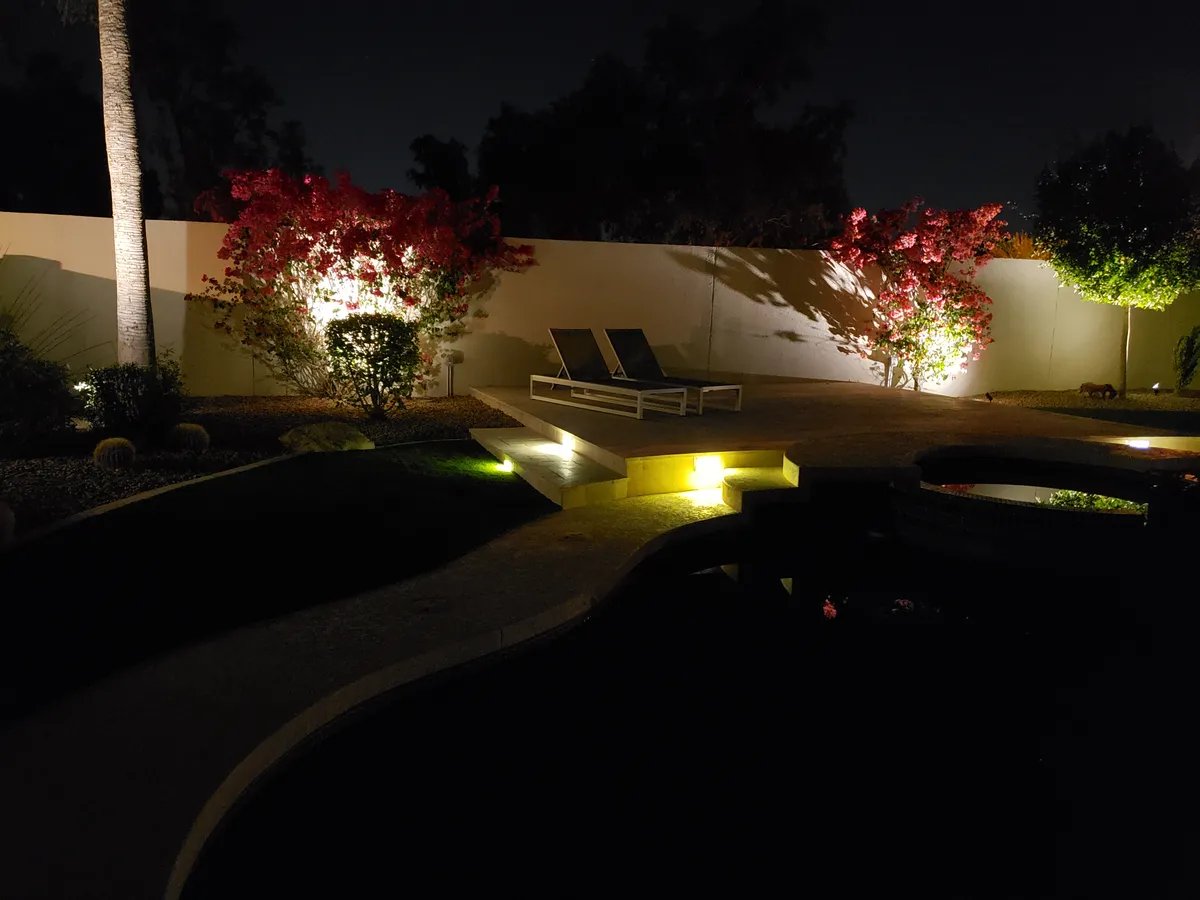
A retired doctor in Central Phoenix has written publicly about what that looks like across a lifetime of yard work. Gustavo has worked for him for more than 30 years, he wrote, handling the weekly mowing, trimming and irrigation, along with projects from large tree removals to a rainwater drainage system. These days the son keeps an eye on the doctor’s irrigation and landscape lighting from his phone.
The younger Reyes intends to keep the company’s name just as it is, and he calls that the hardest of the promises he has made himself. He compares it to a restaurant you have known for years that suddenly changes its name. You start wondering whether they still do things the way they used to, he says, and that is bad for a company. There will be ups and downs, he says, but the name stays.
The house his father bought after that cleanup has a story of its own. The younger Reyes believes it was built by its first owners, who were architects. Years after they sold it, those original owners passed through town and drove by the old place. His father happened to be out front. They stopped and told him they were the first people who ever lived there.