“I’m not trying to make a bunch of young people pressure washers in Birmingham,” Jason says. “It’s merely just a stepping stone to developing them.”
Jason owns Purifico, which he launched in 2025, and he says he built it backwards. “We really started with the fact that we are a workforce development company that trains young people,” he says. The cleaning came second.
He has spent 25 years in youth development. For the last five, he has worked with 16- to 25-year-olds, helping them earn certifications and training and find a career path that suits them. What he kept seeing was a gap between kids growing up in under-resourced communities and the jobs open to them. “I literally started this company to be able to train young people on how to work,” he says.
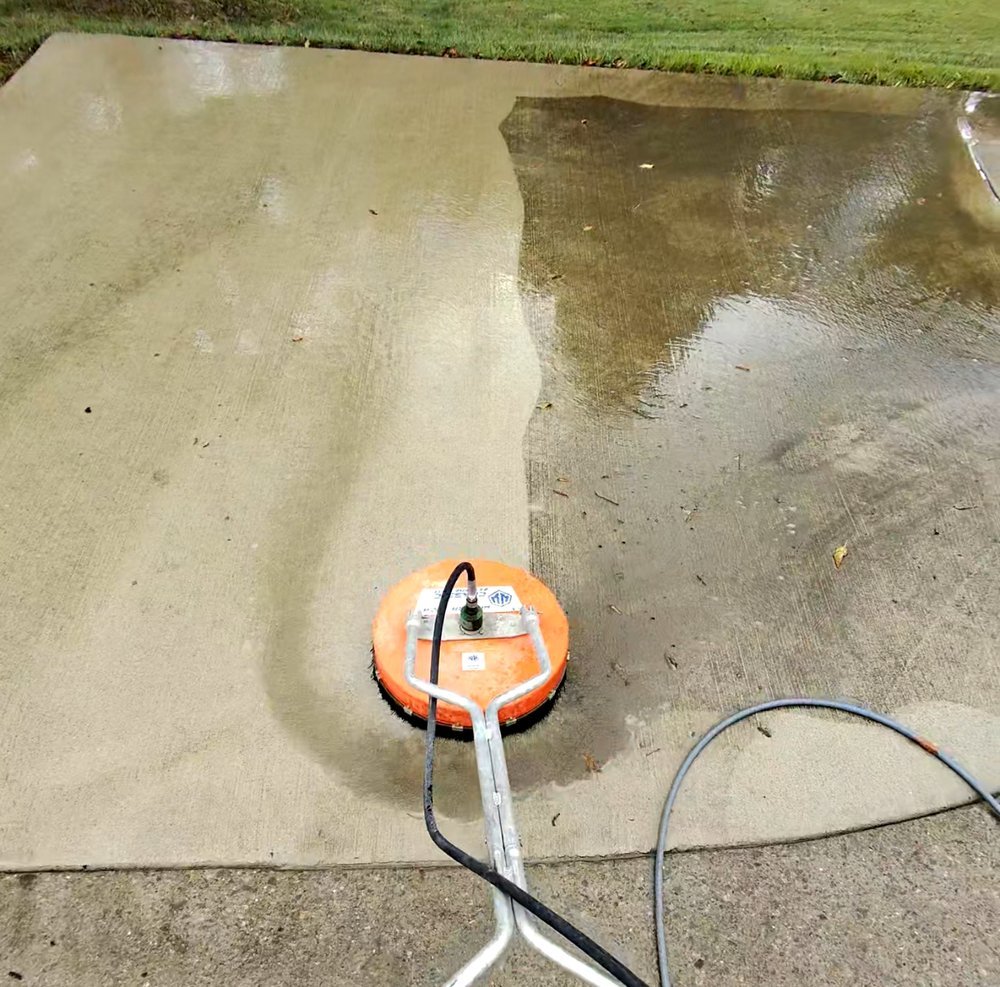
He picked pressure washing because the result shows up before the crew leaves. “You show up at a house, you show up at a business, things are filthy, and by the time you leave, it’s transformed,” he says. He uses that before-and-after as an illustration for life in general.
About a quarter of Purifico’s work is what he calls workforce development. He lays out how it runs. Say a school in an under-resourced part of town needs cleaning and can’t afford it. A nonprofit raises grant money and pays Purifico to do the cleaning and to train students from the local high school. The students clean their own school, get paid, get an assessment and get guidance on what to try next. Purifico also describes a one-day-a-week program in which young people work on projects for widows and on public spaces such as parks, sidewalks and parking lots. Those who show discipline can shadow the crew, apprentice and eventually earn a place on it.
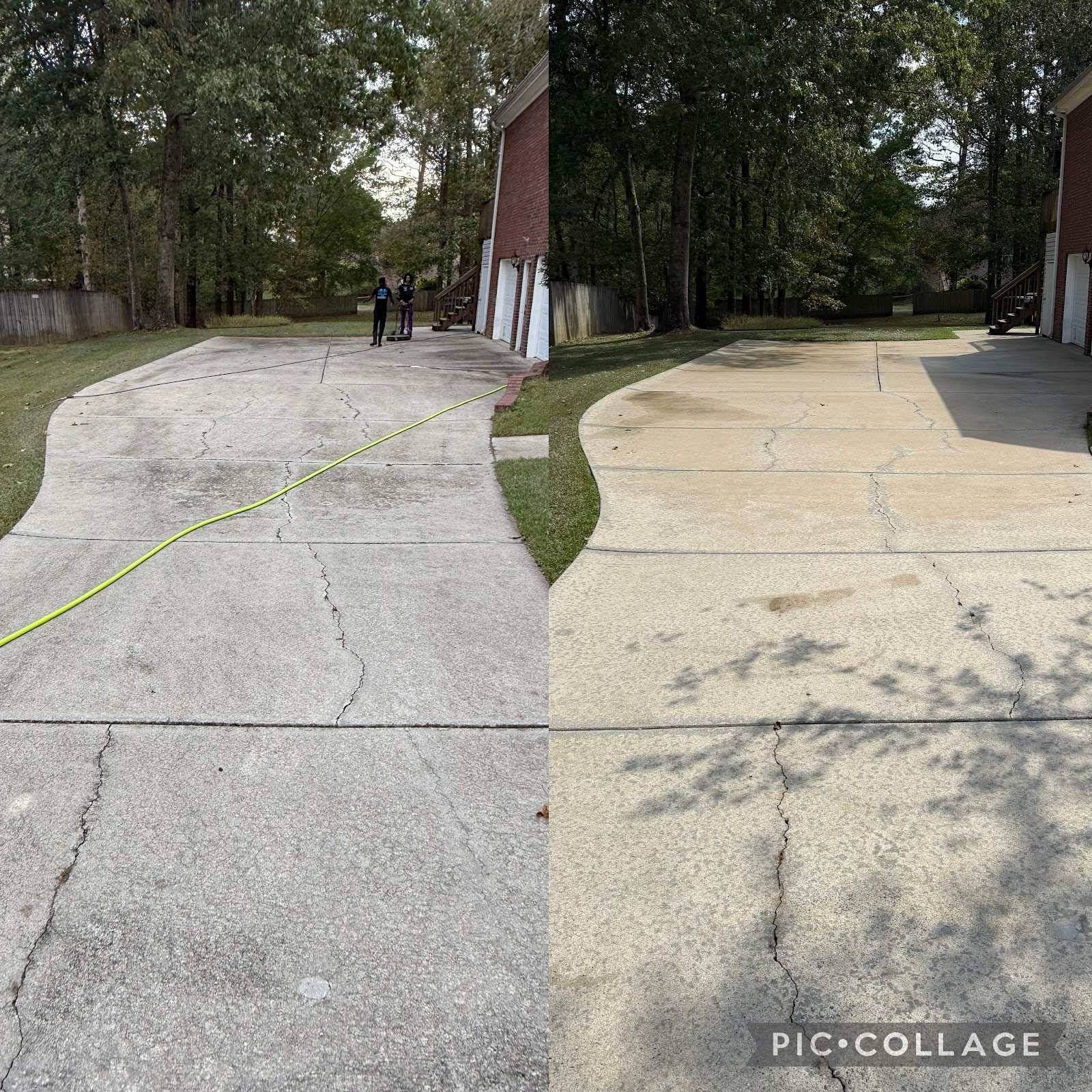
The training is by example. “It’s modeling,” he says. “We’re not just simply telling people how to work.” New people come in as apprentices and watch. Then Jason and his partner hand over the reins and keep giving feedback until the newcomers can do the work on their own, to the company’s standard.
That standard, he says, is part of the curriculum. “How are you going to train young people on what’s excellent if you don’t produce excellent work?”

Jason describes the cleaning as more science than spraying. He likes to ask people whether they used soap and shampoo in the shower that morning, then suggest they switch to plain water. They look at him like he’s lost his mind. A dirty surface, he says, is usually covered in organic growth, and blasting it with water can make it look clean without killing what caused the dirt in the first place. Purifico applies a cleaning solution so that “the solution is doing the cleaning, not water pressure.”
The rest of the work splits between commercial jobs, about half the total, and homes, about a quarter, across Birmingham and nearby towns including Hoover, Homewood, Vestavia Hills and Mountain Brook. The commercial side includes industrial generators worth millions of dollars. Cleaning one takes the right chemical, the right pressure and a plan for the toxic runoff. “It’s very technical,” he says.
The crew also works with blowers. They push rinse water along without adding more of it and cut down on the mud that keeps running off after the rinse. Then the surface gets dried.
Some jobs he won’t take. “If we feel like there’s something about the job that we will not be able to perform with excellence and guarantee results, then we’re going to tell you that up front and we’re not going to take it,” he says.
When a job falls short, he says, the crew comes back. One roof-cleaning customer described exactly that: a small patch near the peak hadn’t come as clean as Jason wanted, so he returned on another day and did it again.
His partner is Willie, who is 20. “He’s pretty much been with me since he was eight,” Jason says. Willie went through the same immersion training and has been on nearly every job. He is also learning the management side, which Jason calls “the ecosystem of operating and running a business.” With the two of them doing the work, the owner is on every property.
Jason wants to hand Purifico to Willie someday. Whether Willie stays in pressure washing is a separate question. “My hope is that in a couple years, even if he doesn’t want to do pressure washing anymore, he’ll have a blueprint for how to run a business,” he says.