Bryan Polk is still the whole crew at Polk Lawn Care Services
In Killeen, Texas, Bryan Polk mows and landscapes mostly alone, and he is studying his old planners to build a business that keeps going when he steps away.
Killeen, TX
Bryan Polk keeps his old planners. He has last year’s, and he thinks the one from the year before is still around somewhere. Now he has a use for them. “During the off season, you need to sit down with these planners and start seeing where the work started to fall off,” he says.
Polk owns Polk Lawn Care Services in Killeen, Texas, a sole proprietorship that does lawn care and landscaping across the area. On most jobs the crew is one man. “I don’t have a team,” he says. “It’s just me.” When a job needs more hands, he brings in help.
Working alone means the year sets the pace, and Polk describes that pace without dressing it up. “The season starts really slow, then it starts to ramp up, ramp up, ramp up, then I start getting overwhelmed, and then it starts to slowly go down, then I’m back at, oh, shoot, I don’t have any work,” he says. The planners are how he means to see the next turn before it arrives. The larger plan is a business that keeps moving when he is not the one pushing it.
Most of the work is grass. “The main thing I do is mow lawns,” Polk says. He will trim a tree, but asked what jobs he wants most, he says, “Pretty much lawn care.” He does not deal with trees much.
His customers are spread across Killeen and the towns around it: Harker Heights, Nolanville, Copperas Cove, Belton and Temple, and Fort Hood, the Army post on Killeen’s edge. He gives discounts to military customers and to the ones who book him on a regular schedule.
Many of those yards are standing accounts. “These are just people who have been with me for a while,” he says. One customer described the arrangement in a Google review: “He stays in touch to ensure that your lawn is cut on schedule, and if for any reason you need to cancel because your lawn is not high, he understands.” Another customer called from Virginia because her brother’s lawn in Texas needed help, and Polk got to it the same day.
The commercial side includes a Dollar General store. “I take care of a Dollar General,” he says.
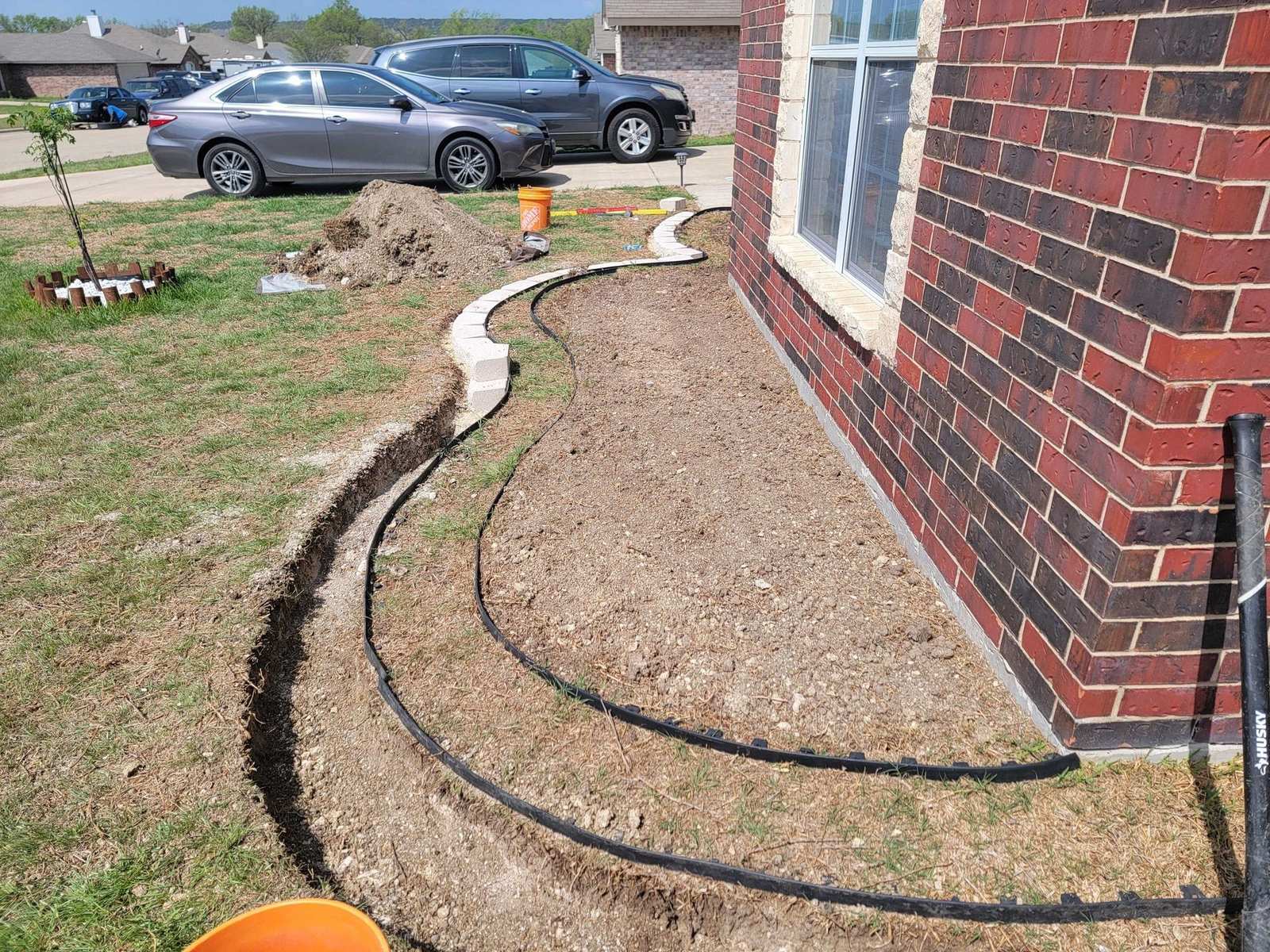
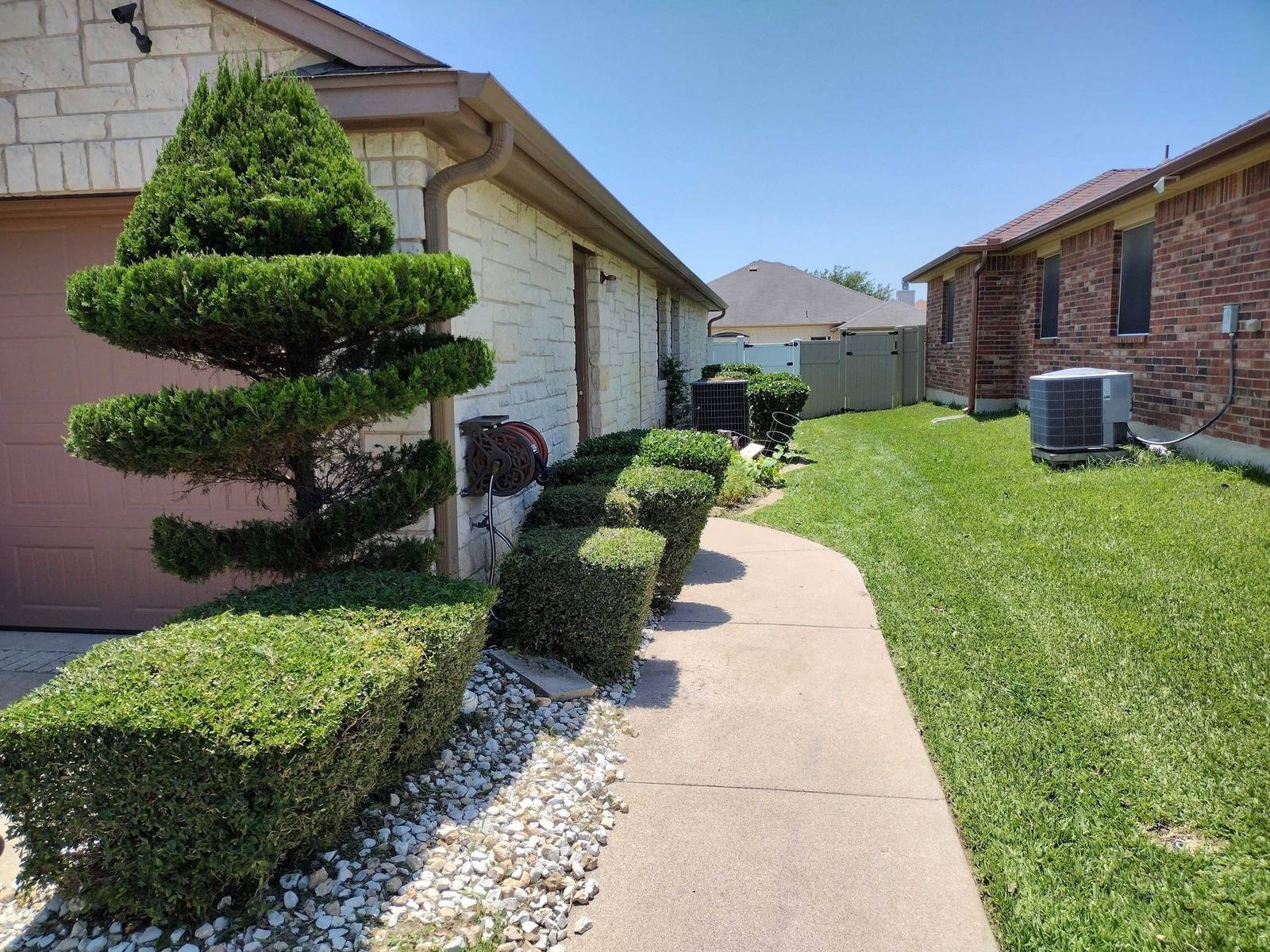
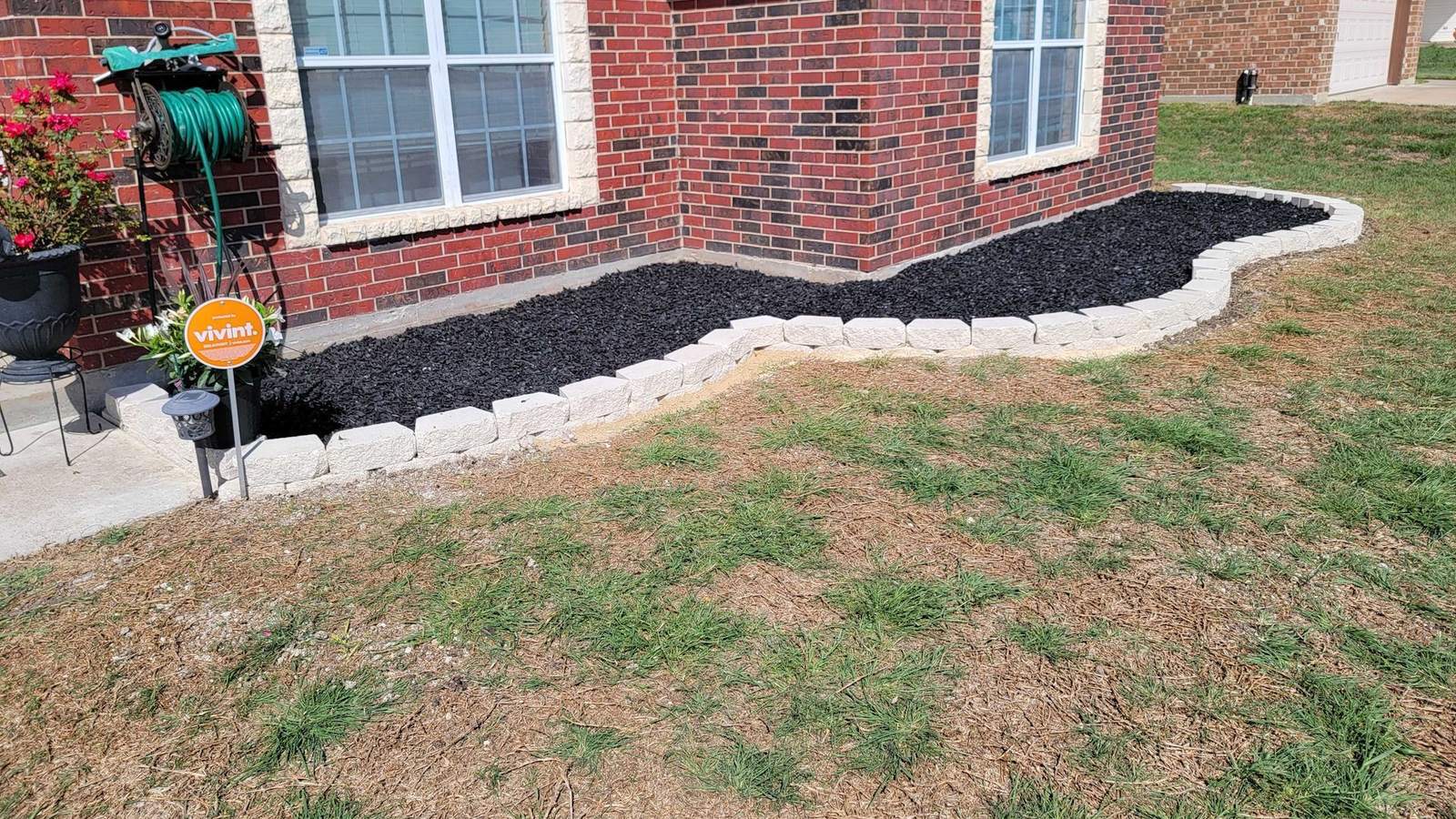
His photos of finished jobs show the landscaping side. Shrubs along a walkway are squared off neatly. A topiary is clipped into stacked tiers. New beds are cut into the lawn, edged with block and filled with black mulch. He likes jobs he can start and finish in a day. “I will take little small jobs as long as I know I can get them done in a few hours in one day,” he says.
The bigger jobs taught him harder lessons. He once took on two landscaping projects that each kept him on site for about a month, and he did most of the work himself. “It was so daggum hot,” he says. “You’re pushing a wheelbarrow and digging all this other stuff by yourself.”
He remembers how a job that size ate his days. There was the long drive every day and the dump fees for hauling away debris. Materials ran short and sent him back to the store, then back again. “I had never really stepped out on a job that big before,” he says. “It was constantly like, okay, this is a problem. How do I fix it? Or I don’t have this. So I’m going back to the store.”
He handles those jobs differently now. He has connections he can call. “When I get big jobs, I will either sub it out to them,” he says, or they take the work on together.
Polk is blunt about what he has gotten wrong. In his telling, the trouble is preparation: by the time the slow stretch shows up, the moment to get ready for it has passed. He describes the talk he has with himself: “You should have been doing this over a month ago, to be in preparation for what’s happening right now, or two months ago.” When the rush finally breaks, coasting is tempting. “Once you get through the storm of the season, it just kind of worn out,” he says. “It’s like a roller coaster.”
What he wants instead is a business that does not depend on one set of hands. He can picture it: six to eight people and two or three trucks on the road. “I’d like to be able to step away for a week or two and everything is still going,” he says.
That does not mean leaving the work behind. “I don’t want to just fully get out of it,” he says. “I’d rather be the guy running around checking on the job than doing the back office work.” He knows what the current setup costs him. “When I go down, everything stops,” he says, “and I’m tired of that.”
For now the extra trucks are a plan, and Polk is still the one on the mower. Changing that starts with last year’s planner and the weeks when the jobs fell off.