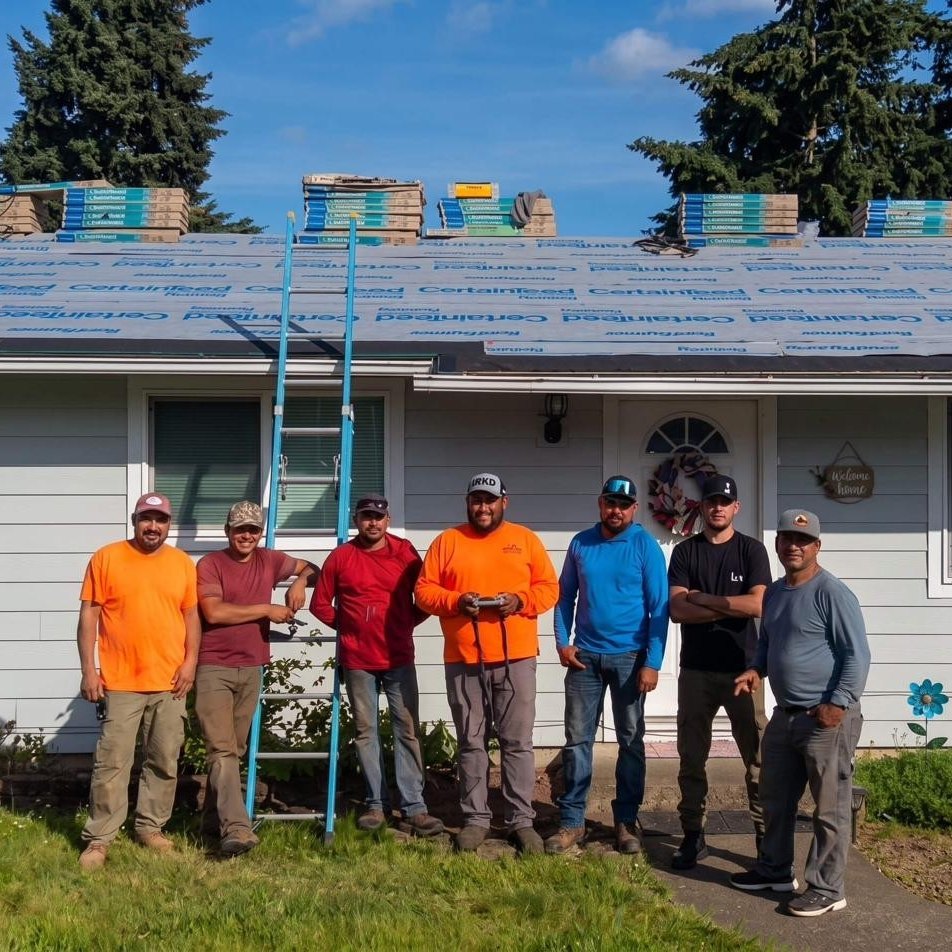
The quitting time at Picture Perfect Roofing & Construction comes down to the nail guns. The crew is on a roof by 7 a.m. and off it by 3:30, and owner Duvalier Prado has a reason for the second number. “Sometimes people get tired of hearing the pneumatic gun going off all day,” he says. “And there’s three or four going off. There’s not just one.”
So the crew stops and comes back the next morning. “If we have to, it takes two, three days to do a job,” Prado says. “That’s how long it takes.” He goes by Duva, and the company is based in Springfield, Oregon, with work across Eugene and the Willamette Valley. He is an owner-operator in the plain sense: “I’m on every job making sure every job is done right.”
The extra days go into steps a homeowner on the ground would never see. “We snap chalk lines,” he says. “We make sure our guns are gauged properly.” The reveal, the exposed part of each shingle, is five and a half inches on some products and six on others, and he sets the gun to the material. He also matches the stagger, the offset between courses, to the pitch. On a flatter roof he won’t stagger more than 10 inches. On a steeper one he’ll use five and a half or six.
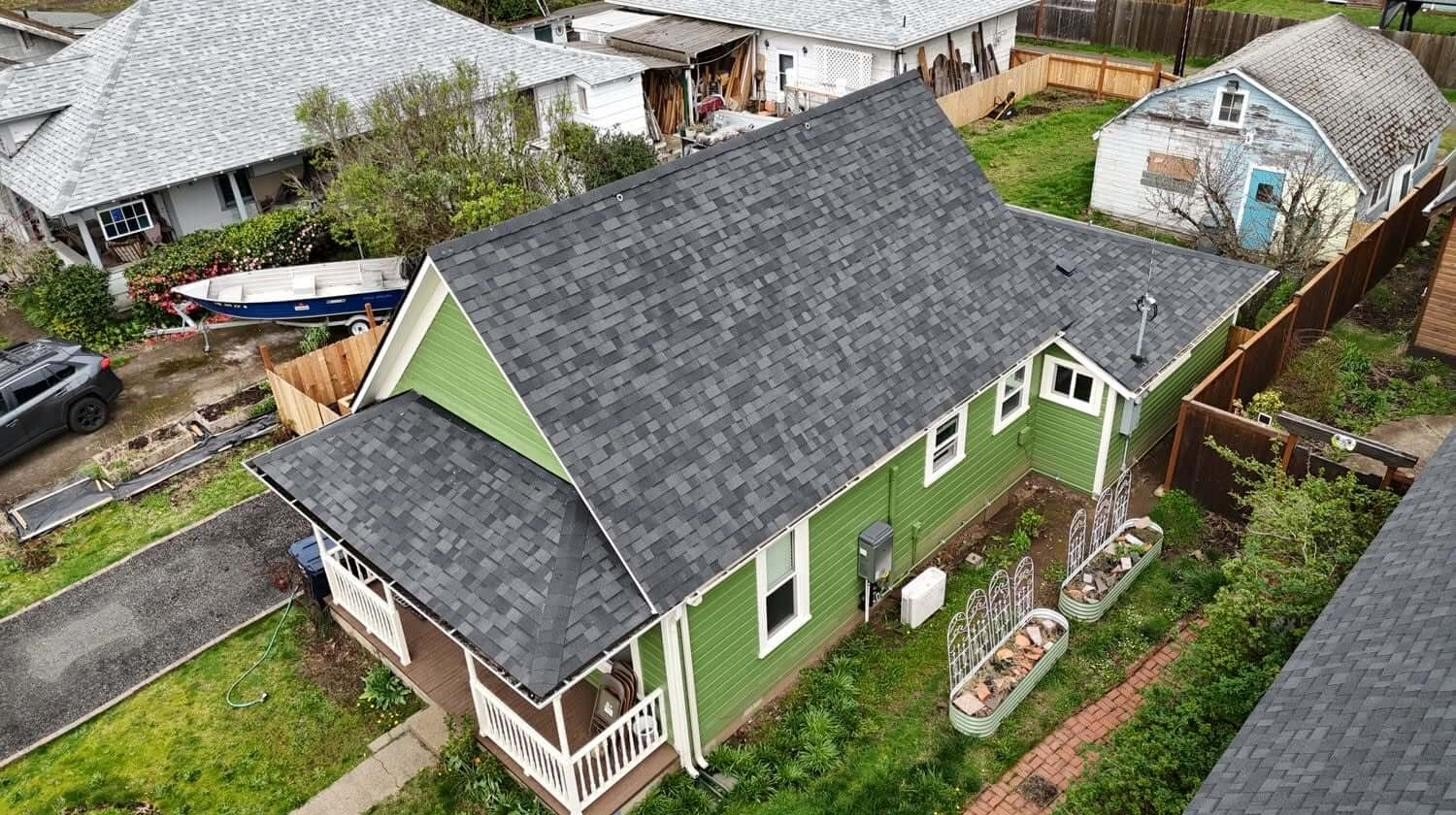
Valleys, pipe jacks, boots and other penetrations get ice-and-water membrane, which he believes goes past what code requires. Where black felt underlayment was once the norm, he now uses a waterproof product with a walkable membrane on one side, a choice he ties to how much rain the area gets. He fastens it with plastic caps, not staples. Staples, he says, void the warranty.
Warranty comes up often when he talks. Prado is a certified installer for CertainTeed and IKO, and his specialty is shingles, including the Presidential line. He tells the story of a custom roof he special-ordered from the East Coast. The shingles arrived faulty. CertainTeed sent replacements, and he tore off what had gone up and installed the new ones. “The thing about CertainTeed is they back their product,” he says. The manufacturer paid for the new material, the dumping, the demo and the installation. “Nothing came out of pocket for the homeowner.”
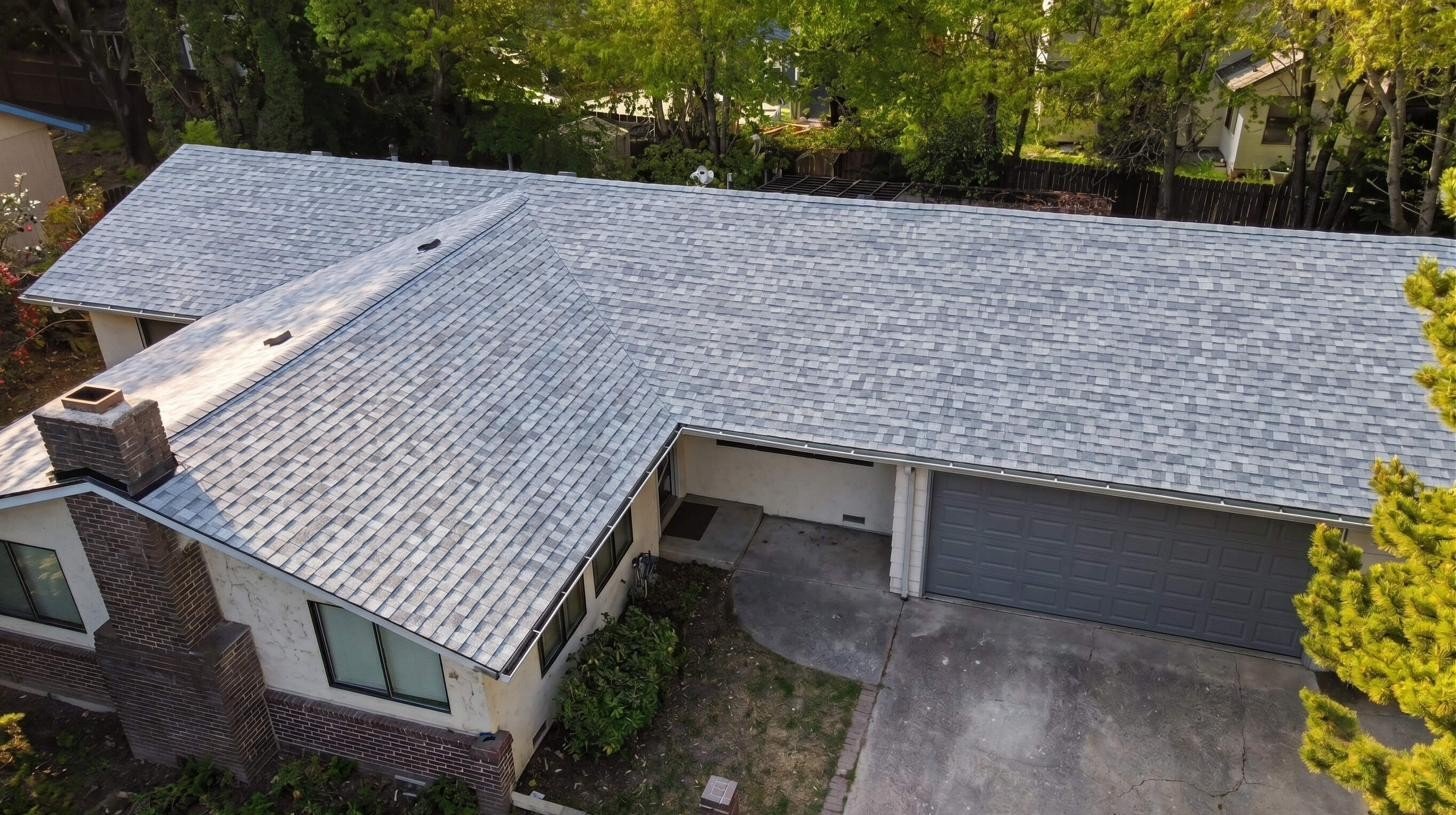
He pays the same attention to what happens under the roof deck. Older bathroom fans were often fitted with a regular vent, he says, and he has been in homes where mold had grown unseen up the plywood and rafters. Now his crew installs a stem vent and wraps it in HVAC tape so condensation stays out of the attic. When customers ask about drywall damaged by an earlier leak, he has fixed it at no charge. He has also thrown in W-style valley metal as a free upgrade.
Then there is the job-site toilet. Prado makes sure every site has a restroom, a porta potty. “We tow one behind us,” he says. Everyone on the roof is tied off, he says, and he buys the crew new high-visibility gear. On one job he describes, a motorized ladder carried shingle bundles to the top of the roof. He takes drone photos of the finished work. When someone on the crew doesn’t know how to do a task, he shows them. He says he has never been called back to any of his roofs.
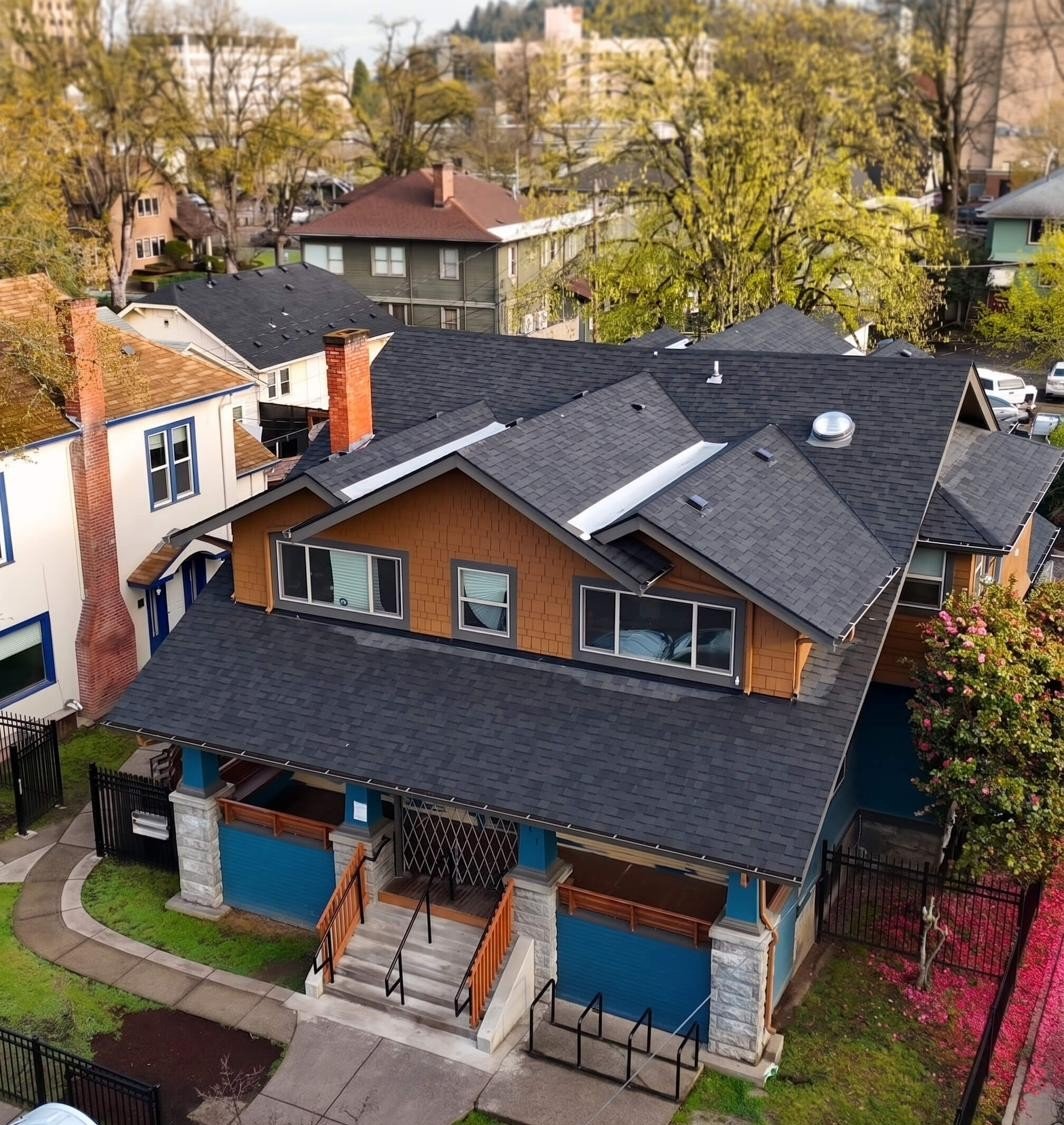
The company grew out of union work. Prado’s website says he joined a carpenters’ union straight out of high school, the same union his father spent years in. When he branched off, he did general construction and flipped houses, and he found his niche in roofing after studying the quality of other people’s work. He thinks the business started right in the middle of COVID, which he calls tough. He still takes on flat roofs, metal and TPO.
His plan for the company is to hand it down. “I’m not trying to sell it,” he says. “I’m trying to build something that’s worth it.”
He started working young. His mother owned a butcher shop, a Mexican store, and he cut meat there as a boy. “I was a butcher since I was a young kid,” Prado says, “until an inspector showed up one day and he told me I couldn’t be there till I was 18.” They moved him to the cash register for a while. “But after middle school I would work a full-time job.”