Tristan Rouse passed on taking over a pest control company and started Pest Patrol instead
Tristan Rouse was in line to take over the pest control company where he had worked for five years, then left to start Pest Patrol, which he runs alone.
Fort Wayne, IN
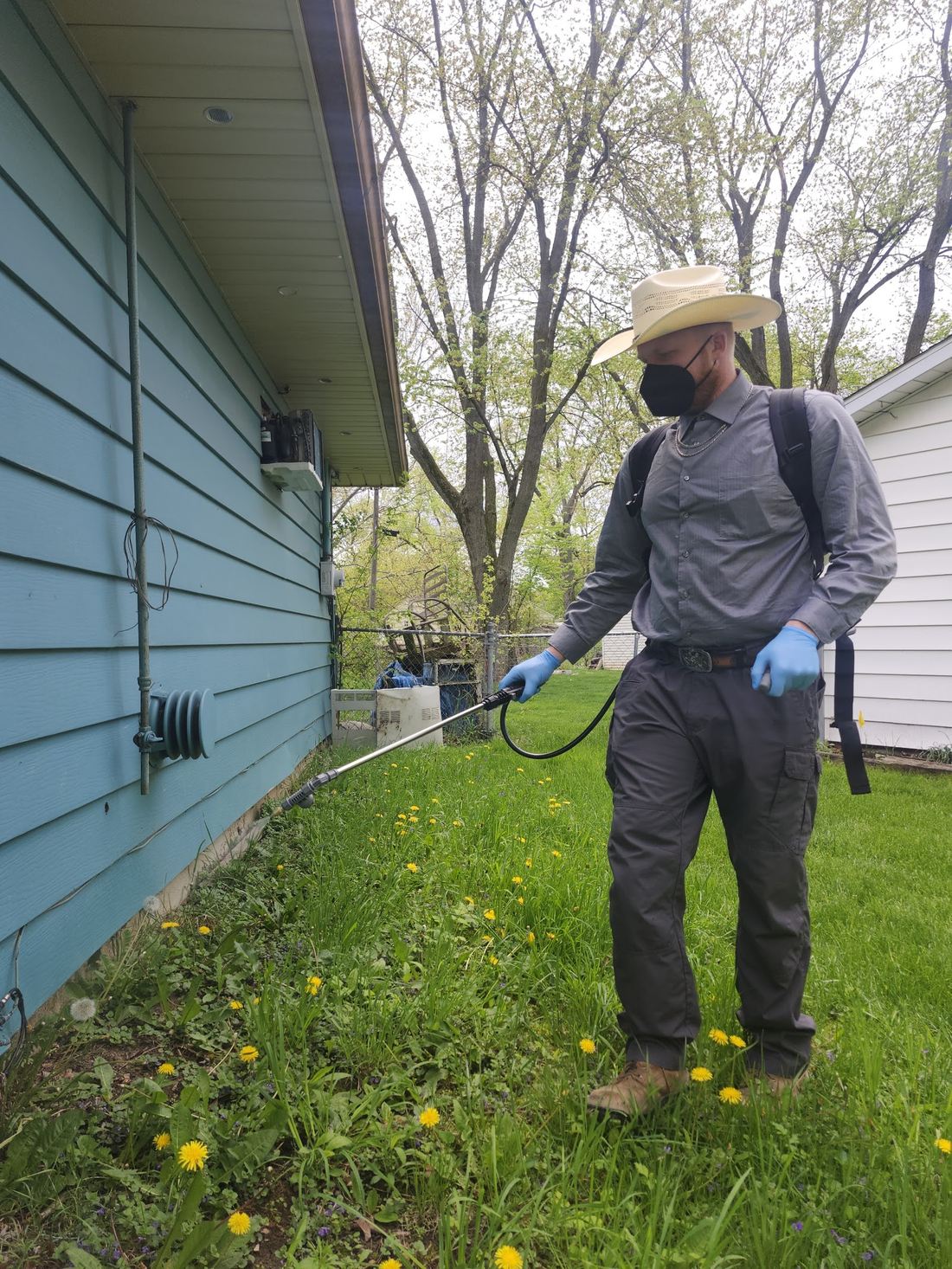
When John M. called Pest Patrol, Tristan Rouse came almost immediately. He gave a quote and explained what was wrong and how he would fix it. John said yes and asked how soon the work could be done. Rouse, John wrote later in a Google review, simply went out to his truck, suited up and did the work. An hour or two had passed since the first call.
There was no one else to send. Pest Patrol, in Fort Wayne, Indiana, is Rouse. “I do everything,” he says. “I do the scheduling, I do the administrative work, and I run my stops, I do my quotes, and I do the work.”
He was not supposed to end up on his own. “I worked for another local company for five years, and I was supposed to take his over,” he says. He decided against it, and in 2025 he left to start Pest Patrol. He has no plans to sell. “I love pest control,” he says. “I want to do it the rest of my life.”
What his customers write about, again and again, is how little distance there is between the phone call and the man in the yard. The person who picks up is the person who shows up, and he tends to show up soon.
Pest Patrol treats houses and businesses in and around Fort Wayne. Customers call about spiders in the basement, carpenter ants, crickets, mice and bed bugs. When the residential work is heaviest, Rouse says, much of it is stinging insects: yellow jackets living in a window shutter beside a front door, a paper wasp nest tucked into the back of a mailbox. One family set him up for a yearly preventive spray around the outside of the house. Others call once, when something has moved in.
On a busy day he makes five or six stops. The week has a shape. “At the beginning of the week, I’m pretty booked up all day,” he says, “but when it hits like Thursday, Friday, it gets slower in the pest industry. That’s just how it goes.”
The year has a shape too. House calls drop off when the weather turns cold, and commercial accounts carry the business through that stretch, so he works to keep both. “The more commercial you have, the better your winter is going to be,” he says.
People remember the clock. The customer with the mailbox nest called on a Friday around 1 p.m. Rouse arrived at 4:30 and was done by 4:50. The woman with yellow jackets in her shutter saw him the same day she called. A customer with crickets wrote that Rouse picked up on the first ring. He came the next day, on time, and sprayed inside and outside the house. A renter who found a mouse wrote that Rouse caught it and removed it the same day, then set traps inside and outside.
Much of the job is explaining. The woman with the shutter nest told Rouse she was very allergic. She wrote that he answered all of her questions and took the time to walk her through how the treatment works, how long it would take and when she could use her front yard again. A customer with a newborn and a dog wrote that Rouse gave exact instructions for leaving and coming back into the house, which put a nervous new parent at ease. A customer with carpenter ants got a call ahead of time to say Rouse was running early, and a rundown of the plan before he started.
One customer called about wasps in the attic. Rouse came on time and identified several species. He found that most of the nests had already been abandoned. He quoted a treatment around the outside of the house for later in the year. He does not push extra work. A woman who had put up with spiders in her basement for a while wrote that he came the next day and sprayed the basement that same day, and that he did not try to sell her anything beyond getting rid of the spiders. Some customers note that the work came with a warranty.
Some jobs take patience. A woman whose elderly mother had bed bugs wrote that Rouse treated the house three times, waiting between visits as he advised, until the problem was gone. She was in Roanoke, outside the city, and he kept her informed closely enough that she did not have to make the drive. On the day of treatment, she wrote, he took extra precautions for her mother.
He describes the standard simply. “I know I treat every customer like their family,” he says.
Rouse does not plan to stay a one-man shop. “I’m definitely trying to grow,” he says. He hopes to hire his first employee, either someone for the office or a second technician, depending on where the business stands. Someday he would like five to seven technicians. “But I mean that’s years down the road,” he says.
For now, the man who answers the phone is the man who comes to the house. One customer called after a spider attacked him in his sleep. Rouse killed it, then found and killed two wasp nests the customer had not asked about. Before he left, the customer wrote, Rouse told him not to let his dog outside for 30 minutes. He had killed everything, Rouse explained, and the man seemed to like his dog.