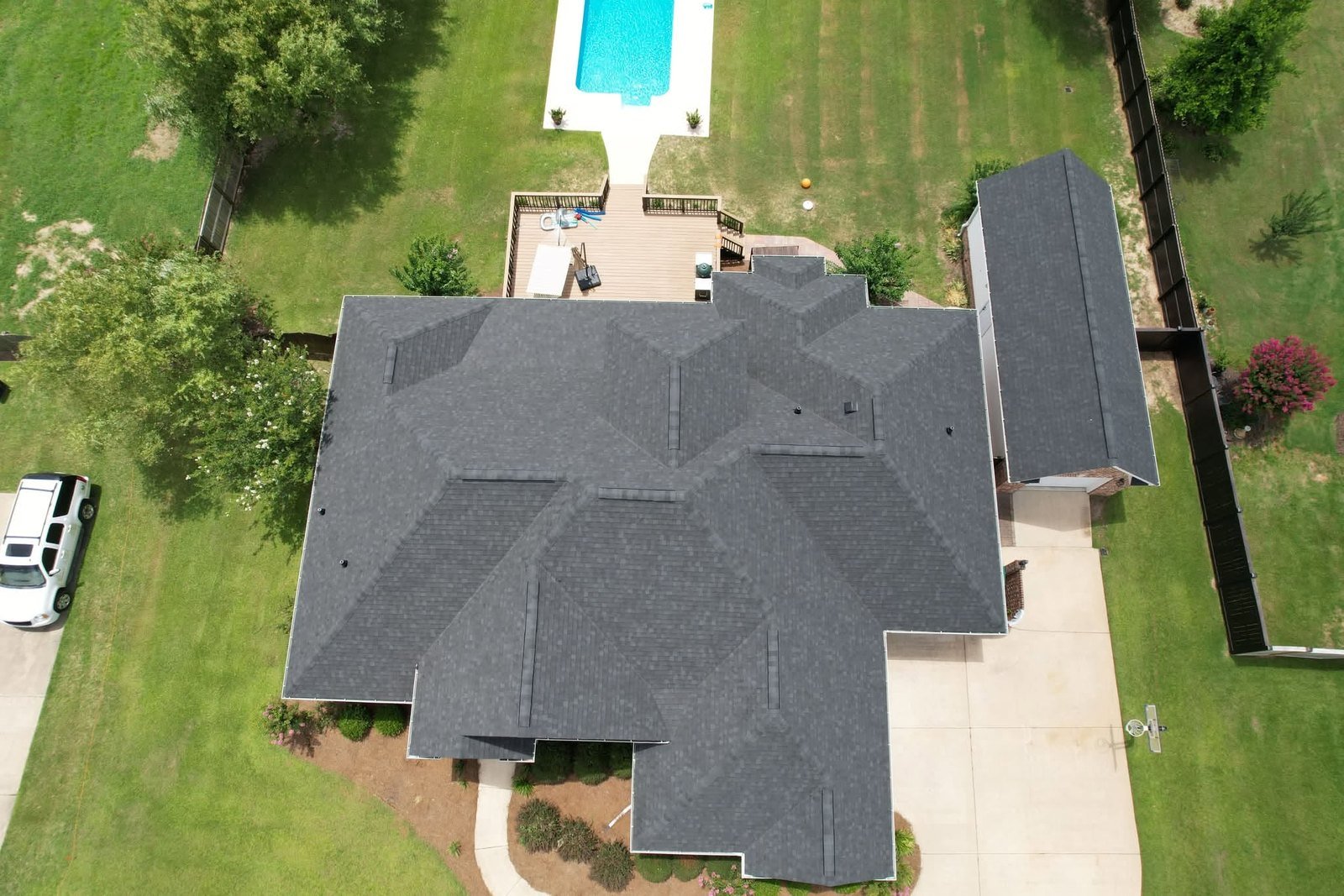
About half the roofs Optimum Roofing Company looks at need a repair, not a new roof, and the company puts that verdict in writing. Its own site is blunt about what that costs: every time it tells a homeowner a repair will do, it gives up the bigger sale. It says so anyway.
The partners who run the Dallas, Georgia, company started it in 2023, after years in the trade. One of them says they had been roofing for a while and simply decided it was a good time to start their own company. They would rather not run an owner-facing business, and they keep their own names out of it.
The rule he describes is short: the company never says it will do something it can’t do or wouldn’t do.
That rule meets its first test at the inspection, which is free. The company describes walking the roof itself, every plane, valley, hip and ridge, instead of studying it from the driveway through binoculars. Each penetration is photographed: pipe boots, flashing, chimney, vents. Someone checks the attic from the inside, since daylight through the decking and moisture stains show what the shingles hide. The homeowner gets a written verdict of repair, replace or fine for now, and keeps the report whether or not Optimum gets the job. The company points out that the paperwork also comes in handy the next time a stranger knocks on the door insisting the roof is shot.
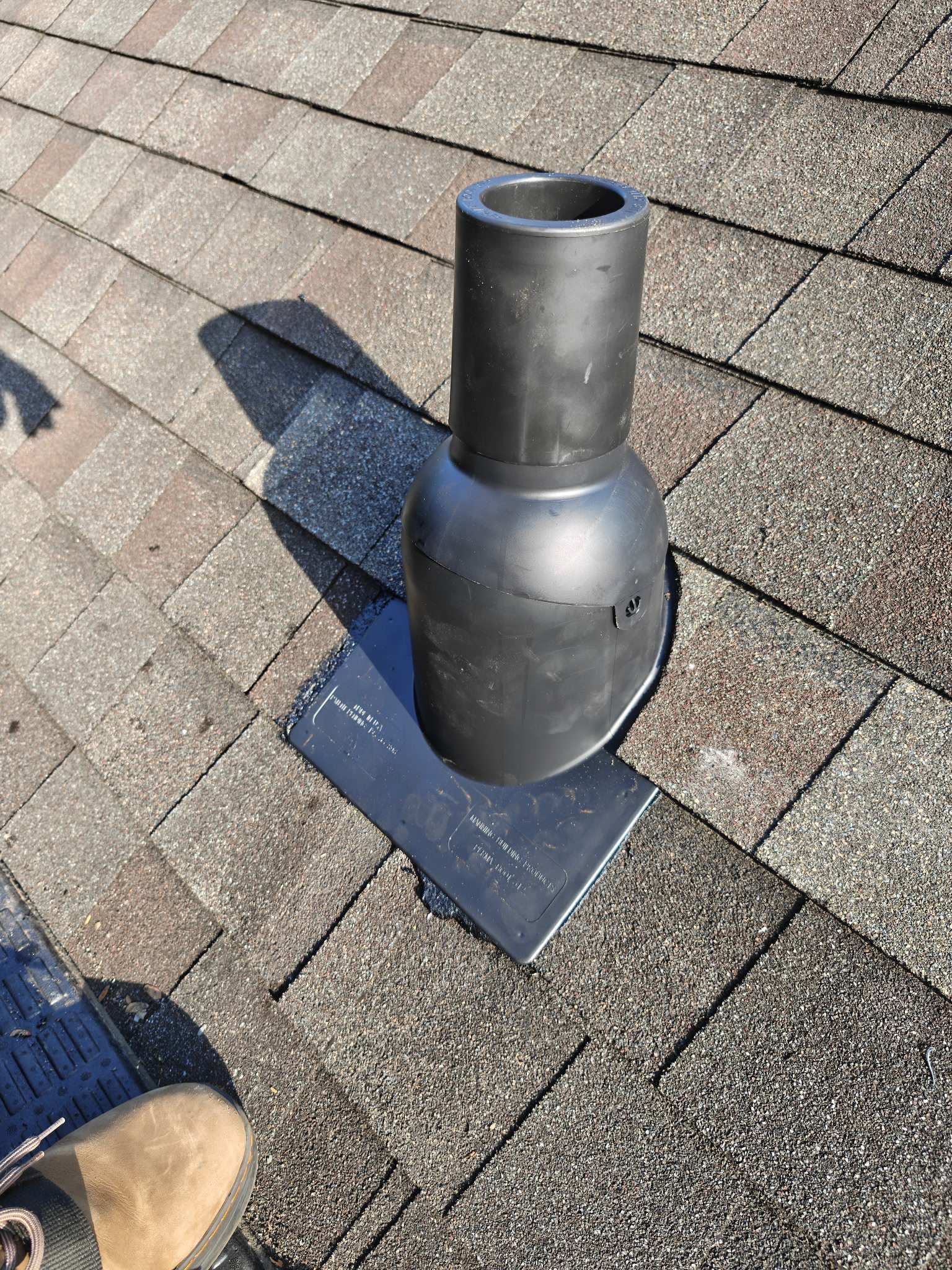
Most of the work, the partner says, is residential reroofing with shingles. He is careful about how he puts it: it is not a preference, just where most of the work falls. Storm and insurance jobs make up a share of the rest. On those, the company says it is on the roof alongside the adjuster rather than waiting in the driveway, and it documents the gap and files a supplement when an insurance payout falls short of the job.
The installation side runs on a small set of crews the company says it has used for years, rather than whoever is free that week, and everyone on a roof is safety certified. Optimum holds manufacturer certifications from Atlas and IKO, which is what allows it to offer a lifetime materials warranty on top of its own 10-year workmanship warranty. Both are handed over on paper.
Some of the metal never comes off a stock rack. The company fabricates its own flashings, chimney caps, drip edge and valley metal in-house, sized to the house in front of it, because cutting standard lengths to fit leaves seams where there should be none. It takes longer. The company credits it for the lack of callbacks on flashing.
One customer, a retired engineer, held the crew to a closer standard than most. He watched every step of a standing seam metal roof going onto his daughter’s house and climbed up to check the progress himself. In his review, he noted that the crew screwed the sheathing down instead of nailing it, snapped chalk lines so the screws landed in rafters, and laid heavy peel-and-stick ice and water shield beneath the panels. What impressed him most was the detail work around the penetrations, the part of a metal roof most likely to leak.
The partner says the crews pick up the standard by watching. His answer to how the rest of the team learns it is that he leads from the front, always. The same goes for the office, where he says they pick up the phone every time and respond quickly.
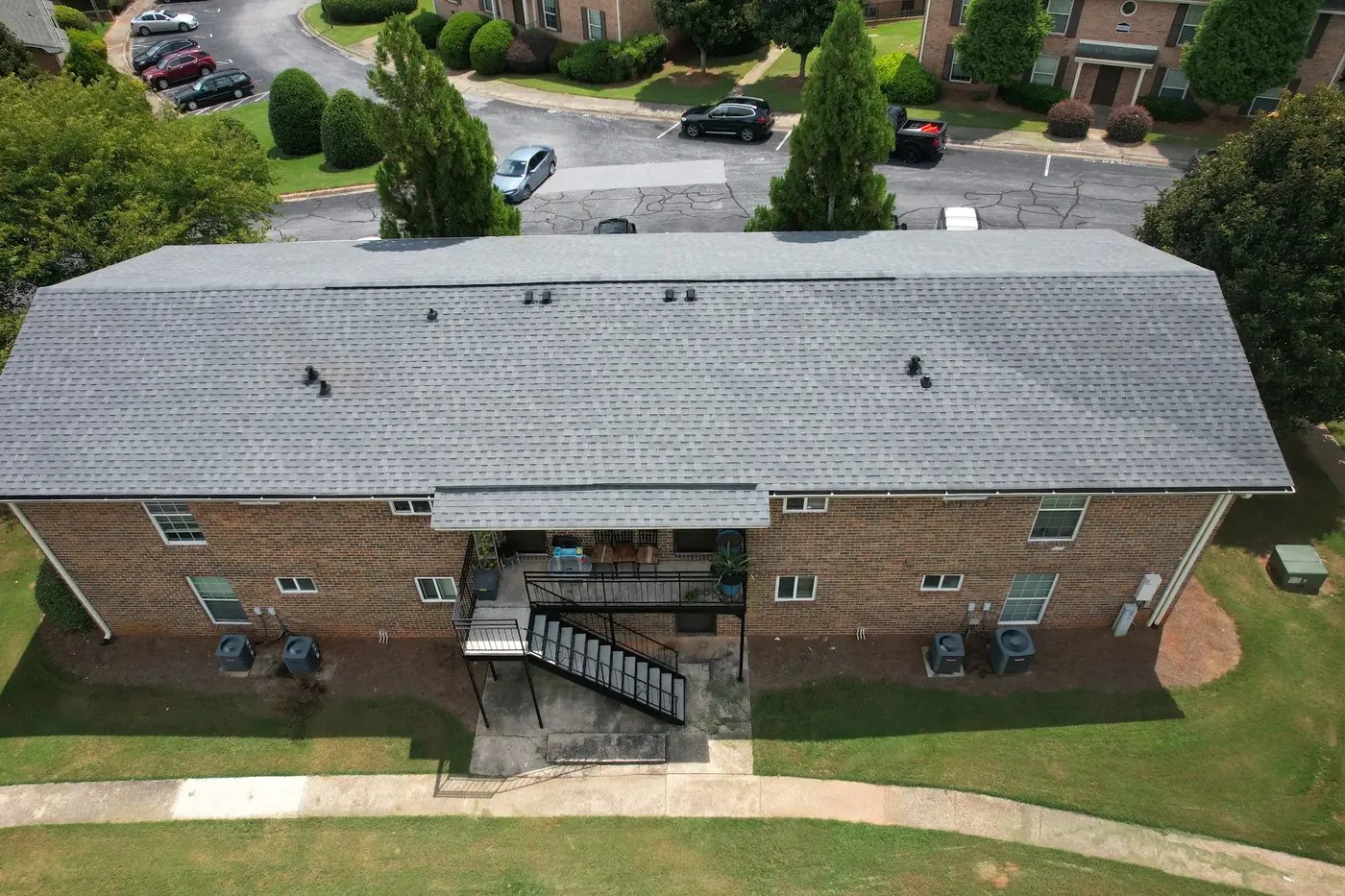
Paulding County, home base, is the ground the company covers most, and its trucks are regularly in Cobb, Cherokee, Douglas, Bartow and North Fulton counties and the city of Atlanta. The partner says the range stretches when a job calls for it. “We can go basically anywhere in the state of Georgia and Alabama,” he says, though the usual reach is about 100 miles from Atlanta.
When a job wraps, the company photographs the finished roof from the air, so the homeowner sees all of it rather than the slice visible from the street. Then comes the final step. A tear-off drops thousands of nails, and while most land in the debris, some do not. Before the crew pulls off the street, someone walks the whole property with a magnet.