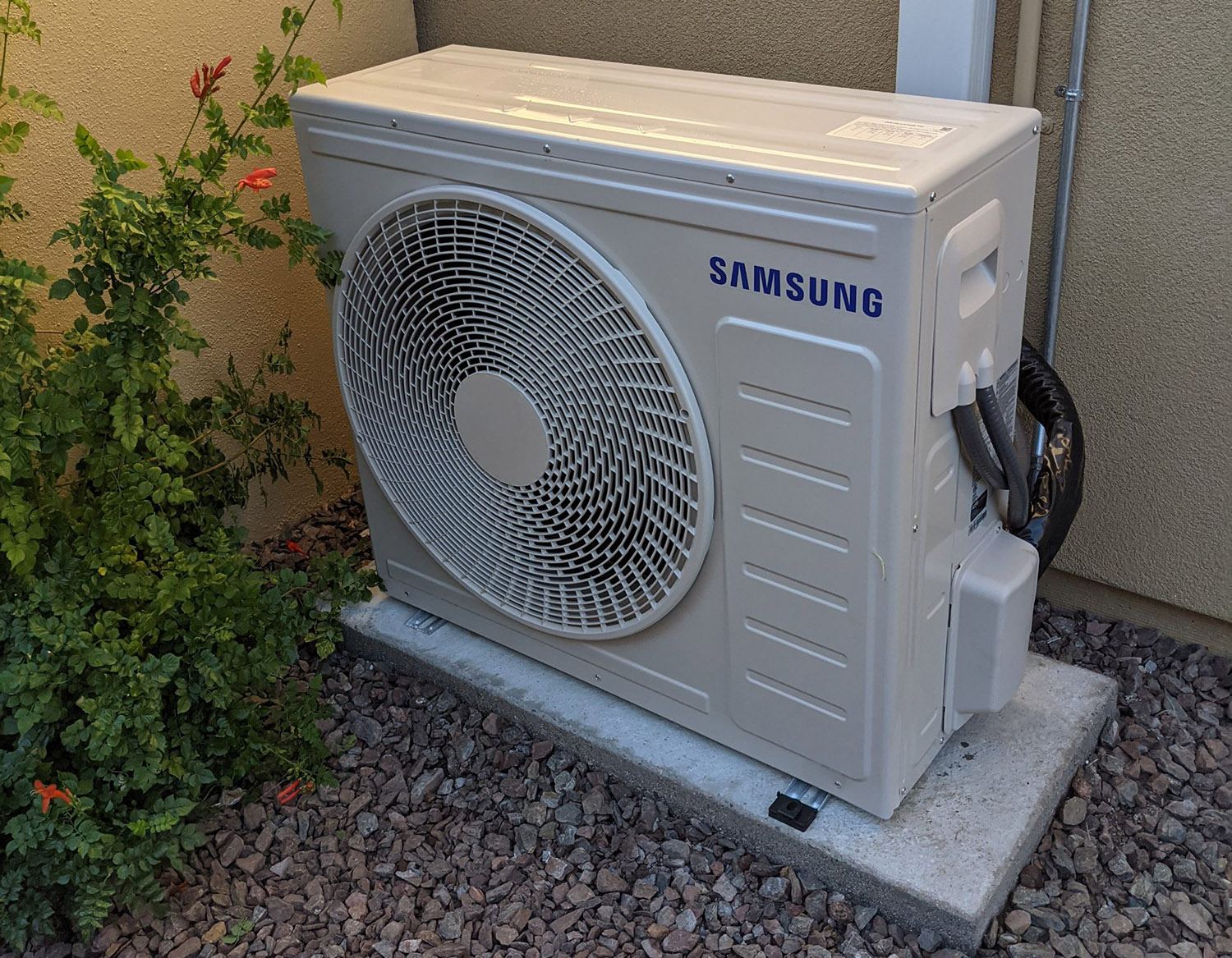
The air conditioning at Jake’s, a restaurant at Wickenburg Ranch, had been out for about 10 days when Robert, the owner of Mini Split Master, was sent to look at it.
“They send me out there. I throw my gauges on it,” he says. The system ran normally. He hooked up Bluetooth gauges, sat downstairs in the restaurant with a soda and watched the readings on his phone. “Every pressure’s good, heat’s good, everything’s good.”
He went home. About three and a half hours later he looked again. The pressure was dropping and the heat was going up. “Wait a minute. There’s something going on,” he remembers thinking. He went back, climbed the ladder and pulled the panel.
“Somebody left a manual inside the unit,” he says.
The manual, about 10 pages, had been lying in the bottom of the unit. Moving air pushed the pages up against the evaporator, which gets damp as it runs. “The pages would blow up there and they’d stick,” he says. After about four hours, the unit would run hot and shut off. The fault took hours to show itself.
It wasn’t a mini-split job. Robert points out that the company does commercial work beyond mini splits. But the story shows how he likes to work: leave the instruments on a system and see what it does after everyone has left. “Everything I’ve got is all Bluetooth gauges,” he says.
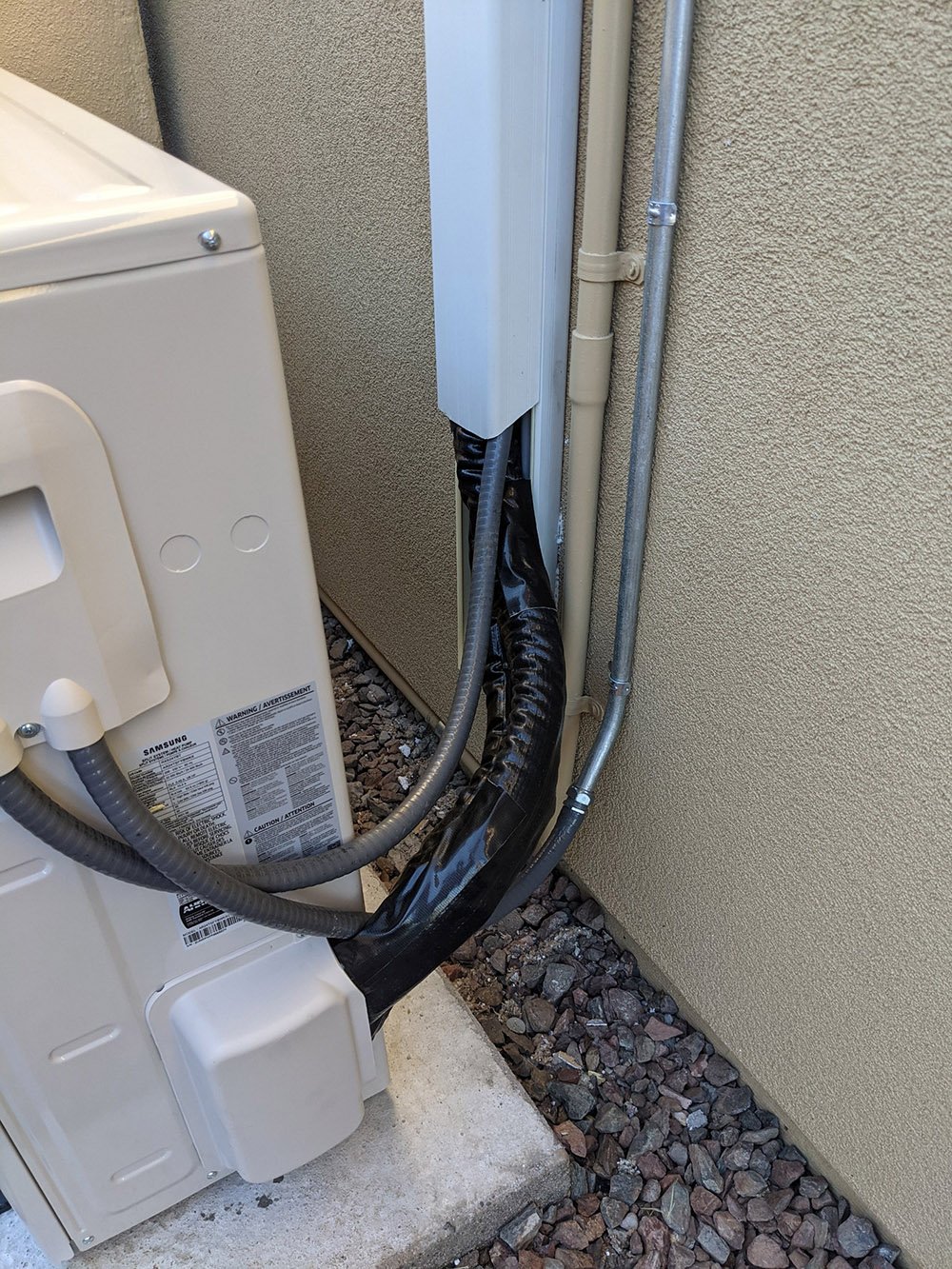
Mini Split Master installs and repairs ductless air conditioning and heat pump systems in North Phoenix, Scottsdale, downtown Phoenix, Wickenburg, Rio Verde and Cave Creek, according to the company’s website. Robert owns it. The website says the company is licensed by the Arizona Registrar of Contractors for residential and commercial installations, is bonded and insured, and is a Samsung Preferred Dealer. It also installs units from a range of other manufacturers.
Robert says he founded Mini Split Master around 2020, but his experience goes back much further. He came to the United States from Holland, where mini splits were common, as they were across Europe. He went back several times to help his family put them into houses and stores. He says he has been working with mini splits and HVAC for 50 years, on jobs in Holland, Germany, Belgium, the Bahamas, Indiana and Florida. Among his photos, he says, are pictures of himself working on mini splits in 1970 and wearing a hard hat on top of the FBI building in Indianapolis in 1986.
The company started out serving the Wickenburg area before expanding to other parts of the Valley, according to its website. In 2023 it installed what it calls its first custom, HOA-approved surround for a mini-split unit there.
Robert is at his best explaining how the machines work, and he reaches for a cordless drill to do it. Old corded drills had a single speed. “You plugged them in and they had one speed, you pulled the trigger, woah, it went like hell,” he says. Older compressors work the same way. They run flat out, shut off and dump the pressure they built, then start again from zero. An inverter-driven mini-split compressor ramps up to bring a room to temperature, then slows down instead of shutting off. The refrigerant stays pressurized, and he says that is where the savings come from. The company’s tagline is “the art of temperature control,” and he means it literally. “It’s an art, you figure out what you need and you put it in there,” he says.
He says the company has trained with the manufacturers. “We’ve been to school with Samsung, Fujitsu, all the name brands,” he says. He also says many brands come out of the same factories under different names, and that he can look at a unit, name the maker of its compressor and tell within about six months when it was built.
Much of the work is repair. One customer, Kathy, wrote in a Google review that her mini split wasn’t cooling well and that it made a difference to call a company whose core business is mini splits. The technician found the problem and fixed it that night, she wrote. “My techs are all licensed,” Robert says.
Some problems never need a truck. He says he walks customers through simple fixes by phone, like a dead battery in the remote, or points them to the QR code that leads to a how-to video, with the office ready to help if that doesn’t work. “I can almost talk somebody into figuring out what’s wrong with their unit, just on the phone,” he says. “It’s just experience.”
When a unit has a problem he can’t explain, he says, he doesn’t blame the owner. He pulls it and sends it back. “I’m going to get you a brand new one. Bang, done,” he says. And if a customer still isn’t satisfied, he says, “we give them their money back.”
For commercial jobs, the company’s website says, it fabricates its own mounting hardware in its own shop, including mounts for metal buildings, ceiling trusses and rooftops, anti-theft enclosures and mounts for vehicles. The site credits Robert with decades of fabrication experience.
Garages come up often. One customer, Laura, wrote in a Google review that after the company put a mini split in her garage, she hired it again to insulate the space. Robert also owns a spray foam insulation company and sees the two trades as a pair. “The two are going hand in hand,” he says.
His long-term plan is to pass the trade on. He wants to open a school for HVAC and electrical work, and he says he is working on it now. “My long-term goal is to build a school, to teach HVAC, AC, and electric,” he says.
He knows what kind of school. “A school where nobody has to pay,” he says, “a school where we teach somebody to go to work.”