Milwaukee Tool began with a one-handed drill and nearly lost its way
The Wisconsin toolmaker came out of a factory fire, built the Sawzall, drifted for years, and then rebuilt itself around the tradesman who uses a tool all day.
Brookfield, WI
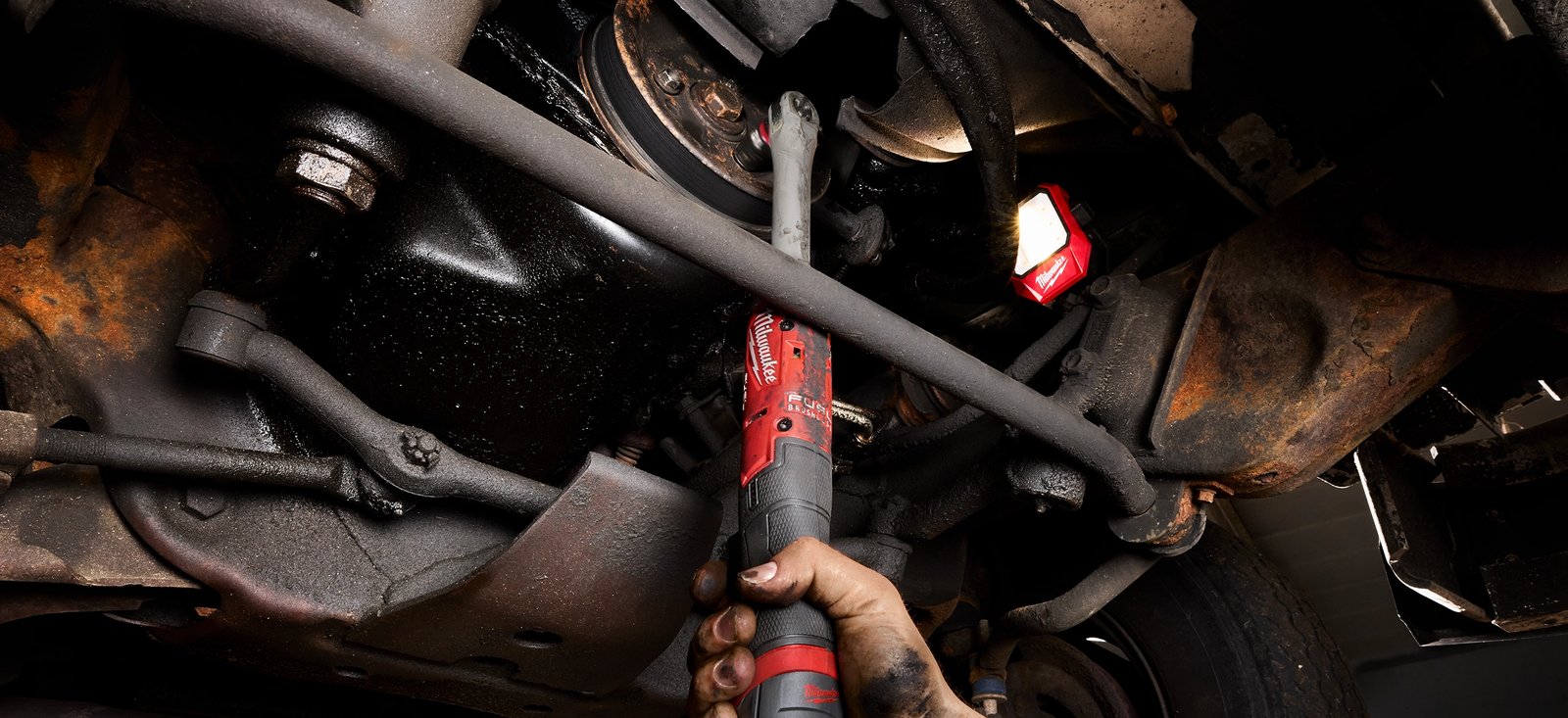
The tool that Milwaukee Tool points to as its beginning was small enough to hold in one hand. It was a quarter-inch portable drill called the Hole-Shooter, and it was made for the automobile assembly line.
Steve Kenitz, a quality manager at the company’s hand tool plant in West Bend, Wisconsin, opened his account of that history with a disclaimer. “Obviously not a historian,” he said on the Fifteen Minutes with Fuzz podcast in 2025. Then he described the drill that Henry Ford’s assembly lines needed. “It was actually the first lightweight one-handed drill, which kind of revolutionized the productivity that Ford Motor Company had at their manufacturing lines,” he said.
The company itself rose out of a failure. According to a history published by SlashGear, the business started as the A.H. Petersen Company, a partnership between A.H. Petersen and Albert F. Siebert. In 1923 a fire destroyed the manufacturing plant, and money trouble closed the company for good. Siebert bought its assets at auction and renamed the business the Milwaukee Electric Tool Corporation. The company counts 1924 as its founding year and marked its 100th anniversary in 2024.
Milwaukee Tool has been owned since 2005 by Techtronic Industries, a Hong Kong company listed on the Hong Kong Stock Exchange. The more interesting part of its story is how close it came to losing its focus, and how a new group of managers decided in the late 2000s to go back to its roots.
At first, the company stayed in business by repairing tools rather than making them, according to SlashGear, and that work eventually led to new products. Employees studied competitors’ tools and set out to build ones that would stand apart, with more durability and a customized motor meant to raise performance and make the tools last longer. The Hole-Shooter caught on in automotive and metalworking shops. The U.S. government allowed the company to make its tools to Navy grade, and during World War II the Hole-Shooter was used to build aircraft. The Navy began ordering from Milwaukee.
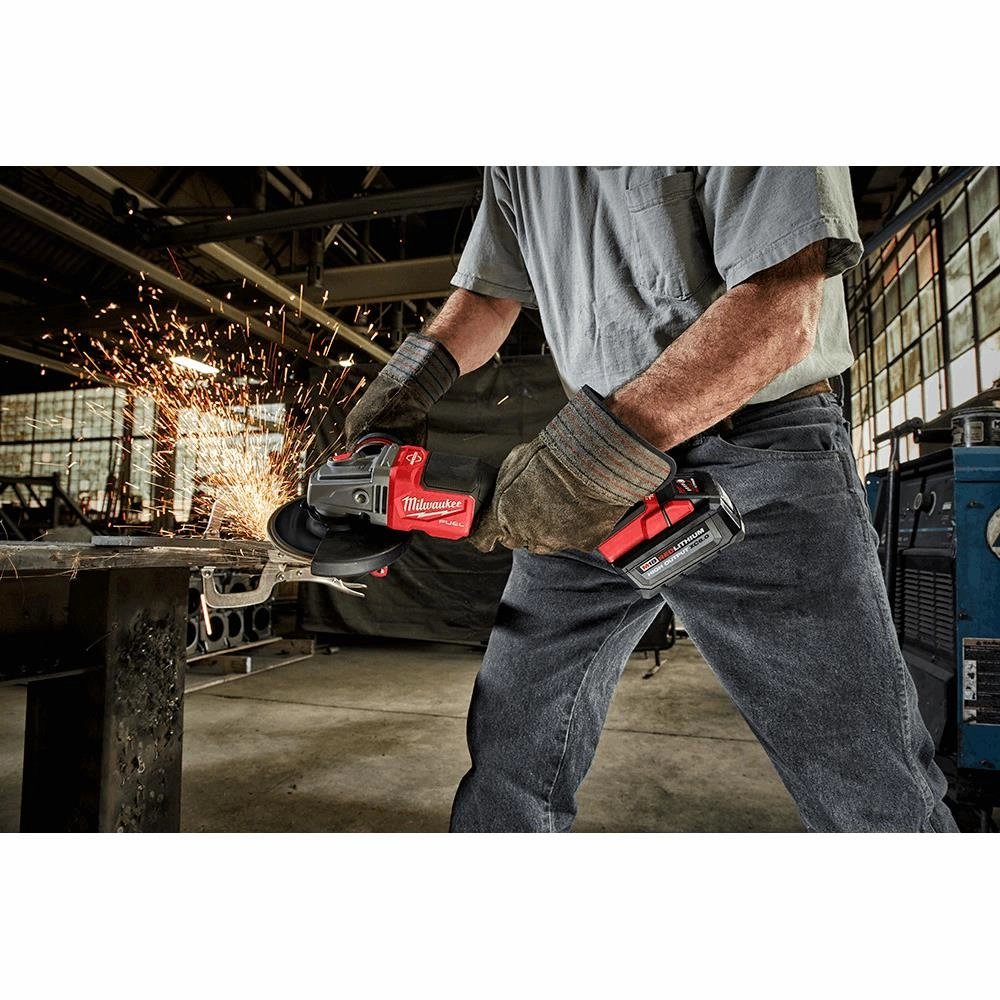
The years after the war produced the tools the company is still known for. Steve Richman, the company’s president, pointed to two of them in a 2016 interview with BizTimes Milwaukee: the first right-angle drill and the Sawzall reciprocating saw, introduced in 1951. Other manufacturers eventually built their own versions of the Sawzall. The company says it launched its first band saw in 1967. In 1974 it opened a manufacturing plant in Mississippi, and in the 1970s it became the first American power tool company to make a 4-1/2-inch angle grinder, according to SlashGear. The Super Sawzall followed in 1991.
By the start of the 2000s, though, the company had drifted. It was known for a variety of tools, and by its own later admission it had lost focus on what made it popular in the first place.
Techtronic bought the company in 2005. Richman arrived in 2007, after a career that included Black & Decker, Werner Ladder, Skil and Bosch, and he found two problems. The first was that Milwaukee was not focused on the professional trades and was “dabbling” in a number of areas while “not doing a great job in doing any single one of them well,” he told BizTimes Milwaukee in 2016. The second was that its ideas came from inside the building instead of from the people using its tools.
The fix was the company’s own past. “That was the foundation that when a new group of us came nine years ago, that we sat up and said, ‘We need to go back to our roots,’” Richman told BizTimes Milwaukee.
Going back meant picking a customer and building for that person. The company aimed itself at the professional trades: mechanical, electrical, plumbing, HVAC, maintenance and repair, and remodeling. “We don’t design products for do-it-yourselfers,” Richman told BizTimes Milwaukee. “Now, a lot of passionate do-it-yourselfers may want a product that performs, but we design products for those professionals and those professional trades.”
Kenitz put the same idea in shop-floor terms on the Fifteen Minutes with Fuzz podcast in 2025. “Not to say that Milwaukee Tool doesn’t care about Bob, the DIYer,” he said. “But if we focus on Jim, the electrician, the one that’s professionally using these tools day in and day out in the field, not really having to worry about Bob, the DIYer is kind of something that comes along with that.”
Distributors were skeptical. When Richman’s team told them how much they meant to change the company, “They really didn’t believe us,” he told BizTimes Milwaukee. At the time, Milwaukee was known as a maker of corded power tools. It had little commitment to power tool accessories, no hand tools at all, and about 3 percent of the North American market for cordless tools.
The bet that followed was on batteries. The company built its cordless tools around two platforms, M12 and M18, so that one battery would run a whole family of tools. A tradesman who bought an 18-volt drill could use the same battery in another M18 tool, which gave buyers a reason to stay with the brand. The company added a hand tools business unit in 2011 and bought Empire Level, based in Mukwonago, Wisconsin, in 2014. In 2020 it rolled out MX Fuel, which the trade publication For Construction Pros described as the first system of battery-powered light equipment. Its One-Key system lets crews track their tools and assign them to specific workers from a phone instead of with pen and paper.
The reset showed up in buildings and payrolls. The company’s headquarters campus in Brookfield had more than 700 employees by 2016, more than triple its 2009 workforce, according to BizTimes Milwaukee. In Mississippi, its headcount grew from 526 in 2010 to more than 2,343 in 2020, LBM Journal reported. In 2021 the company announced a manufacturing plant in Grenada, Mississippi, to join its sites in Greenwood, Olive Branch and Jackson.
That same year it opened a 150,000-square-foot service hub in Greenwood, Indiana, its first location in that state, to complement an existing service hub in Greenwood, Mississippi. The Daily Journal reported that both facilities serve customers around the country.
The West Bend plant came out of a gap in the hand tool line. Many unions and trade groups require tools made in the United States, and domestically made tools were missing from Milwaukee’s offerings. The company broke ground in West Bend in 2020 and opened the plant in 2022. By 2025 it was turning out hand tools there, including cutting pliers and screwdrivers.
The company had carried its hometown’s name for nearly a century while based outside the city. In 2021 the city of Milwaukee put together a deal worth up to $20 million to bring as many as 2,000 of its employees to HQ501, a former office building at 501 W. Michigan St. on the west side of downtown. The Common Council approved the deal, and the company bought the building.
Robert Bauman, the area alderman, had a simple view of it. “Frankly it’s about time for a company with Milwaukee in its name to return to Milwaukee,” he told Urban Milwaukee in 2021.