Master Halco grew from one press in an El Monte garage
The fence and deck supplier started in a California garage in 1951, and one former logger’s career runs through much of the history between then and now.
Dallas, TX
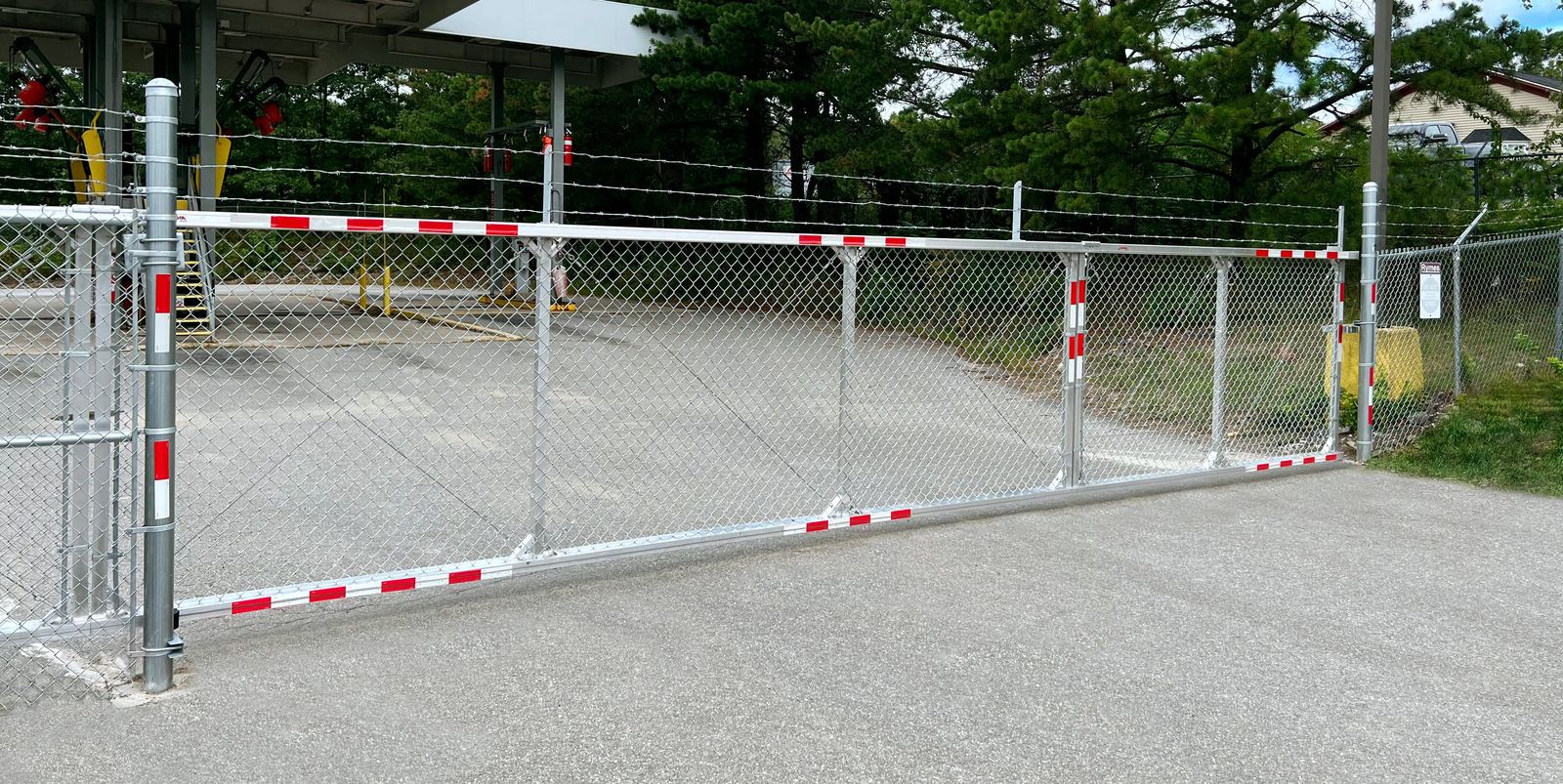
In 1951, a company called Master Fence Fittings went to work in a small garage on Garvey Avenue in El Monte, California. The company’s history lists the equipment: one press and a few hand benders.
Seven years later the phone was ringing for something else. “Master Fence Fittings was starting to receive many calls to handle pipe and tubing and now it was necessary to expand into this field,” former owner Donovan O’Donnell said, as quoted in the company’s published history. In 1958 the company started Master Pipe, Inc. In 1961 it added Master Sales, Inc., so it could make its own chain link fabric.
That garage shop is now Master Halco, a manufacturer and wholesale distributor of fencing, decking and railing products based in Dallas. Its customers are professional fence and deck contractors and building material retailers. It does not sell to the public. When its parent announced a deal in 2025, it counted four plants in the United States, two in Canada, 66 branches in the U.S. and five in Canada. Master Halco is a wholly owned subsidiary of New York-based Itochu International, part of Tokyo’s Itochu Corp., and it was already an Itochu subsidiary in 2000.
Most of the company’s history reads like a list of acquisitions. But one career threads through a large stretch of it, and it began with a logger who sold to a fence company’s sawmill.
In 1975, at 29, Jerry Short owned a logging business. One of his customers was Halco Fence & Wire, which ran its own sawmill and bought his logs. Short told the story in a 2022 interview in FenceView, Master Halco’s own publication.
In 1981 he went to work for Halco as superintendent of its sawmill in Hadlock, Washington. A few months in, he gave the executive team a presentation on how the mill ran. FenceView reported that it was 180 degrees from anything they had been told about the operation. They promoted him to plant manager.
Around the same time, Master Fence Fittings acquired Halco. The company’s history dates the deal to 1980 and says it brought 12 service centers and a plant that made galvanized chain link fabric. In 1984 the combined business took the Master Halco name.
Short doubled production at Hadlock. It was not enough. The equipment was old, replacing it made no sense, and in 1989 he told the executives the company should shut the mill down. His crew knew the closing was coming and kept working hard anyway. Short had set up a rewards program to keep spirits up: lotto scratch tickets and popsicles. He also took on the job of finding his workers new jobs. He went to local businesses and got all 20 of his men placed.
The company kept him. In 1990 it sent him across the United States and Canada to study wood markets region by region. After two years on the road he gave executives a report on how large the wood business was and how Master Halco could compete in it. By 1993 the company had built a wood department and put Short in charge. It handled purchasing, forecasting, pricing and inventory for roughly 40 branches.
When the company overhauled its brand in 1999, it hired Transformational Branding, the firm that had branded Gateway, the computer maker known for its cow-spotted boxes. Short moved to California to build the fence displays used in the photo shoots. The logo from that rebrand stayed in use for more than 20 years. In 2001 he became director of marketing.
He left in 2008 to be vice president of sales and marketing at TMI Forest Products, now Alta Forest Products, which FenceView described as a sister company to Master Halco. He came back in 2010 as region manager for the Northwest, overseeing six branches. Two years later he had the whole West Coast and 13 branches. In 2013 he was director of marketing again.
From 2018 he ran the company’s marketing programs, including Masters Club, a customer program he had started. He described it as a networking event for contractors, Master Halco associates and vendors. In 2022 the company won Best Island Booth at FenceTech, an industry trade show, and the following week Short ran what he said would be his last Masters Club before his planned retirement.
His advice to contractors was practical. “This is definitely an industry you can have a career in for yourself and your family, because it’s an industry that is going to have longevity,” he said in FenceView in 2022. The way to succeed, he said, was to offer customers options and teach them about those options. “Let them understand the value of what you’re offering, and they will pay for that value.”
The company grew mostly by buying other fence businesses and opening branches.
Its first sales branch opened in Hayward, California, in 1964, in a temporary office inside an old one-room construction shack. Larger warehouses came later. In 1972, Olney, Illinois, became the sixth location and the second manufacturing plant, and the company began making vinyl-coated chain link fabric. The Olney branch marked its 50th anniversary in 2022.
The company crossed into Canada in 1995 by acquiring McLellan Fencing and forming Master-Halco Ltd. In 2005 it bought two Quebec companies, Clôtures Lasalle Ltée and Clôtures Bel-Air Ltée.
In 2000 the Los Angeles Times reported that Master-Halco, then based in La Habra, California, had agreed to buy Reeves Southeastern Corp. Reeves had 32 branches in the eastern U.S. and plants in Tampa, Florida, and Birmingham, Alabama. In 2006 Security Systems News reported that the company would combine its Baltimore and Scranton, Pennsylvania, plants into a single 270,000-square-foot facility in Scranton and build an East Coast distribution center. The plan was announced at a press conference with Pennsylvania Gov. Ed Rendell, and the state offered a $1.2 million assistance package. Greg Jendreas was president and chief executive at the time.
By 2019 the company counted 53 branch locations. That year its chief executive, Scott Suh, addressed contractors in Fencepost, the American Fence Association’s magazine. “The need for privacy, security and containment is nearly limitless,” he wrote.
The same year Master Halco acquired Jamieson Fence Supply. Ben Wallace, the Halco Fence & Wire president who had sat in on Short’s sawmill presentation, had gone on to own Jamieson.
Some newer products depart from the company’s chain link roots. In 2021 the fencing manufacturer Betafence named Master Halco its exclusive North American distributor of Prism 3-D welded wire panels, a security fence sold as an alternative to chain link. Since at least 2019 Master Halco has also sold PostMaster, a line of steel posts meant to replace wood posts and round metal ones. The company pitches it as an end to an old neighborhood question: which side of the fence gets to be the good-looking one.
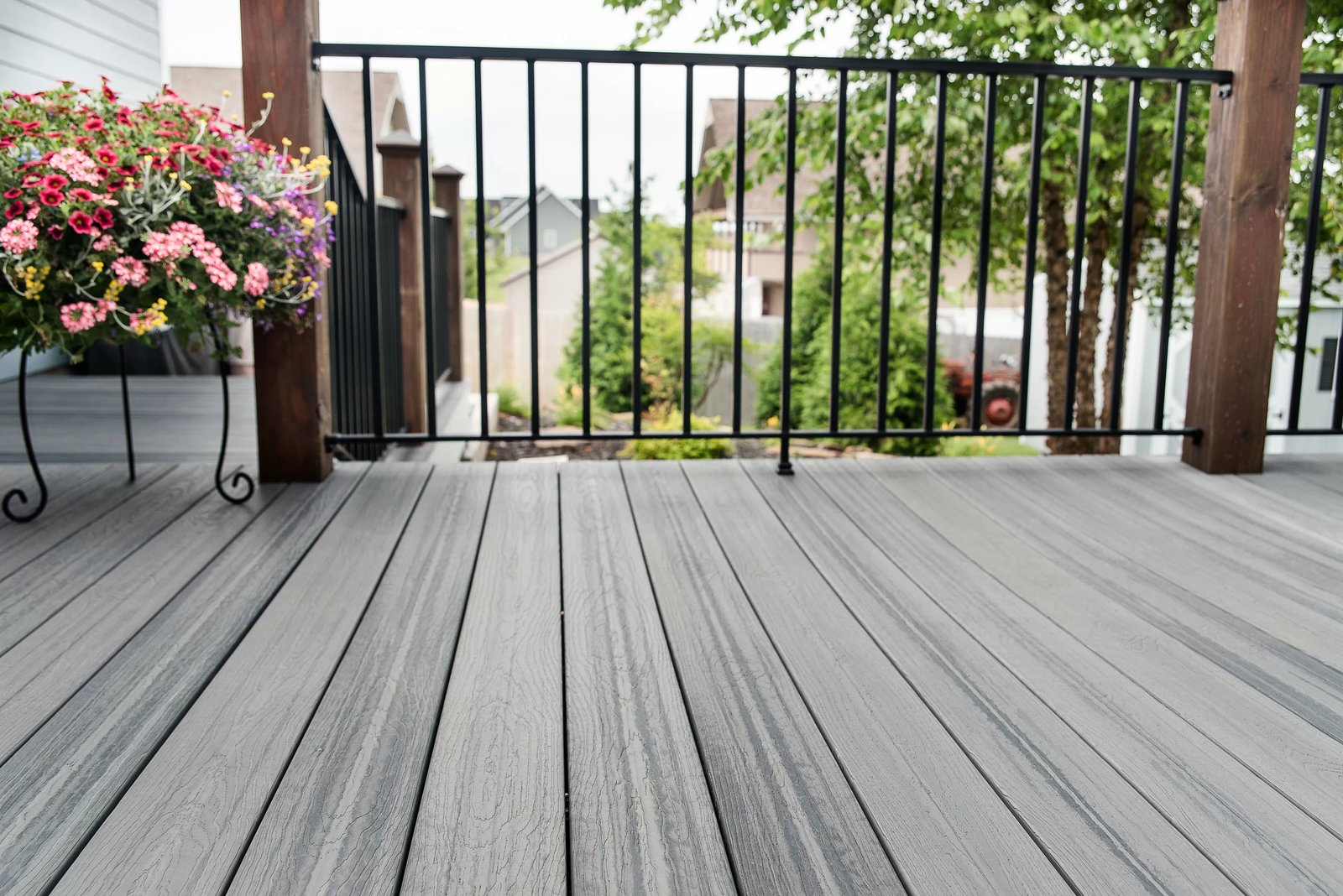
The latest additions lean toward the backyard. In 2024 the company bought US Vinyl Fence and Forest Product Sales in Salt Lake City. In 2025 Itochu announced that Master Halco, led by President and CEO Tatsuro Kimura, had taken over the outdoor living business of The Deck Superstore in Commerce City, Colorado. That company was founded in 1963 and ran from a single location, yet Itochu called it one of the largest outdoor living wholesalers in the country by product volume. Decking and outdoor living products, Itochu said, had become a major second business for Master Halco alongside fencing.
Short had put the long view plainly to contractors in 2022. “There will be adjustments that you will have to make and challenges you will have to face,” he said, “but the need for fencing will always be there.”