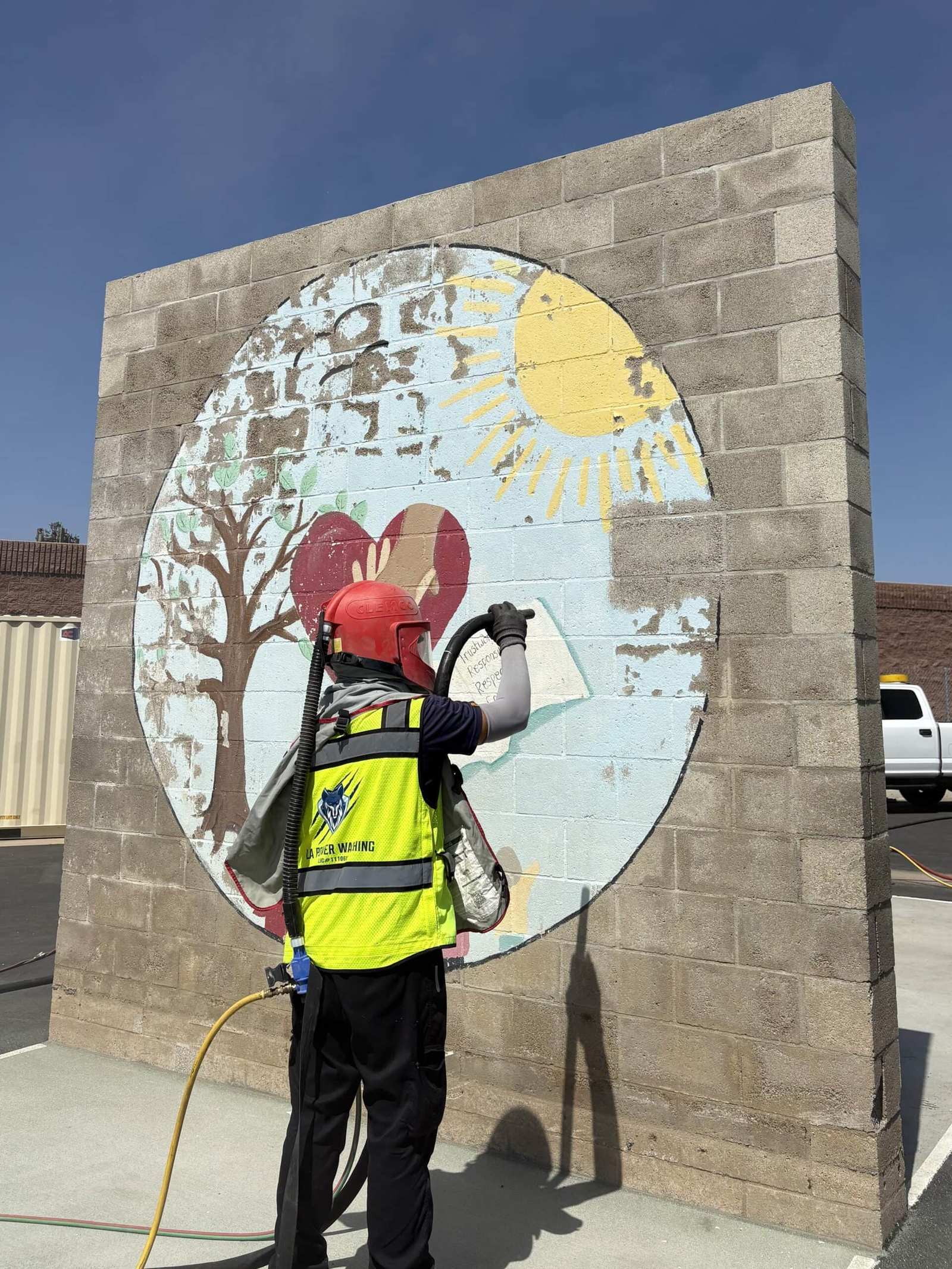
When LA Power Washing takes on commercial sandblasting, the job is usually old paint on wood beams, in restaurants and places like them. Before the full blast begins, the crew does a sample.
“We also do samples before starting, for sandblasting and also pressure washing, so the customer knows what’s the final outcome,” Luis says. The customer sees a patch of the finished surface before the rest of the job goes ahead.
Sandblasting throws a lot of dust, and the crew plans around it. They seal the doors before they start and ask the customer to speak up the moment any dust gets inside. “Text us or give us a call,” Luis says. The company also runs dustless blasting equipment, which mixes water into the abrasive to keep the dust down.
Luis runs the company out of Whittier with his father and a crew, hauling mobile equipment to jobs across Los Angeles and Orange counties and farther east into San Bernardino County.
He learned the trade working for a larger pressure-washing company, and what he noticed there was how much room the work had. “I did see the potential it had, doing pressure washing, helping out people with their properties, also commercial projects,” he says. That is where the idea for his own company came from. He started small, pressure washing and cleaning roofs, then moved into sandblasting, which now brings in most of the commercial work.
The washing side kept growing alongside it. The company uses hot-water pressure washers to break down grease and oil, and homeowners associations keep it on maintenance contracts. Residential work is still the larger share, and Luis values it for what it brings beyond the job itself. “You meet a lot of people, you have a lot of connections,” he says.
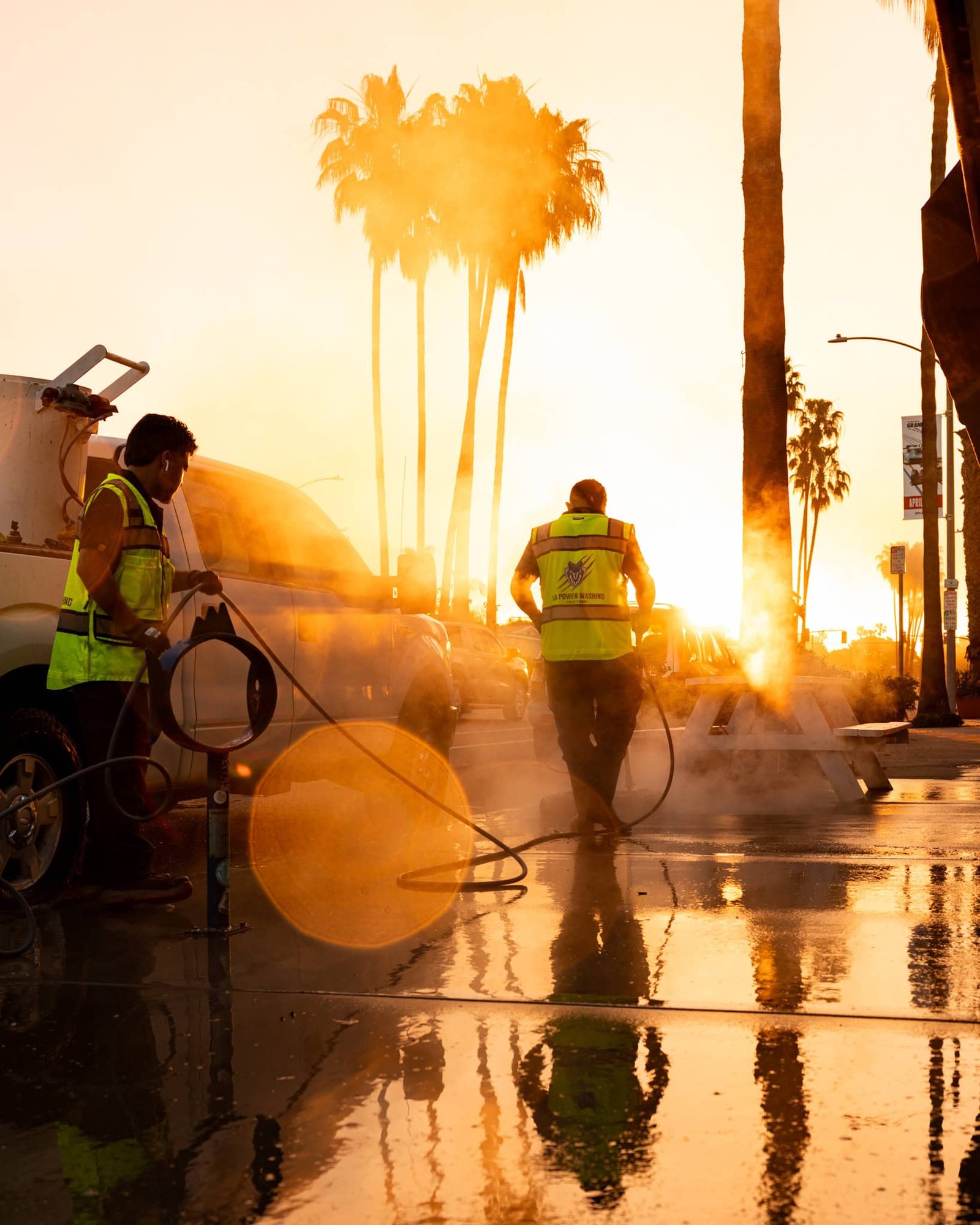
As the business picked up, his father took notice. He had been working at a restaurant, and Luis told him he could join if he wanted. His father has backed him in it ever since, and the two now work side by side. Customers have picked up on the arrangement; more than one has described the crew in reviews as a father-and-son team. Luis wants it to stay that way. “My idea is to keep it within the family,” he says.
That arrangement shapes how he thinks about the work. When Luis is on a job himself, the result belongs to him. “I’m the owner, so it’s going to be on me,” he says. Quotes go out through a contractor app with the disclosures spelled out, and a quick text keeps customers posted on when the crew will arrive. The crew heads out confident it will take the job and do what is needed to solve the customer’s problem.
He asks the same of the people who work for him. They are to keep good communication with the customer and be straightforward about whatever the customer tells them. A bad day at home stays at home. “Try to wash it off and do your best to give a good face when you’re out there with the customer,” he says.
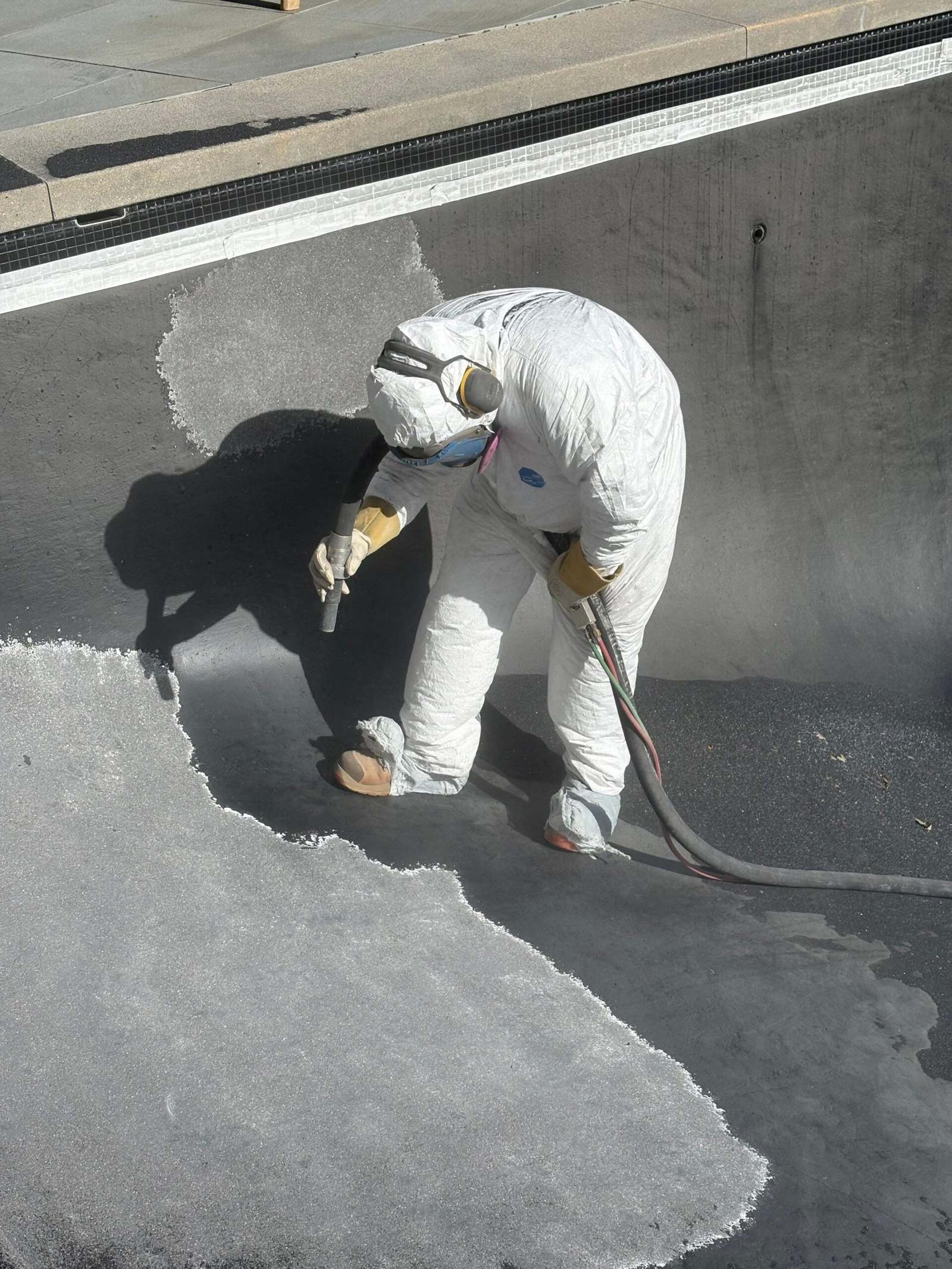
The sample shows a customer how a surface will look. The part of the work Luis likes best is what that surface does afterward. “What really makes me happy is solving an issue for a person,” he says. His example is pool coping gone slippery, the kind people have already fallen on. When the crew finishes and the surface is corrected, he says, the payoff is plain: “You could probably save someone getting injured.”