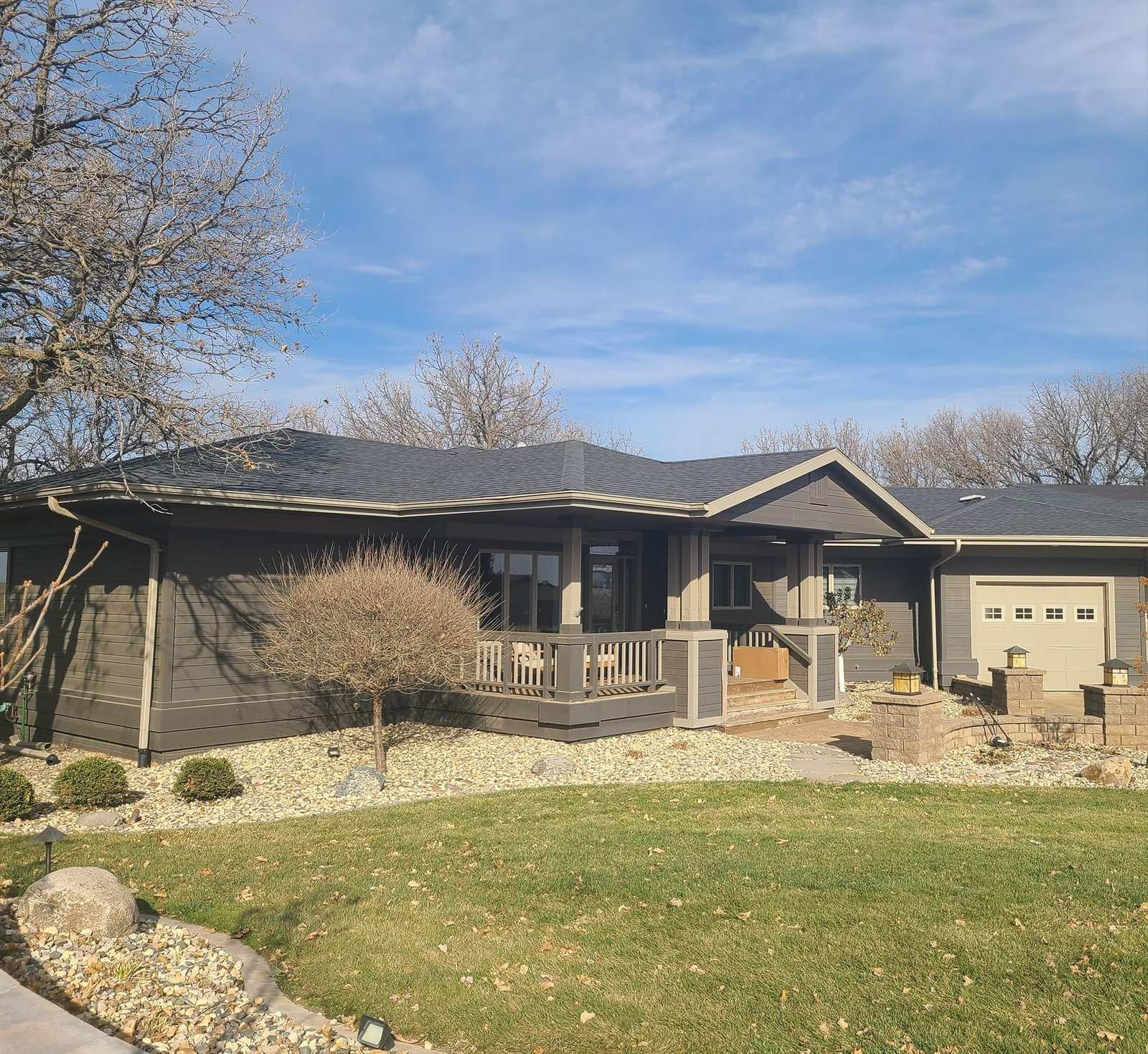
The house in Crooks needed a full re-deck. As Mark James’s crew pulled out the old plywood, they found a little box stuffed down in the insulation. Someone carried it off the roof, knocked on the front door and handed it to the homeowner.
Mark has been taking roofs apart since high school. His family moved from Ohio to South Dakota during his freshman year, and his father, who had roofed his whole life, started James Roofing & Construction here in 1989. Mark worked beside him from the start. He tried a little college and a few other paths, he says, and “always made it back to roofing.” Over the years he came to run all of his father’s crews, doing the work himself, and later bought the business from him.
His father, Mark says, “was just a go-getter,” a personable man whom people liked. That goodwill built the company’s first base of customers. The craft came with him too. “He was an old school hand nailer,” Mark says. On his father’s roofs, every nail was driven by hand. “A lot of our repairs we still do that way,” Mark says. “I enjoy the hard work, and all my guys do.”
The people around him have stayed a long time. Chad has worked with Mark since high school and spent years on roofs before Mark moved him into sales, which the two of them now handle. A woman runs most of the crews, and the longest-serving crew has been with the company about eight years. A couple of the men Mark’s father hired in the early days stayed on until they retired from the company.
Residential roofing is the bread and butter. Mark says his crews can do almost any size house in a day: tear the old roof off, put the new one on and haul the debris away in their own dump trucks and trailers. Lumberyards deliver the materials to the site and pick up whatever is left over, so the crews spend their hours on roofs instead of loading trucks.
The cleanup counts as part of the job, gutters included. “Usually when we’re finished with the job, their yard looks better than it did before we got there,” Mark says.
The company also keeps coming back after the roof is done. On top of the manufacturers’ warranties and its own five-year workmanship warranty, Mark says, anyone whose roof James Roofing installed is covered for most repairs as long as the company is in business. If a past customer calls with two or three shingles blown off, “we just go fix it for free,” he says. One homeowner learned how far that goes. She had bought a house James Roofing reshingled for the previous owners, and a storm soon tore off some shingles. When she called, she was told the work was fully guaranteed, and a crew showed up the next day.
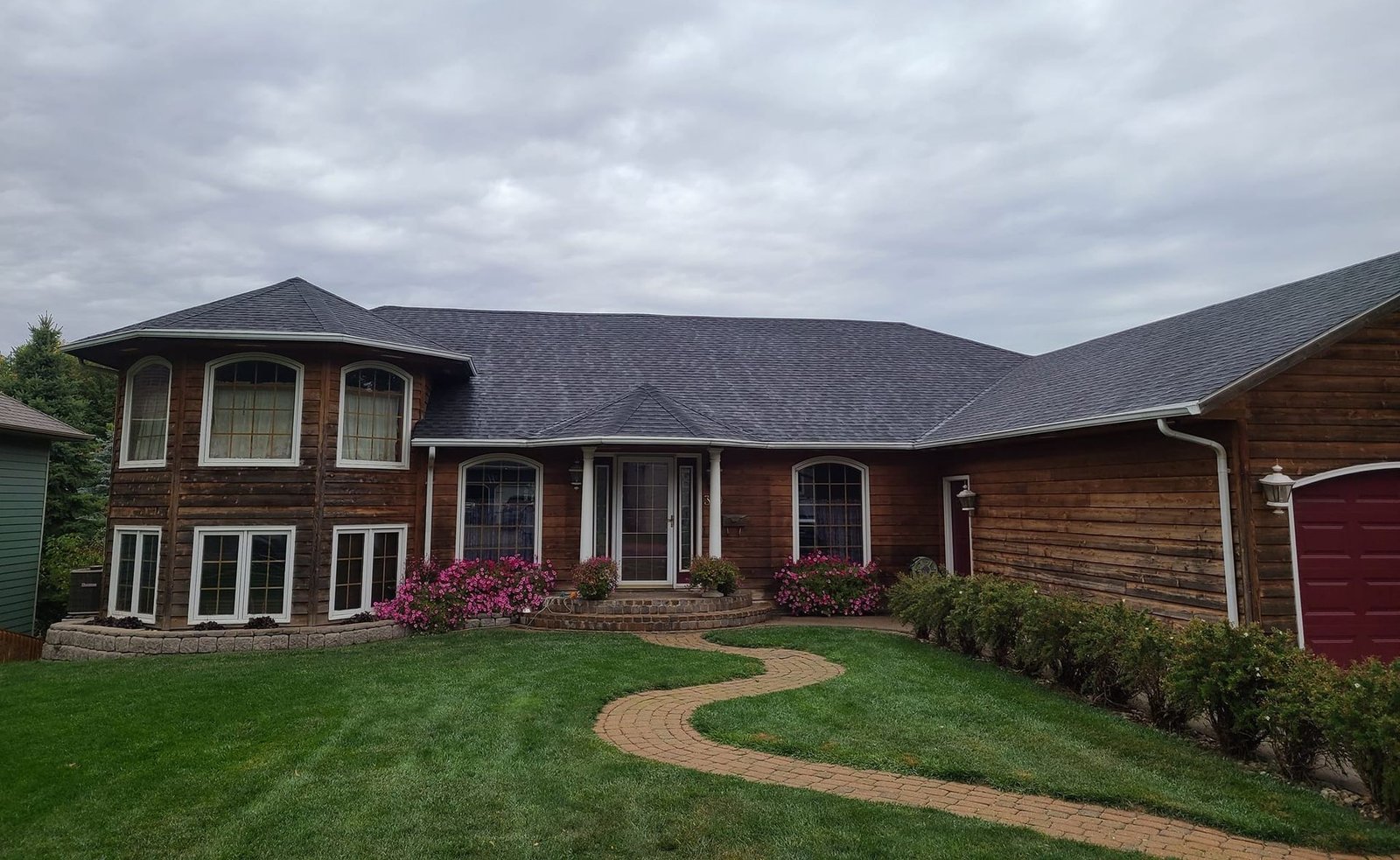
That work has carried the company well beyond Sioux Falls, across the eastern half of the state and as far as the North Dakota border. Much of it is in small towns, where one roof tends to lead to the next. “You start working on someone’s house and then a neighbor comes over and starts talking to you,” Mark says. “Next thing you know you’re doing their house.” The crews have done whole neighborhoods that way.
Crooks is one of those towns. The house where the box turned up had been in the same family for four or five generations. Inside, as Mark recalls, were pictures and trinkets that went back to the homeowner’s great-grandmother. A small local article was written about the find afterward.
“It was kind of cool,” Mark says.