
Husen Radjabov gives customers a day and a time, and then he keeps it. The habit has a price. “That makes my life harder because I have to work seven days,” he says.
He has promised a customer 6 p.m. or 6:30 and headed over at the end of a long day, worn out, because that was the time he gave. If his crew is running late, he says, the customer gets a call. “If I set something that we’re going to do, or we come this day, we come and we finish,” he says. People should get what they were told to expect.
Radjabov, who owns Hi-Tech Plumbing Services in Winnetka, takes lateness hard wherever it happens. Arriving after the time he said frustrates him whether the appointment is a job or the gym. He says he takes things “too serious,” and when something goes wrong, the stress reaches his technicians too. A plumber who once worked for him, an easygoing type, kept telling him to relax. He couldn’t. “It’s probably just what you are,” he says.
He learned the trade in England, where he started as an apprentice and spent about six years as a helper at one company. When he moved to the United States, he says, he didn’t know what to do, so he started over as an apprentice and put in another four or five years with a company here before getting his license.
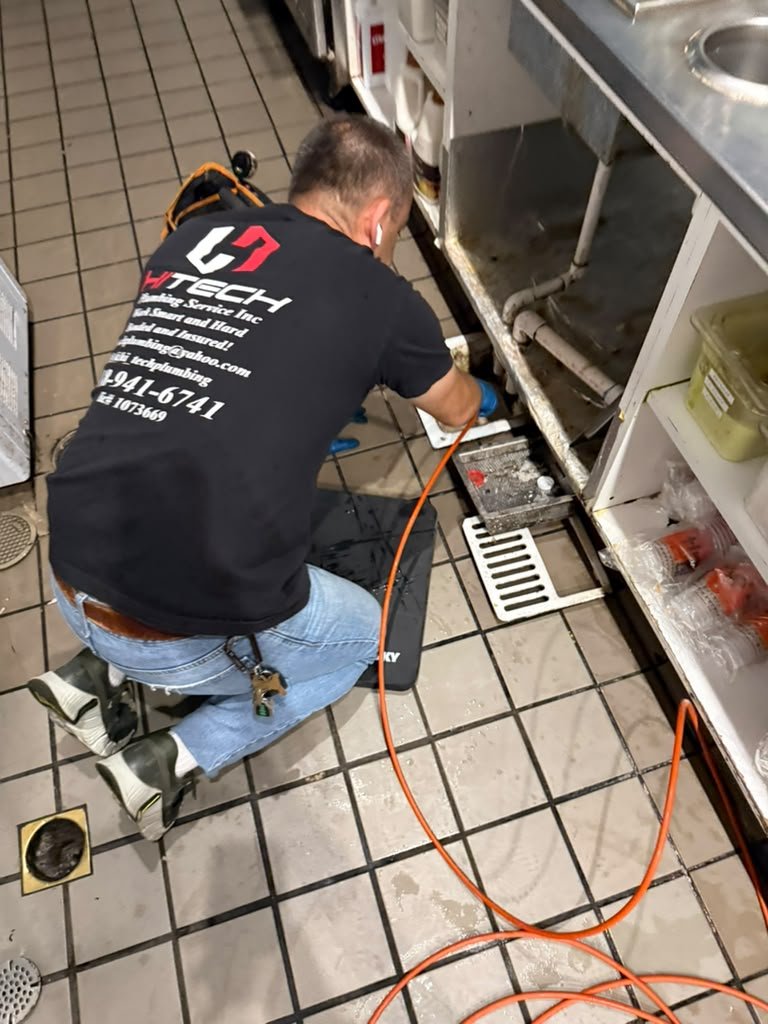
He started Hi-Tech in 2020 and worked alone at first, kept busy by a steady run of home-warranty calls. Retail customers followed, and he began hiring. He now has four technicians. Most of the work is residential, which is what he prefers: service calls, remodels and new construction, with a commercial job taken when it comes.
The warranty work is where some customers first see the follow-through. One homeowner, sent to Hi-Tech by a warranty company for a water heater problem, recalled in a review posted on the company’s site having braced for a wasted visit. Instead the technician diagnosed the problem, ordered a part, called back to reschedule once it arrived and finished the repair the next day.

Every week Radjabov sits the crew down and goes over the pluses and minuses: the mistakes, what went well, the reviews that came in. The rules he repeats don’t change. “We have to be in time, we have to be responsible, we have to be clean without any damages,” he says.
He doesn’t want Hi-Tech to get much bigger, mostly because of the time it would take. He hasn’t decided whether he would sell someday. He compares the company to a child he has raised from the beginning.
“If you grow more, maybe it’s good, business-wise, but the quality will drop down for sure,” he says. “You’re going to get some sloppy works, which I hate.”