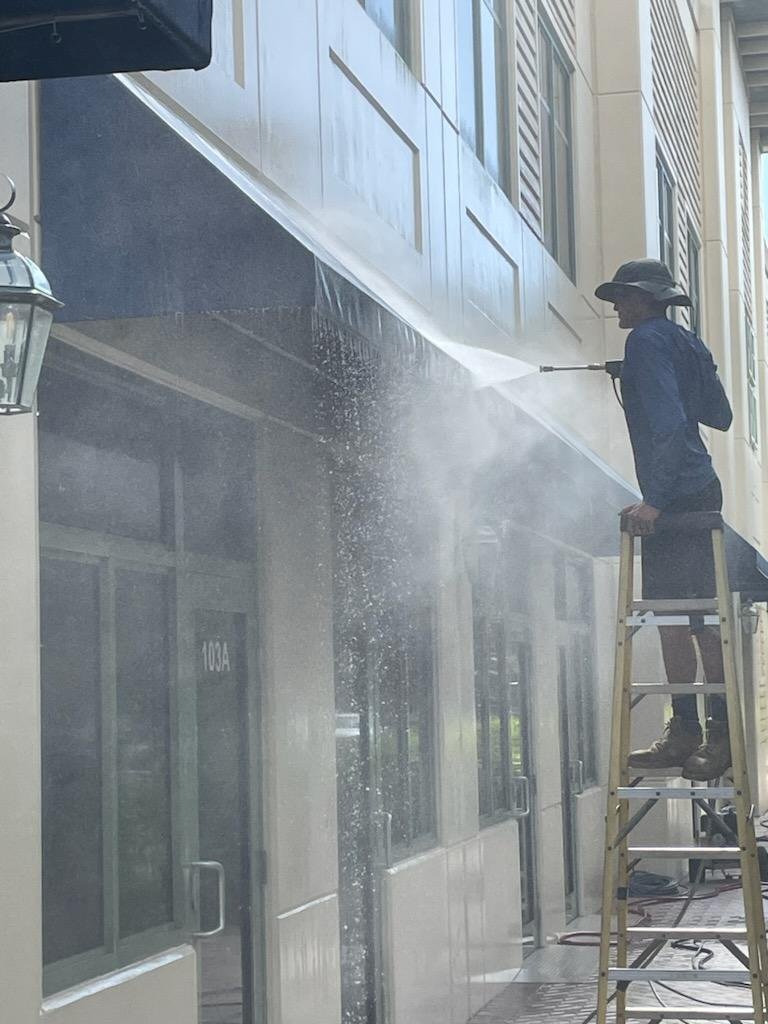
Jordan Marrale was complaining about his job at a poker table when a man he barely knew made him an offer. Marrale worked in landscaping then, and he didn’t hide how he felt about it. “Man, I hate landscaping. I would do anything besides doing this,” he remembers saying.
The man said he could use someone he could train to clean windows. There was a catch. “We hang off buildings,” Marrale recalls him saying. A lot of people, the man told him, can’t take the height.
Marrale took the next Monday off to see for himself. The man threw a rope over the side of a building, showed him how the gear goes on the rope, got in the chair and slid down. Then he set Marrale up and told him it was his turn. “I slid down the rope very slow and ginger,” Marrale says. He wasn’t comfortable, but he wasn’t so afraid that he couldn’t work. That was 1993 or 1994.
Glass Act Cleaning, which works out of Davie, is what that Monday turned into. Marrale ran his own window-cleaning company from 2000 to 2010, then folded it into a janitorial venture with a friend, a plan to combine their companies that didn’t last. He opened Glass Act in 2012. Heights stopped bothering him long ago. “I’m actually more comfortable on the side of the building than I am in my own office,” he says.
The choice that shapes the company is how it hires. Rather than bring on several people at once to grow, Marrale adds one at a time and trains each from scratch. “I’ve chosen to hire one man at a time, train him the way we like the work done and to our standards,” he says. He would rather teach someone the job correctly from the start than bring in workers with habits learned elsewhere.
Glass Act sends out two crews, each with two or three people depending on the day. They work through the day, every weekday and sometimes on Saturdays. Marrale answers the phone himself and goes out to the jobs to shake hands with customers. Many clients have his cell number, and he has theirs. “People know that when they get Glass Act, they’re getting Jordan and all my experience with it,” he says.
The training matters most inside people’s homes. Marrale says nobody on his crews goes into a house until he trusts them. “I know that you can trust my guys around your $50,000 Rolex without a problem,” he says. He expects the same care with the glass. “If it takes a little extra scrubbing, it takes some extra care around the framing or the caulking to bring out the best possible outcome, my guys are going to do that automatically without a supervisor looking over their shoulder.”
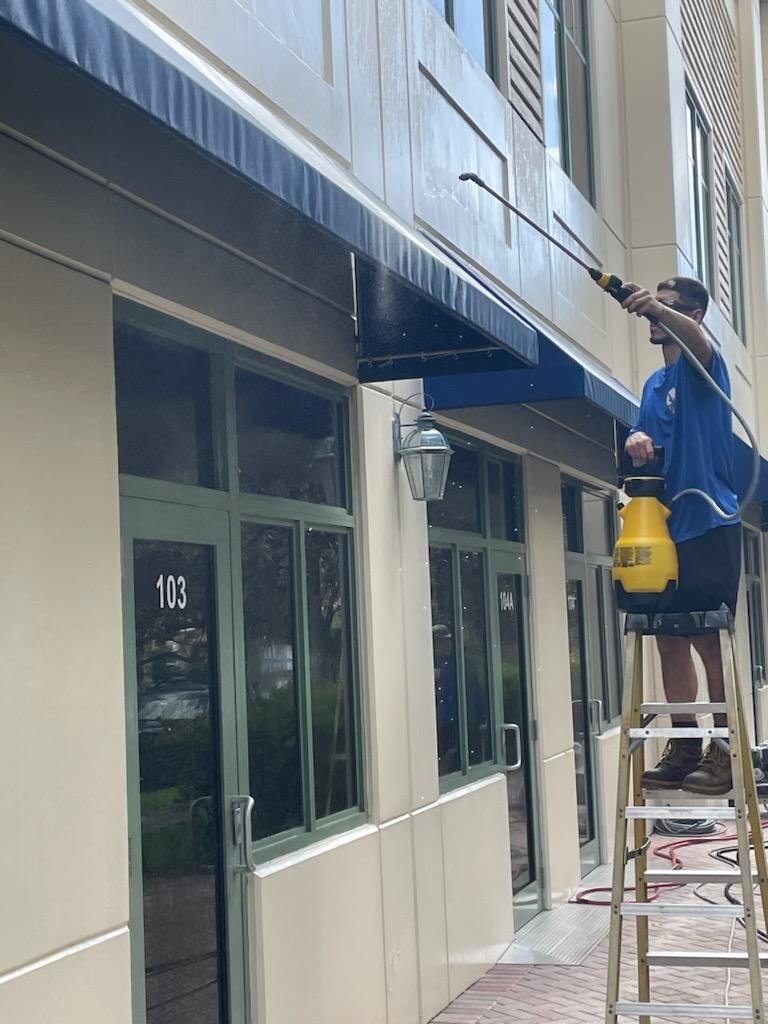
A company this size still runs on a schedule. Marrale uses customer-management software that sends clients a text and an email the day before, with a window for the crew’s arrival. In the morning, the crew opens the app, confirms each job and reads its notes. When they head out, the customer gets a text, and the status changes again when they pull up. At the end, the crew asks the customer to look over the work. “Can you walk around with me and make sure that you approve and everything looks to your satisfaction before we leave?” is the question, Marrale says. The software also handles callbacks. If a customer asks to hear from him in six months, the system reaches out, so the call doesn’t depend on his memory.
The work runs from single-family homes to high-rises, and Marrale says he wouldn’t pick one over the other. Commercial accounts with weekly and monthly cleanings give the schedule a base he can plan around. Residential work is where he thinks a company shows what it is. “You stand out when you’re a company that is based on quality, because people are really looking at what you’re doing in their homes,” he says.
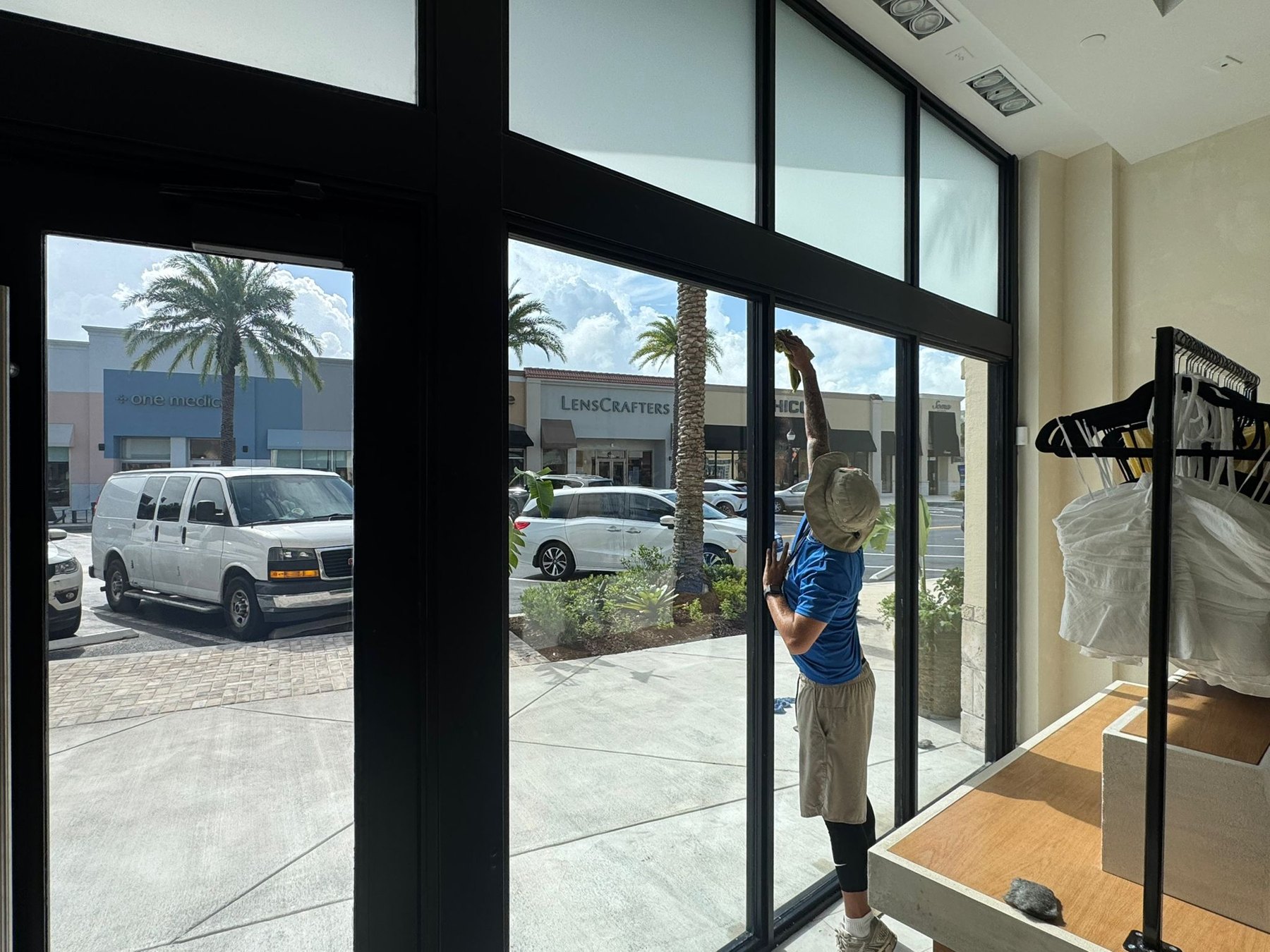
The company’s website lists Palm Beach, Broward and Miami-Dade counties. Marrale describes the territory as a north-south strip, from Boca Raton down to about South Beach, and from Weston east to the coast. A recurring commercial job farther out can be worth the drive, he says, if a crew can finish it in a single day.
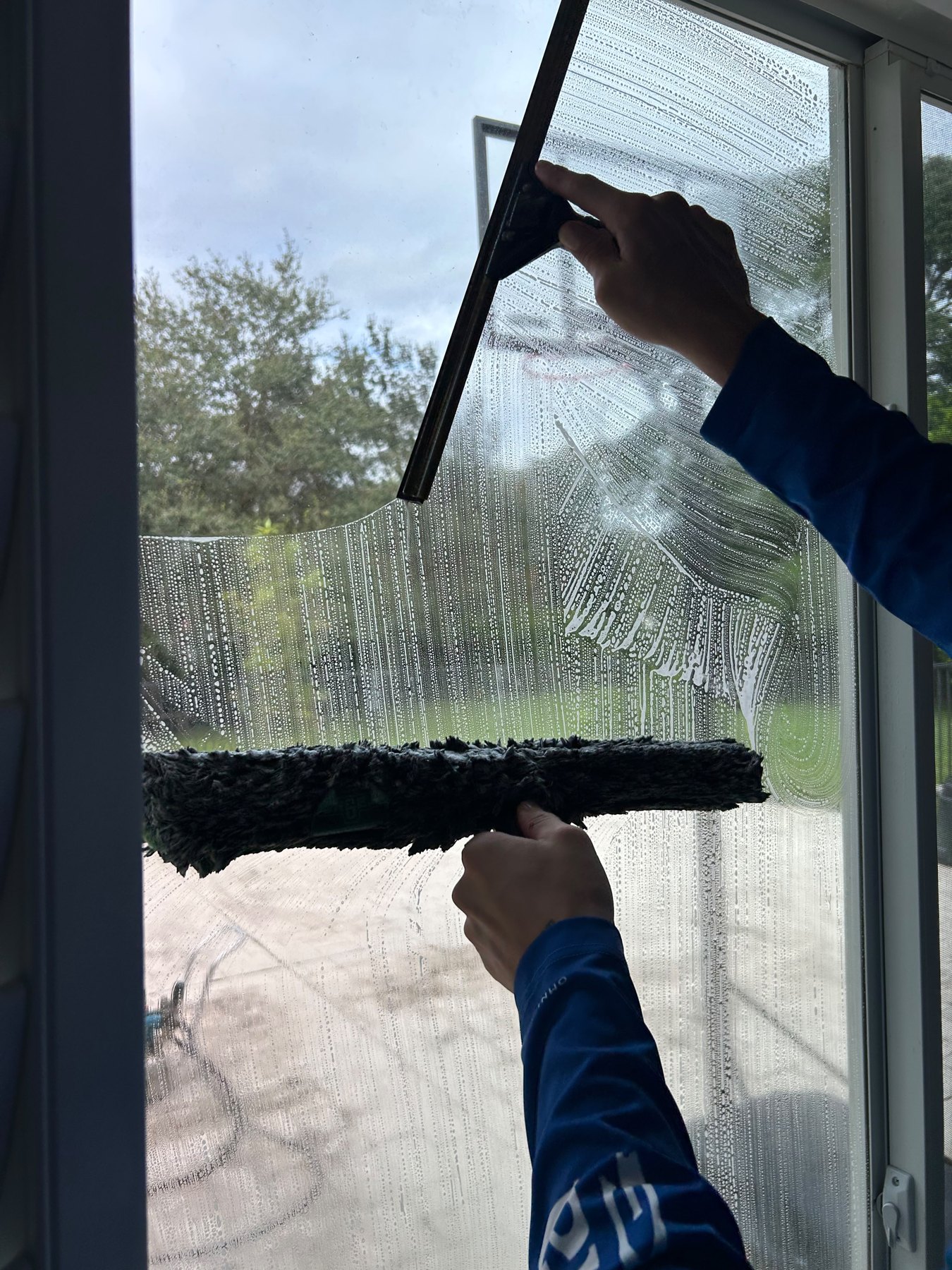
Customers tend to notice the small things. One wrote in a 2019 Google review that Marrale is particular about details, and that the crew scraped mortar and sticker residue off the windows and used treated water that dried clean. Another wrote that Glass Act cleaned the windows, pressure washed the house and patios, sealed the brick pavers and cleaned the awnings on a 6,000-square-foot home in one day.
According to the company’s website, Glass Act is licensed and carries general liability and workers’ compensation insurance, follows OSHA, ANSI and IWCA standards, and requires a drug-free workplace.
Marrale owns and runs the company himself. He takes his crew to quarterly dinners and says he knows their families well. His son works for him. “He’s a really good window cleaner, super bright,” Marrale says. He plans to hand the business down and is teaching his son to be an owner. First, though, the son has to work his way through the job the way his father did.
Marrale still likes where the work puts him. “When you’re outside, your office changes every day,” he says. “You always have different views.” Some of those views come from 30 stories up, on buildings along the beach. “And it’s quiet,” he says. “You’re just doing your job.”