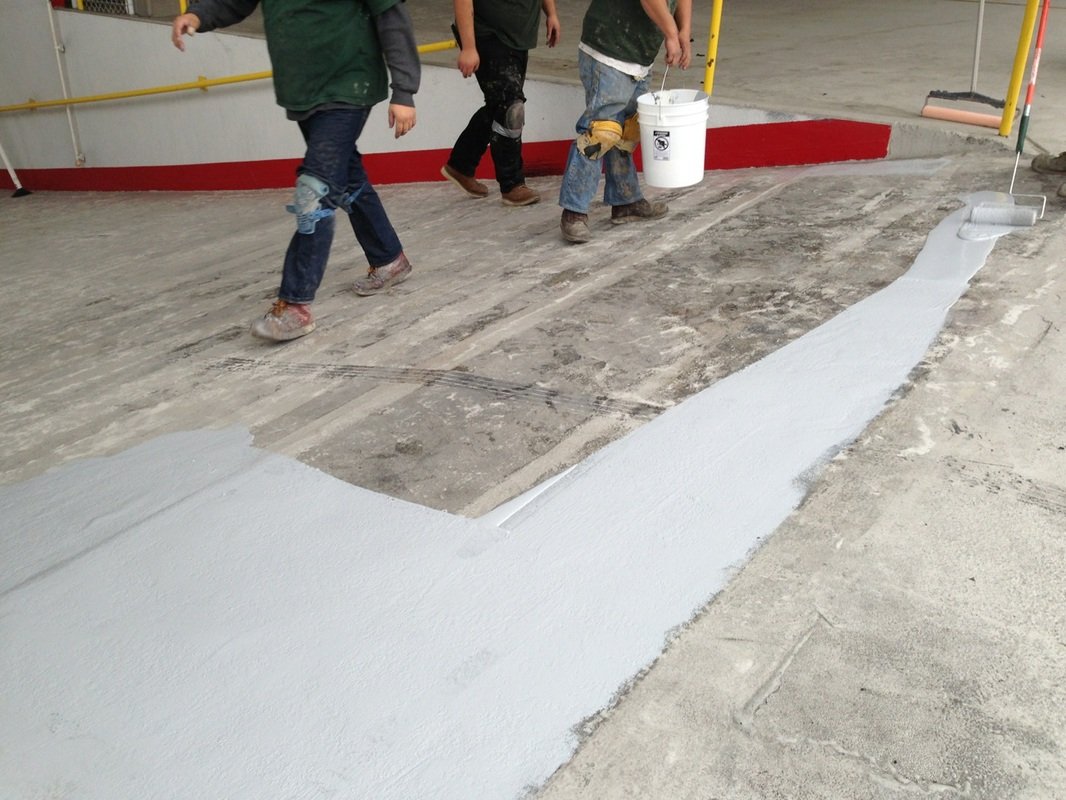
George LePorte once had a customer with about 20 buildings around Los Angeles County, and Eco Construction fixed the waterproofing on every one of them. Then the work stopped. The problem, he says, is that the repairs worked, and now he doesn’t have that customer anymore.
He calls that the only tough part of the business. Eco Construction repairs and restores concrete: parking decks, apartment balconies and walkways, utility tunnels, water tanks, seawalls. The work is almost all commercial and industrial. When it is done right, the leak doesn’t come back.
The jobs LePorte likes to talk about are the ones where it couldn’t come back. One was a waterproofing job of about 40,000 square feet for a restaurant in the Century City mall. “You had a Macy’s underneath it with $50,000 dresses downstairs, so it couldn’t leak,” he says. The same restaurant’s locations in New York City and Las Vegas had both been leaking, which made the Century City floor a tremendous liability. “They didn’t have any leaks,” he says of the result.
Another was for the Metropolitan Water District, where the Colorado River Aqueduct ends. The district treats the water with ozone in giant concrete tanks with walls 12 inches thick, and the walls had cracks all over. The tanks hold drinking water, so whatever went into the cracks could not contaminate it. The crew injected a special urethane resin made for potable water, and LePorte says it stopped all the leaks.
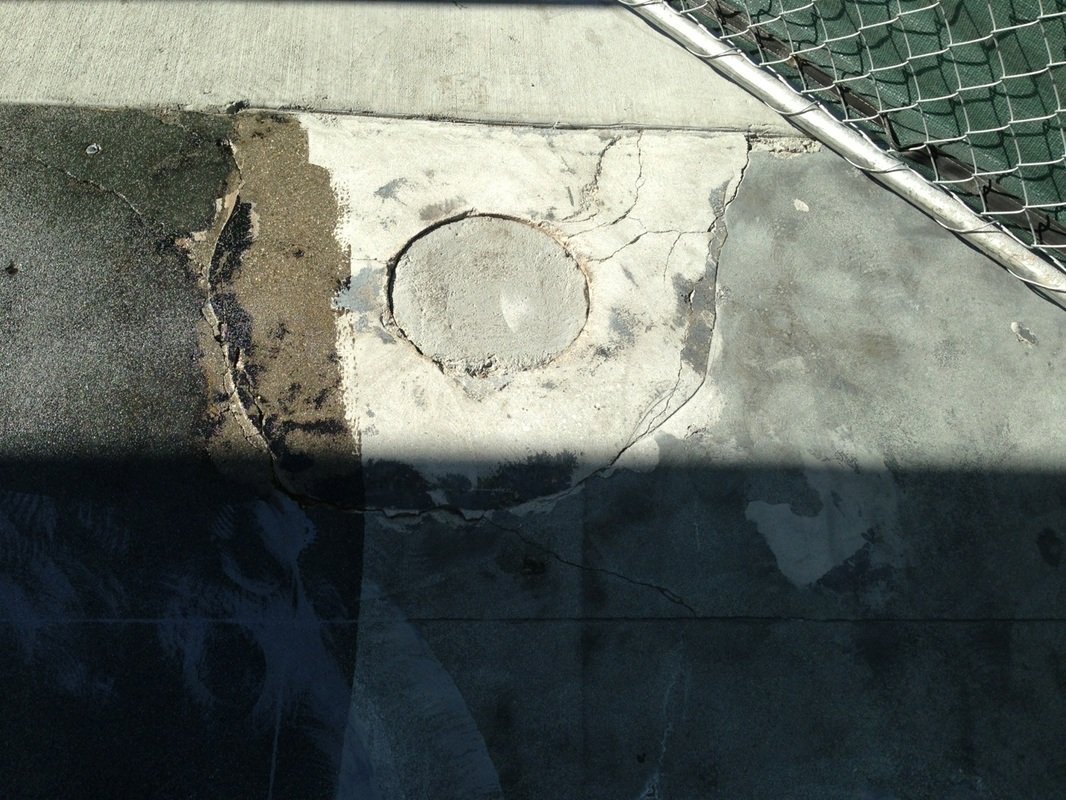
He chooses the material by the kind of crack. One that is actively leaking gets urethane. A dry one gets epoxy. Cracks come first because they cause the damage people notice later: water gets in, the rebar rusts, and chunks of concrete fall off a wall or ceiling. The fix for that is a sequence. The crew chips out the failed concrete behind the rebar and wire-wheels the rust off the steel. They coat the bars with a rust-inhibiting coating, replace any that have failed, and patch everything back.
LePorte says the technique is where jobs go wrong. Plenty of people look at a repair like that and assume it’s easy, he says, but skip a step or mix the material wrong and it will fail. Most of his crew has been with him for more than 20 years. He says he won’t substitute a cheaper product to fit a low budget, and he points to Sika, the repair-materials maker, as an example of the kind he uses: expensive, he says, but it works. He also jumps in and does some of the labor himself. The crew tells him he doesn’t have to, he tells them he enjoys it, and in his telling they start working harder.
He came to concrete by accident. LePorte arrived in California on a wrestling scholarship to UCLA and was pursuing an acting career in Hollywood. A fraternity brother met a man on an airplane who was selling a polymer concrete repair product and told LePorte he ought to go work for him. He did, as a salesman for a company called Steel Grip. It was supposed to be a side gig, and he describes the whole thing as a fluke. The work kept coming, and it became his full-time job.
The company’s About page credits him with running Steel Grip’s annual concrete contract with the City of Los Angeles from 1984 until 1997. LePorte recalls work at the Coliseum for the 1984 Olympics and a city Recreation and Parks contract resurfacing tennis courts. After the Northridge earthquake rattled the gymnasiums in the San Fernando Valley, he says, the city handed him a stack of FEMA repairs, and his crews did the epoxy crack injection at the rec centers there. A contract followed to resurface more than 60 of the city’s Olympic-sized swimming pools.
A roofing job gave the company its name. Under another contract, his crew put a white reflective polymer coating on the Valley gym roofs. He says it was revolutionary at the time, that nobody else was doing it then and that it is now close to required on new flat roofs. When he went out on his own in 1997, the name went with him. The company incorporated in 2005.
Today he goes after the harder work, much of it structural seismic repair and negative-side waterproofing. “We tend to do things that are a little more complex,” he says. “It’s a challenge.” His clients are mostly general contractors on commercial and public works projects. He has done parking deck work for Fox, including a parking structure in West Los Angeles, along with underground utility tunnels he describes as about 100 years old, and the top deck of the parking structures at a Keller Williams headquarters in Santa Clarita. The crew usually works from San Luis Obispo to the Mexican border and east, and for bigger projects LePorte will put them up in hotels and go as far as Seattle or Denver. His project list includes a Navy job in Bremerton, Washington, repairing four quarter-mile utility tunnels along a dry dock.
The job he tells like a story is the Ventura seawall, a half-mile of concrete that protects the promenade. He says the project was runner-up for the International Concrete Repair Institute’s repair of the year. What he remembers is the finish. Near the end of the job, the king tides came in, and the crew got the work done dodging waves. He remembers it as an entertaining job.