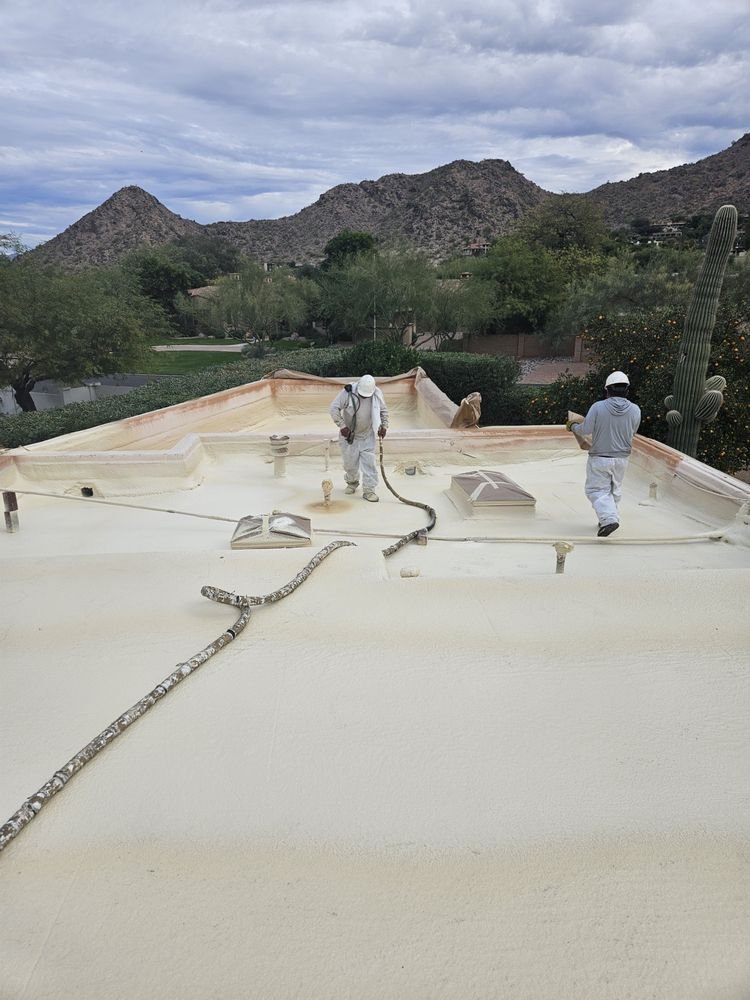
“Our applicators have been around for 20 plus years,” says Curtis Forstie, who owns Durafoam Roofing with his brother, Tim. On a foam roof, the applicator is the one spraying the material. At the Phoenix company, the people doing that work have been at it for two decades or more.
Foam is what Durafoam is built on. Curtis says the company does both residential and commercial work, a lot more residential, and that most of it is flat roofs in urethane foam. It takes on tile and shingle jobs too. Still, the company’s website was already describing it as experts in urethane foam roofing systems in 2001, 12 years after Steve Forstie, Curtis and Tim’s father, founded it in 1989.
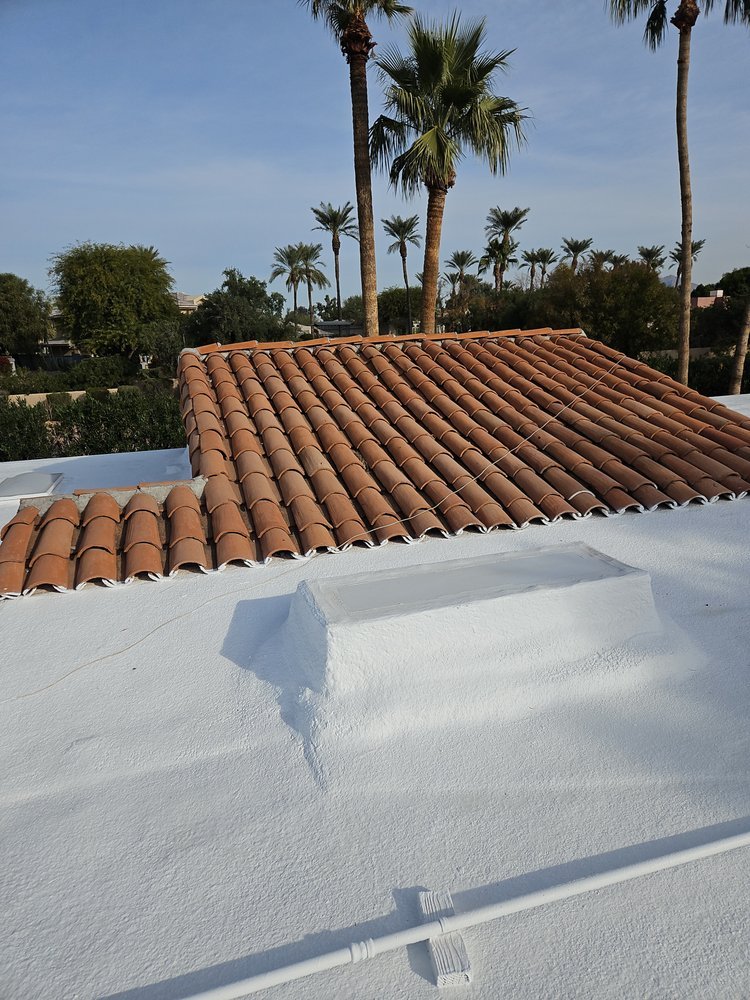
The method rewards experience. Foam is sprayed on and bonds fully to the surface below it, so a flat roof can often be redone without a tear-off. The company says it can clean and prep many older built-up, torch-down, TPO and metal roofs and spray directly over them, once loose gravel, wet insulation and any bad decking are dealt with. What goes over the foam matters as much as the foam. Durafoam’s own explanation treats the elastomeric coating as the sacrificial layer, the part meant to wear away so the foam underneath doesn’t, and it puts the recoat interval in Phoenix at about every five years. A recoat starts with a pressure wash. Bird pecks and small voids get patched, and the coating goes on in two crosshatched passes.
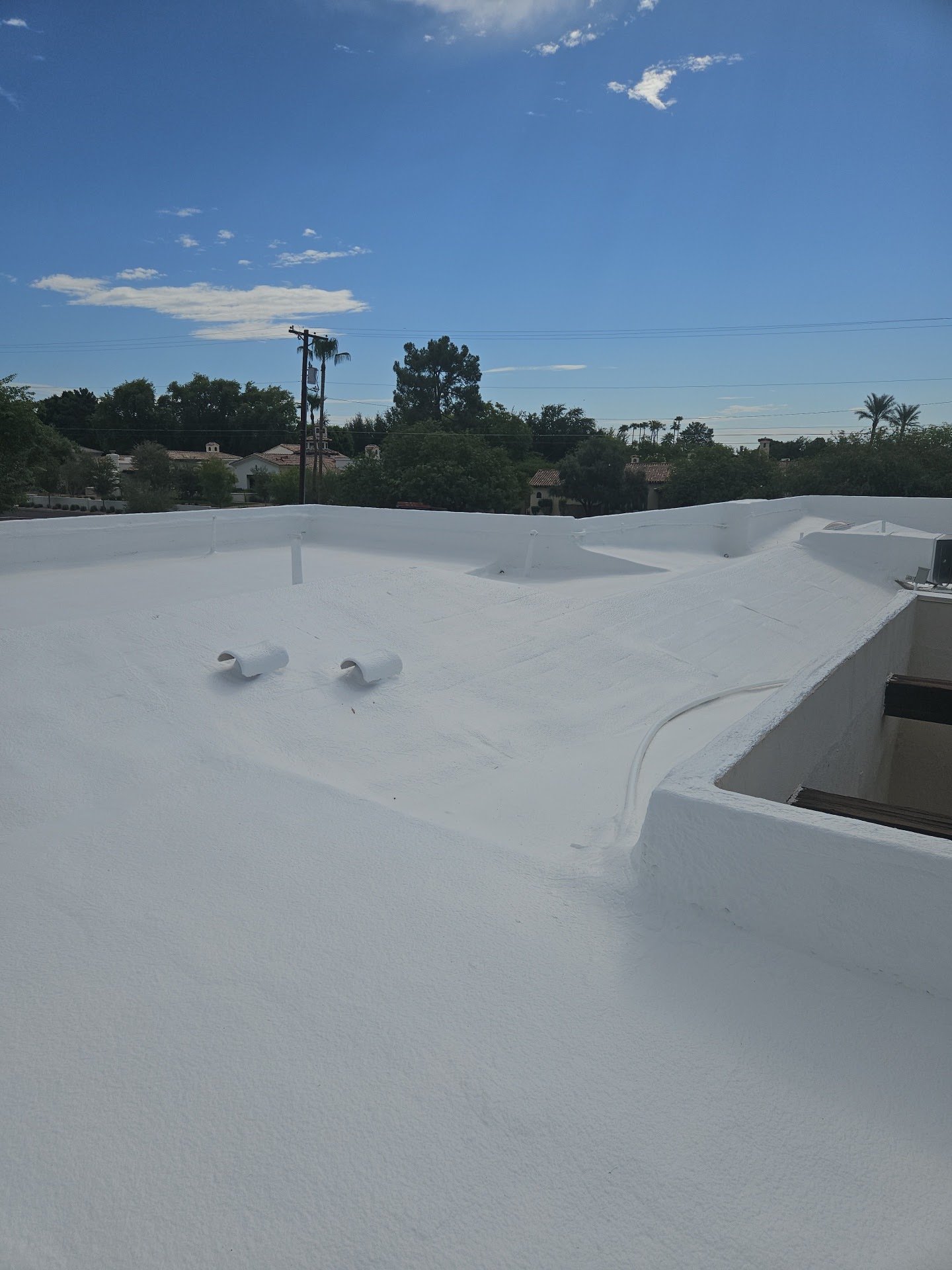
When Curtis explains why someone should hire Durafoam, the crew is where he starts. Applicators who have been in the business that long, he says, know how to put down a great-looking roof.
Keeping that standard steady comes down to how newcomers are brought in. “If there’s new guys come in, we make sure they get trained the same way that we’re trained, to make sure everybody’s on the same page,” Curtis says.
The owners learned the trade the same way. By the company’s account, Tim and Curtis grew up in the business, working through job sites, materials, crews and customer service from the ground up. Steve began handing the company to his sons in 2011. “My dad started the business, and then we purchased it from him,” Curtis says.
Some customers have been around nearly as long as the crew. One homeowner recalled that Durafoam put the roof on the house when it was built in 1994 and has maintained it ever since.
Curtis describes the rule he works by as something passed along rather than written down. “It’s something that’s been pushed down the line,” he says. “Make sure you do what you’re supposed to do. Don’t cut corners.”
The rest of that rule covers what happens when the work falls short. “If there’s any kind of screw up on a job, make sure we go fix it and do it right,” he says. “Which occasionally does happen, not all the time.”