
Mike did not come up through the electrical trade. “I have a weird background,” he says. He says he has run Fortune 500 companies, holds a master’s degree in finance, and has done CFO and high-level operations work. Then he bought Cannizzo Electric, a company a man named Nick founded in the 1980s and built on high-end residential work, with commercial and industrial jobs alongside it.
Nick retired, and Mike has run the company much the same way since. What he brought with him was the discipline of a larger shop. “Some of the techniques and stuff that are used in those larger companies lend themselves well to keeping an accurate schedule,” he says.
The clearest result for a customer is a staffing rule. Hire Cannizzo for a project, Mike says, and “one of my senior electricians will be on your project start to finish.” Nobody gets swapped in halfway through.
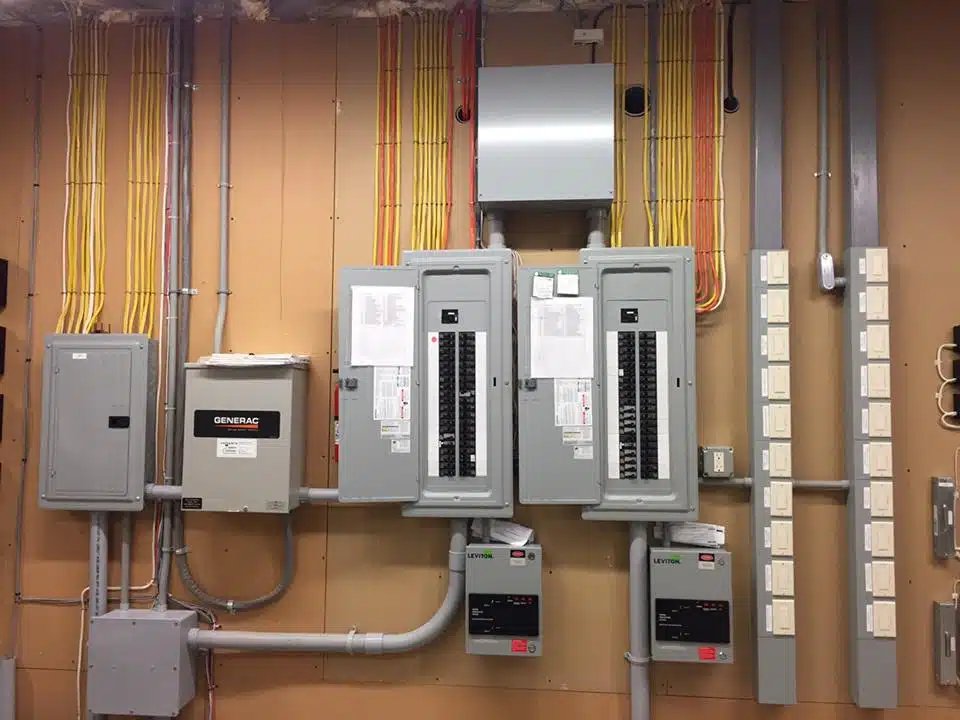
The reason is practical. In high-end residential work, he says, “the projects morph and change as they go, and constantly changing out personnel makes that almost impossible to manage and keep those changes accurate.” If the homeowner or the general contractor tells the electrician on day one to watch for something, he says, “that message is carried through the whole time.” The electrician who heard it is the one still there at the end.
Mike is the company’s only owner, and he does all the quoting himself. That shapes how he runs the crews. He takes the customer’s hard requirements, such as a deadline or a must-have, and passes them to the electrician. The rest is left to the electrician. “I give my guys a lot of autonomy,” he says. “I hire really good electricians.” The other half of the arrangement is the office. When an electrician in the field says a job needs another pair of hands or will run long, Mike says, “I react very, very quickly to their requests.” He calls that kind of back-office support “somewhat unusual in the industry.”
The schedule follows the same logic. Mike says quotes go out on time about 99 percent of the time, usually the same day he looks at the job. Once a customer approves, the job goes on the calendar within a day or two. An appointment booked two to three weeks out is treated as fixed. “We don’t no-show customers, that’s 100 percent,” he says. “It’s pretty rare that we have to bump a schedule, and it never happens without notification.”
Squeeze-ins are the exception, and he says so up front. A customer who wants something done this week might get an hour here or there. “I’ll let them know, hey, we’ll try, but there’s no guarantee to this,” he says. He makes sure the customer knows the slot is tentative before anyone counts on it.
The company also services its own work, and Mike defines that broadly. “Even if it’s not anything to do with us, even if they get exactly what they’re asking for and they just don’t like it, we make sure to service that,” he says. Customers sometimes choose something, see it installed in the house, and decide they don’t like it. Cannizzo goes back and fixes it, so the customer is not left with a bad opinion of the job. A homeowner with an old house, a couple of major projects in, noted in a review that the crew was doing more than installing new work: it was also bringing years of hacked-together wiring into a safe state.
Mike describes the company’s size as a position he chose. “We’re large enough to handle big projects but small enough to where you get really personalized service,” he says. The commercial side has included rapid remodels for restaurants and retail, but he calls high-end residential the company’s bread and butter: lake houses, mansions, the wealthier end of the market.
That work centers on one body of water. “We just do a ton of lake houses,” Mike says. “We probably have a good portion of the houses along Canandaigua Lake that we’ve done in the past or are currently working on.” The crews know those lakefront properties well by now. “We like doing that work,” he says, “so the more the better.”