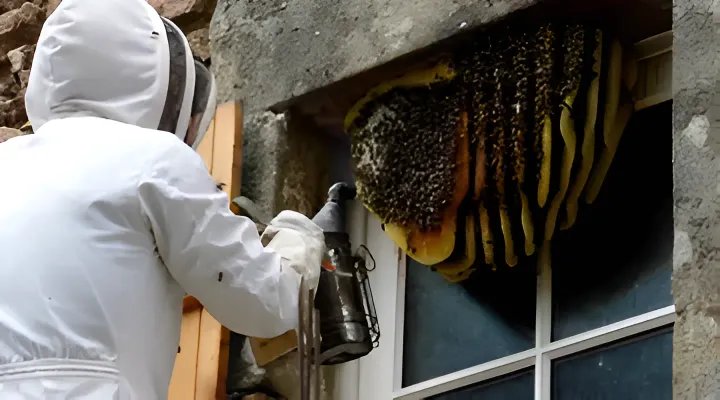
The Coast Guard took Jeff Stanifer out by boat to an island down in Channelview, where bees had moved into what he describes as a wellhead from an old oil pump, or some kind of pump. On the ride out, one thought kept coming back. “I cannot believe I’m getting paid to do this,” he says.
The bees were “real aggressive,” and his job was to get rid of them. He did.
Stanifer has run Budget Bee Removal since 2006. He works on honey bees and wasps at homes and commercial properties around Houston, from a base in Katy. The island is one of a handful of jobs he tells as stories, and they share a pattern. Bees settle where nobody wants to reach in, and he is the one who goes in after them.
He learned the work at a pest control company, where he spent many years and eventually took over its bee removal. When he went out on his own, he followed the calls. “It was just a demand for it at that time,” he says. As he tells it, nobody in Houston really specialized in bees then.
That specialty is what put him on a line at an oil refinery. Bees had gotten into a reactor that was shut down and decommissioned. It was slated for demolition, and the bees had to go first. “I had to get lowered down and exterminate them and then get lifted back out,” he says. “That was pretty cool.”
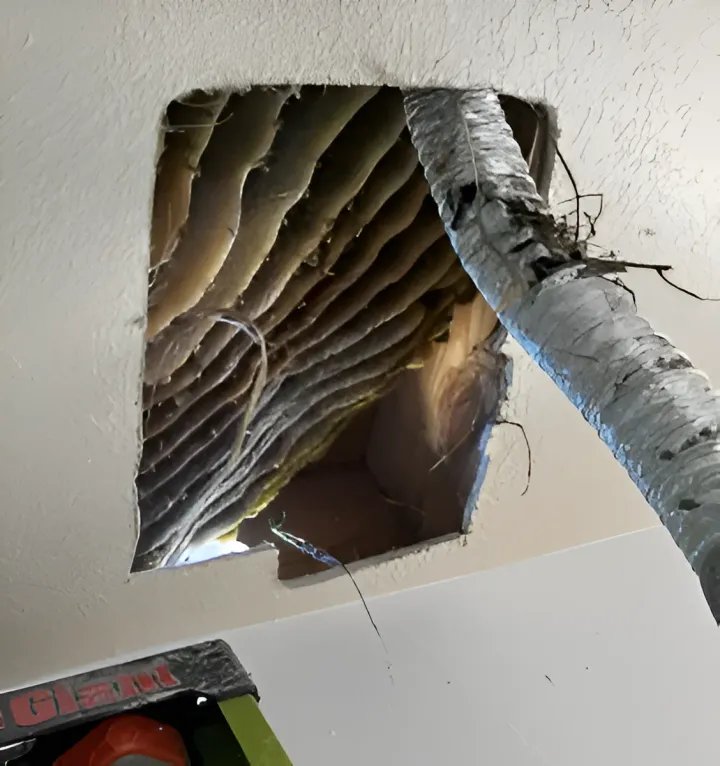
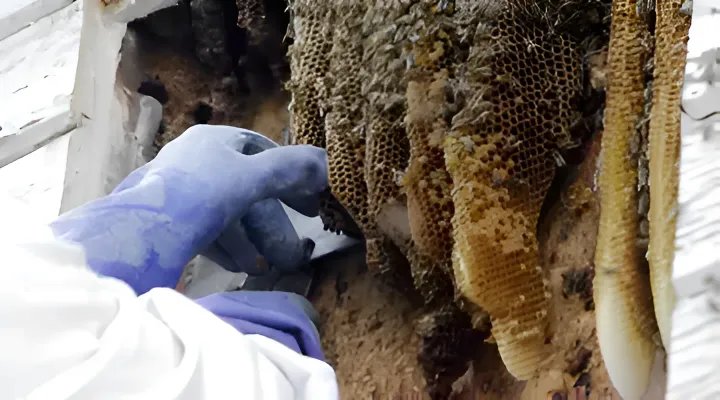
Most of the work happens closer to the ground, inside the walls of houses. He still remembers one home where five sections of wall held honeycomb. “I just kept pulling honeycombs out and piling them up,” he says. The comb matters as much as the bees. The company’s site explains that comb left in a wall ferments in the Texas heat and keeps signaling to passing swarms that the spot is a good place to settle, so it has to come out too.
Those jobs start well before he opens a wall. He talks with customers by phone first. “I usually have a good conversation with someone over the phone before I come out, and they kind of know me,” he says. He says he always shows up, and the voice on the phone belongs to the man who does the work. “I’m the owner operator, so I always do a good job for my people,” he says.
Many of those people call again. “Sometimes bees come back years later, and they call me, and I’ve got repeat customers, repeat apartment complexes and people,” he says. He takes residential and commercial jobs alike and says he goes everywhere. He likes working down in Pearland. One work van carried him more than 400,000 miles.
What he values most is being picked. “It’s always rewarding when you’re the guy they call,” he says.
Of all the places those calls have sent him, the boat ride out to Channelview and the island wellhead still come first. “That was cool,” he says. “That’s my most memorable.”