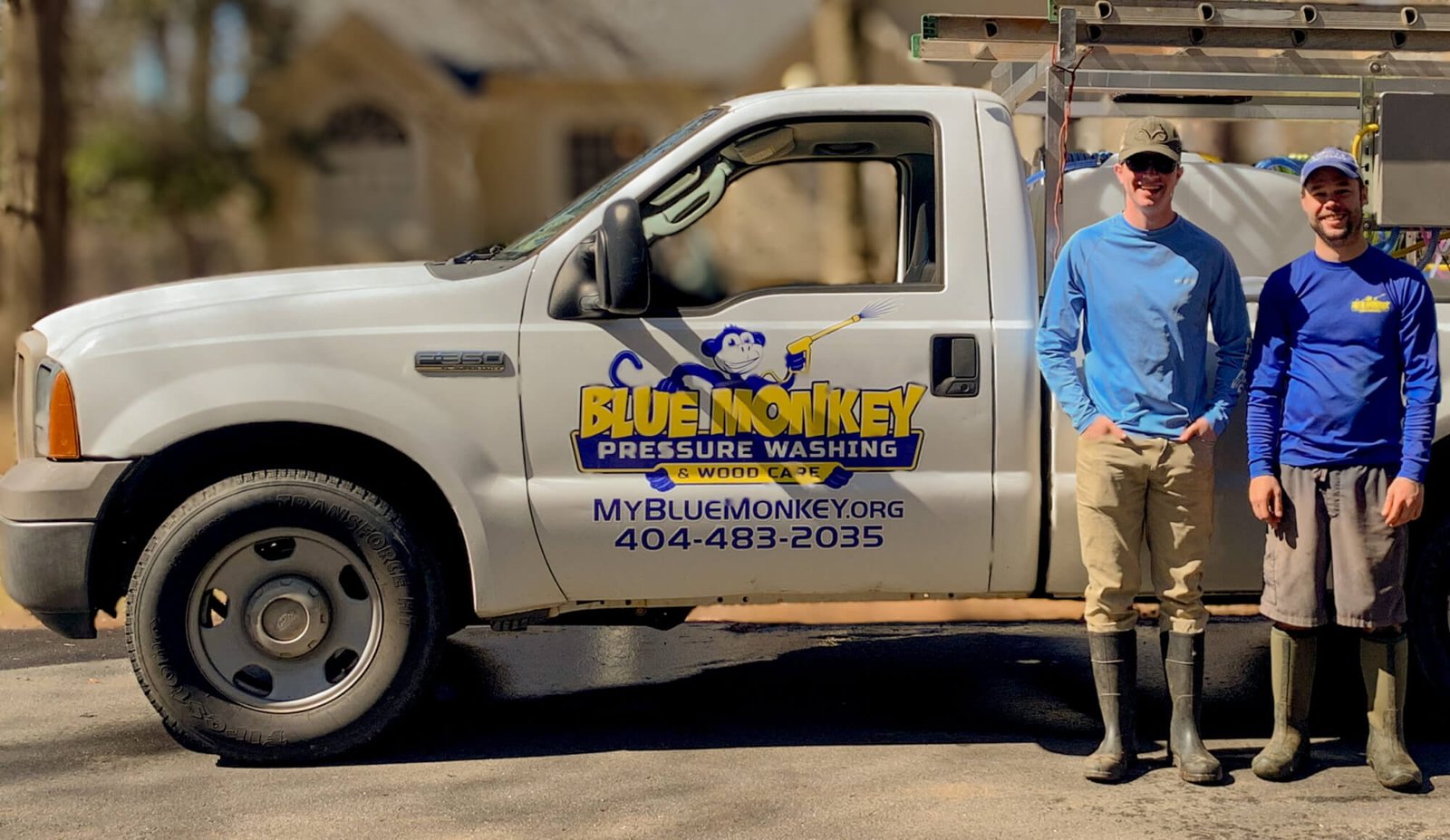
Jarrod Harris owns three businesses. When Blue Monkey Pressure Washing & Wood Care comes up, he calls it “the least exciting one.”
He is not selling it short so much as sorting it. The other two are a mountain bike park in North Georgia and a business built around erosion-control matting for bike trails. “Blue Monkey is just kind of a thing that I just keep going because I have two guys that their livelihood depends on it,” he says.
The washing company exists because of the bike park, and the bike park exists because of a career he walked away from. Harris worked as a comedian for almost 20 years. He lived in Los Angeles and appeared on Comedy Central and TBS. Late-night work was coming up, and he had a big web series on YouTube. He left anyway. “I like performing,” he says, “but I didn’t like the industry.”
In 2012 he came back to Georgia and bought land to start the park. He still wanted off the road. In 2015 he started Blue Monkey so he would not have to tour as much. “Most people are trying to get into comedy,” he says. “I’m trying to get out of comedy and get into owning a bike park.” The wash business, he says, “was just essentially a way to fund the business that I was most passionate about.”
He enjoyed the work when he started. He was glad to be done with airports, rental cars and other people’s egos, and to have plain blue-collar work in their place.
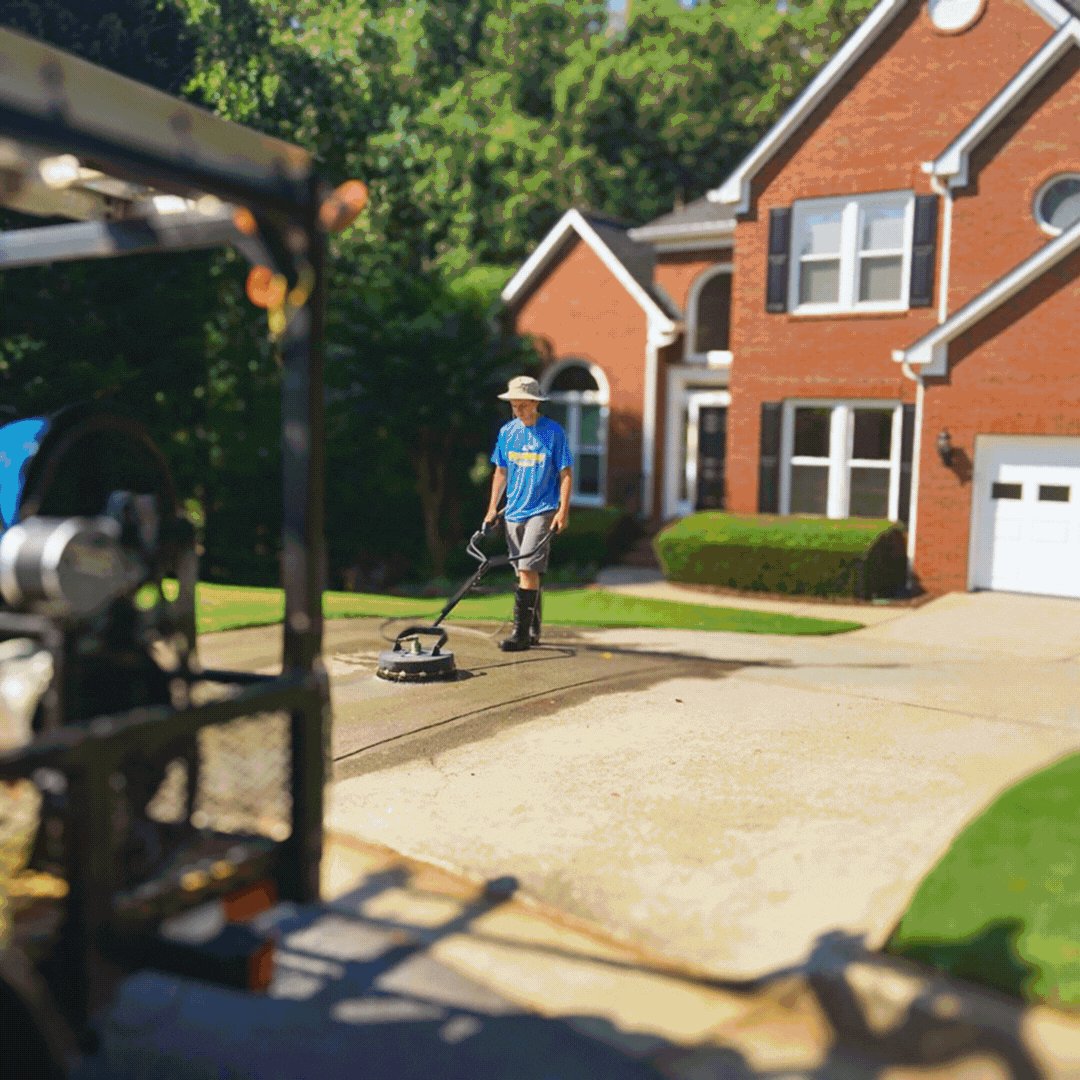
Blue Monkey once had seven people. Harris says he had a hard time finding quality people, so he scaled down. He now works with two men he calls great. Running smaller, he says, meant that if COVID brought a slowdown, he did not feel it much, because he was not keeping seven people busy.
He says he interviews the same way at his other business. “I’m looking deeper than just what are you capable of doing,” he says. “It’s more so what kind of person are you?” His washers are paid by how much they do, and he says that gives them a stake. “They treat the business like it’s their own.”
The company used to take commercial and property-management work. Harris dropped it. Residential customers pay when the job is done, and he has no appetite for chasing anyone. “I don’t have time or energy or patience to follow 30 day, 60 day invoices,” he says. The trade-off is the calendar. About three months of the year are slow, and the other nine are good. His advice is to expect the slow stretch and plan around it.
His own part of the business fits in a morning. He handles Blue Monkey early in the day, usually until 10, 11 or noon, taking calls, sending estimates and scheduling. He prices most jobs from a customer’s address. For a deck, he asks the homeowner to stand in the yard and send a few photos, and he says that gets him an accurate number nearly every time. For customers who cannot manage the photos, he can send someone out.
Customers deal with him, not a middle layer. “If there’s an issue with anything at all, they call me directly and I have an invested interest in it,” he says. He holds himself to the same rule in the other direction. If equipment goes down and a crew cannot make a job, he says, the customer should get a phone call right away and an offer to be moved to the front of the next day’s schedule.
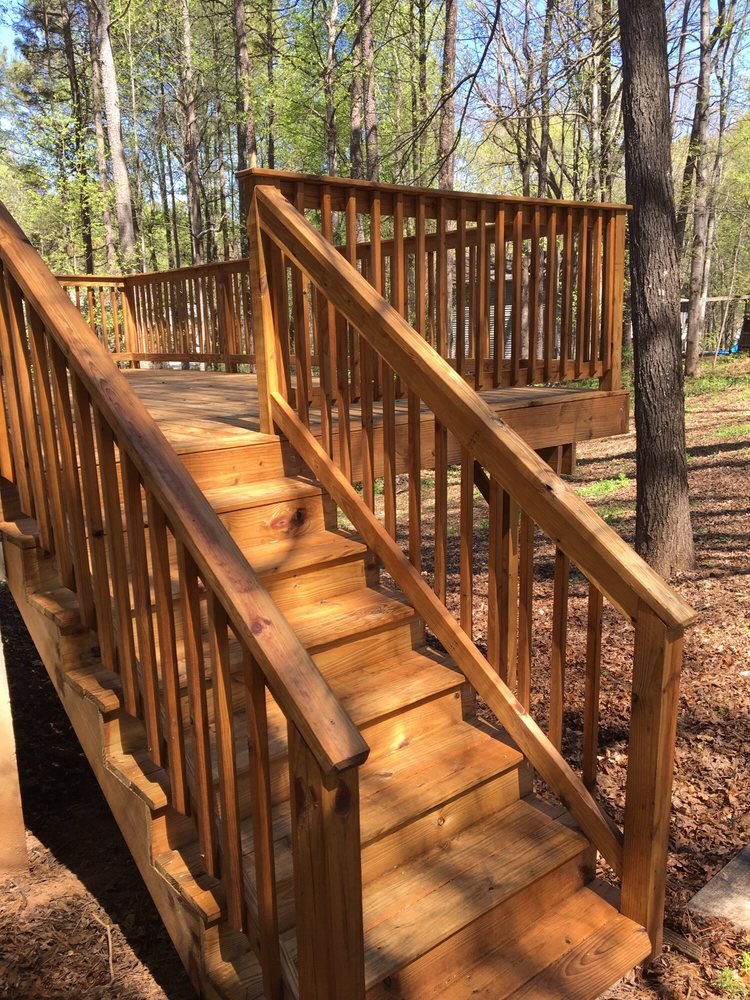
Wood care is in the company’s name for a reason. One deck customer recalled the man washing the deck explaining how he cleans without damaging the boards, and a carpenter talking through repair options before starting. A staining crew finished the job. The company’s own social pages describe its territory as Cobb County and metro Atlanta.
Harris expects to hand Blue Monkey down, “probably” to one of his two men. It is small enough, he says, that nothing about it is complicated, and it would put that man in a better position.
The name has no deeper story. “I just love monkeys and I love the color blue,” he says.